The Knights of Ren have spent most of their time in Star Wars canon as a mystery hidden behind black armor and battered masks. Marvel’s latest comic is changing that, and in doing so, it is challenging one of the franchise’s oldest assumptions about the Force.
For close to 50 years, the saga has mostly relied on a simple framework: a light side and a dark side, with the Jedi and the Sith locked in a conflict over which will prevail. That divide has held firm across three film trilogies, a long run of animated series, and an extensive library of tie-in novels. Yet the galaxy has always been larger than the Jedi Temple, and Marvel’s “Star Wars: The Fall of Kylo Ren” confirms that not every Force tradition speaks the same language.

The Knights of Ren Call the Light Side “The Shine”
Written by Charles Soule, “The Fall of Kylo Ren” follows Ben Solo (Adam Driver) and his Knights in the period between Star Wars: Episode VIII – The Last Jedi (2017) and Star Wars: Episode IX – The Rise of Skywalker (2019), a window the films largely skipped over.
The series reveals that the Knights refer to the light side of the Force as “The Shine.” It joins “The Shadow,” the group’s term for the dark side, which Soule had already introduced in an earlier story featuring the Knights. Rather than inventing a fresh pair of terms, the new comic completes a set that was already half-built.
“The Fall of Kylo Ren #3” adds another word to the Knights’ lexicon. In that issue, the group calls an individual “Radiant,” which appears to serve as their description of someone who is Force-sensitive.
Why the Knights of Ren’s Vocabulary Matters
In the sequel trilogy, the Knights barely registered beyond their imposing silhouettes. They loomed in the rain, took orders, and were ultimately cut down by Ben Solo on Exegol. A distinct vocabulary suggests something the films never had time to explore: a culture with its own customs and beliefs, standing apart from both the Jedi Order and the Sith and borrowing its definitions from neither.

The Acolyte Already Tested This Idea
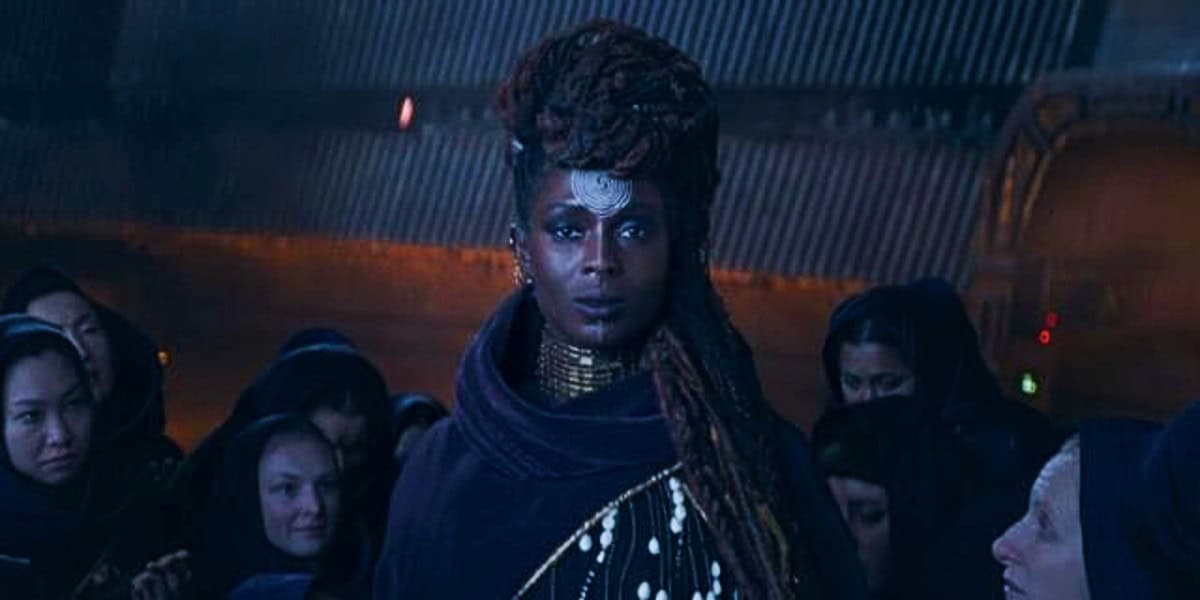
The Knights are not the first faction in canon to describe the Force on their own terms. The Acolyte, Leslye Headland’s 2024 Disney+ series, took a similar approach. Set roughly 100 years before Star Wars: Episode I – The Phantom Menace (1999), in the final days of the High Republic era, the show introduced a coven of Force witches on Brendok led by Mother Aniseya (Jodie Turner-Smith).
The coven rejected the Jedi’s model and spoke of the Force as “the Thread,” a single strand that could be pulled, woven, and shared among those connected to it, rather than something split into light and dark. The Jedi characters did not wave the concept away, treating it as a separate tradition, studying the same power from another angle. Since the show’s cancellation, it has also been confirmed that Qimir (Manny Jacinto) was essentially the first Knight of Ren, linking the two stories directly.
The Thread nonetheless became one of many complaints aimed at The Acolyte. Detractors argued the series was rewriting established lore, often citing it alongside the coven’s apparent power to create life through the Force and the show’s depiction of the Jedi Order. The debate never truly subsided, and in August 2024, Lucasfilm confirmed there would be no second season, leaving its cliffhangers unresolved.
Like the Thread, “The Shine” and “The Shadow” represent one group’s perspective rather than a franchise-wide rebrand. The key difference is visibility: these terms are arriving in a comic book, not a high-profile live-action series.
What’s Next for the Force in Star Wars
The reveal comes as Lucasfilm seems increasingly focused on defining the Force itself. Ahsoka Season 2 is the next major live-action project expected to engage with that question, with Dave Filoni, now Lucasfilm’s President and Chief Creative Officer, indicating that it will explore the mythology of the Mortis Gods, the Father, the Son, and the Daughter, first introduced in Star Wars: The Clone Wars.
Further out sits James Mangold’s film, announced at Star Wars Celebration London in April 2023. Set at the dawn of the Jedi, approximately 25,000 years before the Skywalker Saga, it would tell the story of how the Force was first discovered. While the project technically remains on Lucasfilm’s slate, it appears to be on indefinite pause, with no production start, cast, or release date attached. Should it proceed, it would be the first Star Wars story positioned to explain the Force’s origins and how the terms “light side” and “dark side” came to be.
For now, “The Fall of Kylo Ren” is available at comic book shops and digital retailers. Are you buying it?