One of the strangest lawsuits to ever emerge from a Florida theme park is officially heading to court.
An Orange County woman, Hillary R. Martin, has filed a lawsuit against SeaWorld Orlando, alleging that she was struck in the face by a duck while riding the park’s high-speed roller coaster, Mako. According to the complaint, the impact knocked her unconscious and caused “permanent physical injuries, disfigurement, and mental pain and suffering.”
Now, the case officially has a trial date. Court records show that the case will go to trial on November 8, 2027, with a pretrial conference scheduled for October 28, 2027. The schedule, released this week, confirms the first concrete timeline in a dispute that has drawn both legal and public attention across the theme park community.
The Unusual Mid-Ride Collision
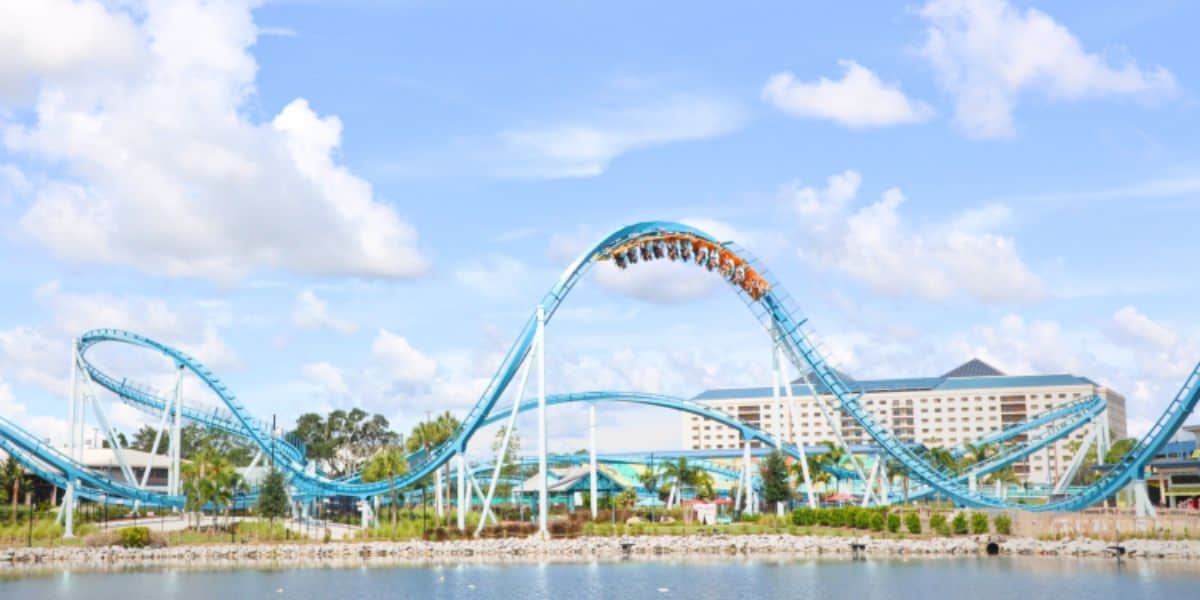
Martin’s lawsuit recounts an incident that took place in March 2024, when she was visiting SeaWorld and chose to ride Mako, the park’s 200-foot-tall steel hypercoaster. As the coaster train was in motion, the filing states that a “duck flew into the path of the roller coaster,” striking Martin “in the face and knocking her unconscious.”
Her attorneys argue that the park’s design decisions contributed to the incident. Mako, built by Swiss manufacturer Bolliger & Mabillard, is known for its open-air design and sweeping track that cuts directly over a lagoon at the heart of the park. Martin’s legal team claims this created what they call a “zone of danger” — a space where wildlife, particularly ducks and other birds, are more likely to cross paths with the attraction.
The lawsuit names both SeaWorld Orlando and its parent company, United Parks & Resorts, and alleges that the resort “failed to keep its premises in a ‘reasonably safe condition’ and didn’t warn guests … about dangerous conditions,” including the risk of “potential rogue ducks.”
The Legal Claims and Damages
In her filing, Martin asserts that the collision was severe enough to cause long-term harm and that she continues to experience ongoing complications. She is seeking more than $50,000 in damages, a figure that allows her case to be heard in circuit court rather than small claims.
Interestingly, the incident was not included in the Florida Department of Agriculture and Consumer Services’ quarterly incident report, which records park injuries requiring at least a 24-hour hospital stay. The absence of any record, her attorneys argue, does not diminish the seriousness of her injuries or the need for damages.
In a statement following the lawsuit’s filing, SeaWorld Orlando reaffirmed its long-standing stance on guest safety but declined to discuss specifics due to the ongoing litigation. “The safety of [its] guests and employees is a top priority and [it takes] these situations seriously,” the company said. “We will not be commenting beyond that as this is pending litigation.”
The park’s response mirrors its approach to prior guest claims — offering a limited statement while emphasizing its commitment to safety across all attractions.
UPDATE: A trial date for this case has been set for Nov. 8, 2027, according to court documents. A pretrial conference is scheduled for Oct. 28, 2027: https://t.co/bgOcLJDtrs pic.twitter.com/yI4o1lyOfd
— Ashley Carter (@AshleyLCarter1) October 29, 2025
Wildlife Hazards and Theme Park Liability
While lawsuits over theme park injuries are not unusual, those involving wildlife encounters mid-ride are almost unheard of. Most personal injury cases involving amusement parks cite equipment failure, falls, or guest misconduct.
This case, however, raises questions about the balance between immersive attraction design and environmental unpredictability. Mako’s scenic path — soaring above the lagoon, surrounded by SeaWorld’s marine theming — is a visual highlight for guests but also places the coaster close to bodies of water that naturally attract birds.
The suit claims that SeaWorld “created a zone of danger for bird strikes by positioning Mako near a body of water, which could disorient nearby birds and increase the risk of similar incidents” (via Fox 35 Orlando). Whether that proximity represents negligence, or simply an unavoidable environmental factor, will likely be a key question when the case reaches trial in 2027.
A Long Legal Road Ahead
The three-year timeline before the trial reflects the complexity of personal injury litigation involving large entertainment companies. The court’s pretrial conference in October 2027 will finalize witness lists and expert testimony parameters before jury selection begins in November.
Both sides are expected to rely on extensive expert input — including ride engineers, biomechanical analysts, and avian-behavior specialists — to reconstruct what happened and assess whether SeaWorld could have reasonably prevented the collision.
The case could test the boundaries of how far theme parks must go to account for environmental risks within their attraction design.
SeaWorld’s Safety Record and Reputation
Since opening in 2016, Mako has been considered one of Florida’s premier roller coasters. It’s celebrated among coaster enthusiasts for its smoothness, height, and airtime, and has operated without major safety incidents until now. SeaWorld’s rides are inspected daily, with additional oversight from Florida’s Department of Agriculture and Consumer Services.
The park’s spokespersons maintain that safety and maintenance remain top priorities, with regular operational reviews ensuring compliance with both state and corporate standards. Still, this lawsuit stands out because it deals not with mechanical malfunction — but with nature itself.
The Bigger Picture: Nature vs. Attraction
The case highlights a growing concern in Florida’s theme park industry — how to coexist with the state’s abundant wildlife. Parks like SeaWorld, Walt Disney World, and Universal Orlando are surrounded by wetlands and lakes, and all must contend with native birds, reptiles, and other wildlife that occasionally cross into guest areas.
Experts note that if Martin’s case proceeds to trial, it could prompt broader industry conversations about how rides located near open water mitigate wildlife risks. Questions could arise about the use of deterrents, barriers, or staff procedures designed to keep animals away from attraction zones.
For SeaWorld, the outcome may influence how it approaches future attraction placements or environmental planning across its properties.

Looking Toward 2027
As it stands, Martin v. SeaWorld Orlando will not see the inside of a courtroom until late 2027. The long wait ensures both parties have ample time to prepare, but it also means the unusual nature of the case — a duck colliding with a roller coaster — will continue to hover over the park’s reputation for years to come.
If the trial proceeds as scheduled, it could establish a new legal precedent for theme park liability in cases where environmental hazards intersect with guest experiences.
For now, SeaWorld has reiterated that its “top priority” remains the safety of its guests and employees, while Martin’s attorneys pursue what they describe as justice for an incident that turned a day of excitement into a traumatic and lasting ordeal.
As the case moves forward, the central question remains: when a thrill ride meets the unpredictability of nature, who bears the responsibility?