

Lucasfilm is once again trying to define what the modern Star Wars era looks like, and the early returns suggest a complicated transition.
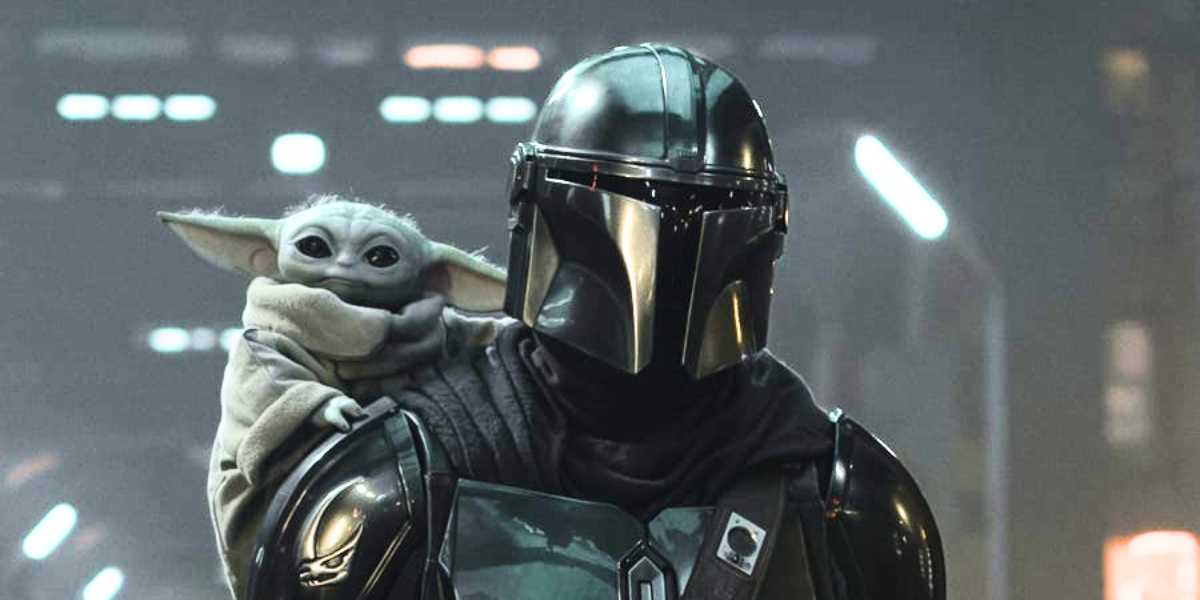
Just days after release, The Mandalorian and Grogu (2026) has already been displaced from the top of the box office conversation, raising questions about how audiences are responding to the franchise’s long-awaited return to cinemas.
For much of the last decade, Star Wars storytelling largely migrated into streaming. When Disney+ launched in 2019, The Mandalorian effectively became the franchise’s new anchor point, shifting attention away from theatrical releases and toward serialized storytelling. That shift brought a wave of interconnected shows, including The Book of Boba Fett, Obi-Wan Kenobi, Ahsoka, The Acolyte, and Skeleton Crew, creating a sprawling narrative ecosystem designed primarily for streaming audiences.
That model has now been reworked. The Mandalorian and Grogu, which opened May 22, 2026, represent Lucasfilm’s first major theatrical Star Wars release since Star Wars: Episode IX – The Rise of Skywalker in 2019. It also signals a structural pivot: a return to cinema-first storytelling after years of Disney+ expansion.

Originally conceived as The Mandalorian Season 4, the project was reconfigured into a feature film under showrunner Jon Favreau. That shift required significant narrative compression. Storylines built for episodic television had to be reshaped into a format that works for general audiences, not just viewers familiar with Mando-era continuity.
Favreau has acknowledged that early versions of the season would have tied more directly into Ahsoka’s storyline and the looming presence of Grand Admiral Thrawn, played by Lars Mikkelsen. How much of that material survived into the final cut–outside of the legacy characters–remains unclear, but the film marks a departure from what the series was originally intended to become.
The box office debut reflects both anticipation and uncertainty. The film opened to $165 million globally, effectively matching its reported budget. But attention quickly shifted to its second-week performance, where signs of pressure began to emerge. Midweek tracking revealed that the film had already been taken down from the number one spot by an unexpected competitor.
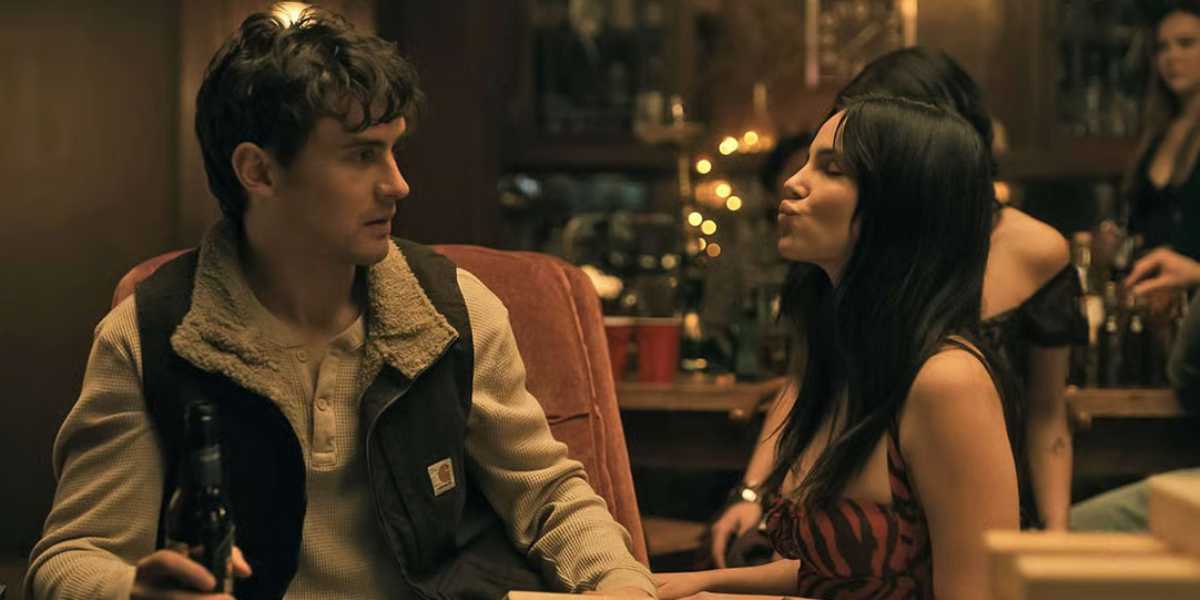
“Daily box office tracking is now showing that Obsession is now beating The Mandalorian and Grogu handily as of this Wednesday, earning $5.6 million domestically to Mando’s $4.1 million on that day,” Forbes explains. “And again, this is the second week of Obsession’s release (this Wednesday is practically a non-existent drop from last Wednesday), and this is Mando’s first week.”
The challenger is Obsession (2025), a low-budget thriller from Focus Features. Premiering at the Toronto International Film Festival and released in the U.S. on May 15, 2026, the film reportedly cost around $1 million to produce and has already climbed to $95.8 million globally. Starring Michael Johnston and Inde Navarrette, its performance is being closely watched as an example of strong word-of-mouth overcoming scale and franchise power.
While The Mandalorian and Grogu still leads overall earnings, the comparison underscores a shifting theatrical landscape where smaller titles can compete aggressively against legacy IP when momentum favors them.
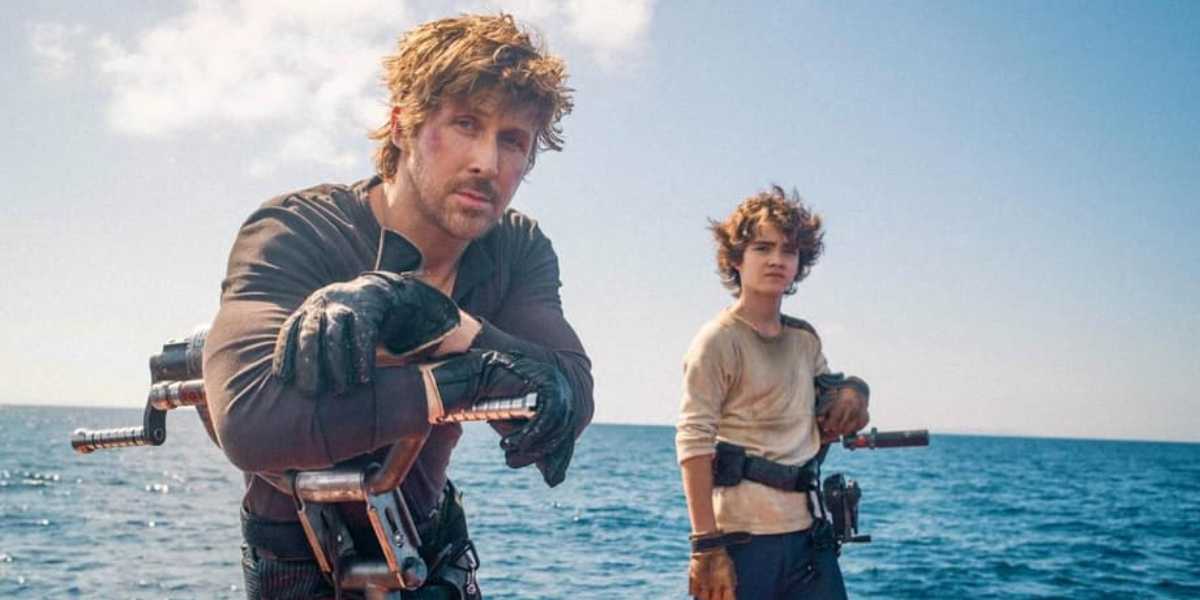
Looking ahead, Lucasfilm’s next major theatrical swing is Star Wars: Starfighter (2027), directed by Shawn Levy and led by Ryan Gosling. The project is positioned as a fresh entry point with minimal reliance on established characters, a strategy that may prove crucial as the studio recalibrates its approach to theatrical Star Wars storytelling.
For now, The Mandalorian and Grogu stands as both a return and a test: a bridge between the streaming-heavy past and a theatrical future still being defined.
What do you think is the reason for The Mandalorian and Grogu‘s poor box office performance? Let us know in the comments down below!






People are tired of investing emotionally into these tremendous Story Arcs with the best action sequences!!!
We are tired of These Great Series being Given to Already Well known actors who we already know will not be invested in a 6-8 yr or more long Mandlorian Series that we have all been wanting to This New Star Wars Journey between an orphan grown up to be a Mandorlian and his Task he is told that he must Protect and reunite The young 100yr old Grogu back with his own Kind – the Wizards who the Mandorlians had fought in the past.
If you are going to give us New Star Wars Universe Character Story Lines than start out with a new talent not yet a movie star that you can sign the actors into a 8 + 2 more years contracts as we tired of Series that we just get invested into after 2 yrs to really a get to know about how they are continuing the Star Wars Universe Just ina tiny corner of the Galaxy!
You get Actors like Pedro Pascal who is jumping from one series to another and it’s very dissatisfying to being Introduced to the wider world of Star Wars and then the rig get pulled out from under our Feet!
People are Tired to Rewarding A easy take the Story built up for 3 seasons and Instead The best Series is dropped to turn it into a film really is a disservice to Us Fans Who have waited for indepy story telling In the Star Wars Universe!
So I have a great deal anger that we have asked to get behind a Speciality Tv Serious Streaming and Then Be told to This is all you will get ….. It’s a slap in the face again to the Billions of People over the Last 50!yrs is Treating The People you wanted to love your Great New Main Star War Central story and then Say after we have been reading novels to now consume the what should have been 4 season instead we Handed Comic and expected to be Thrilled about it.