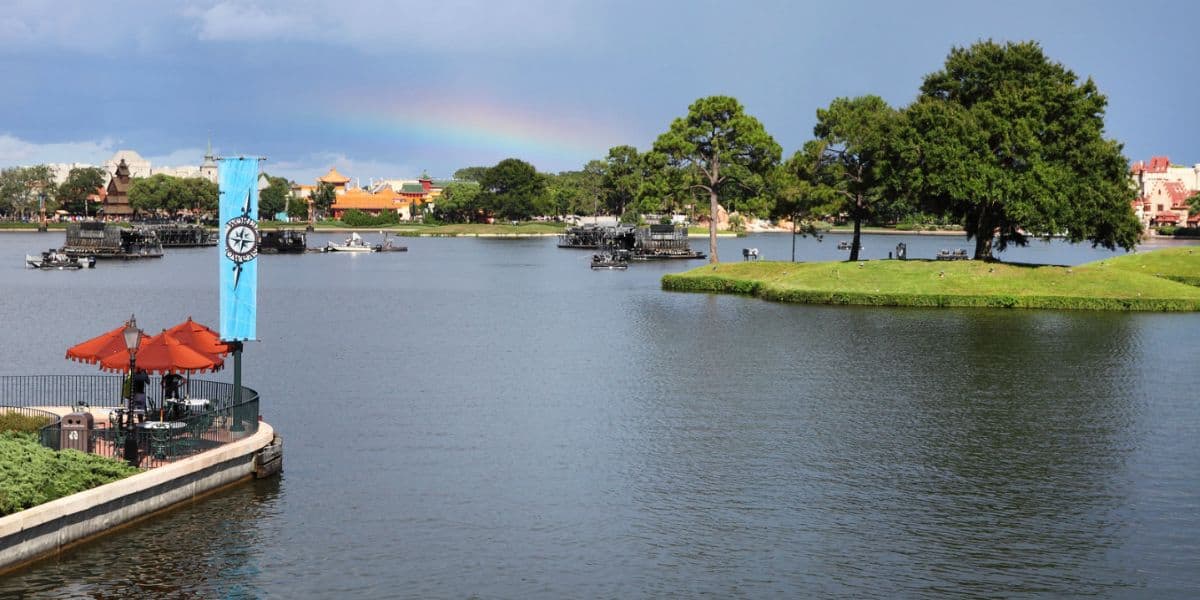
Walking around the 1.2-mile promenade of EPCOT’s World Showcase is a masterclass in architectural consistency. Ever since the Norway Pavilion made its grand debut back in May 1988, the permanent lineup of 11 international pavilions has remained entirely frozen in time. Despite massive, multi-million-dollar transformations sweeping across World Celebration, World Nature, and World Discovery, the global promenade has stood as an untouchable historical time capsule.
But what if you were told that Disney actually broke ground on a 12th country—and that a piece of it has been sitting right in front of millions of guests every single year, hidden completely in plain sight?
To discover how Disney hid an entire nation, you have to look past the standard festival food booths and character meet-and-greets, tracing a bizarre path back to the park’s opening day in 1982. As theme park historians and archive sleuths frequently whisper, a fabled piece of unbuilt Disney history is fully active right now, serving as a functional testament to an international expansion that never was.
The Legend of the “Lost Danish Potties”
The architectural mystery centers on a phenomenon affectionately known by insiders as the “Lost Danish Potties” of World Showcase. When EPCOT Center opened on October 1, 1982, a curious layout anomaly existed on the wide plot of undeveloped forest located between the Mexico and China pavilions. Sitting entirely alone against the tree line was a free-standing, highly detailed guest restroom facility.
These weren’t just standard, utilitarian theme park restrooms. They were meticulously crafted with intricate, rustic Nordic design flourishes and heavy timber elements. At the time, everyday guests simply assumed it was a standalone comfort station designed to break up the long trek around the lagoon. In reality, it was the opening phase of a massive expansion plan: the unbuilt Denmark Pavilion.
During the late 1970s and early 1980s, Walt Disney Productions was aggressively negotiating with international governments and major global corporations to secure the massive sponsorships required to fund World Showcase. Denmark’s concept was so far along in the creative and legal pipeline that Imagineers went ahead and installed the massive subterranean plumbing network, electrical mains, and structural foundations for the pavilion’s back end before the park’s opening day.

Original Imagineering blueprints and scale models from the era reveal that the Denmark Pavilion was intended to be an absolute showstopper. It was designed to feature:
- A Miniaturized Tivoli Gardens: A lush, kinetic recreation of the historic Copenhagen pleasure gardens that famously served as a direct inspiration for Walt Disney when he was conceiving Disneyland in the 1950s.
- Exclusive Flat Rides: Elaborate carousels and a Ferris wheel that would have stood as the only traditional amusement-style rides in the entire park, adding desperate kinetic energy to the promenade.
- The LEGO Boat Ride: Long before LEGOLAND theme parks existed as global corporate entities, Disney was in deep talks with the iconic Danish toy company, LEGO, to anchor the pavilion with an innovative, family-friendly boat attraction.
The 1988 Annexation: How Denmark Became Norway
Unfortunately, the grand corporate and diplomatic partnerships fell apart at the eleventh hour. When negotiations with the Danish government and LEGO hit a financial impasse, Disney pivoted, attempting to patch together a multi-national “Scandinavia” pavilion that would combine the cultures, folklore, and architecture of Denmark, Sweden, and Norway to split the operating costs.

Eventually, Sweden and Denmark dropped out of the conversation entirely. Norway, however, stepped up to underwrite the venture fully, culminating in the grand opening of the Norway Pavilion in 1988.
When Imagineers constructed the Norwegian village—including the Maelstrom dark ride (now Frozen Ever After) and the Akershus Royal Banquet Hall—they didn’t demolish the lonely standalone bathrooms that had been sitting there since 1982. Instead, they cleverly built the new Norwegian facades right around them, effectively annexing the Danish plumbing into Norway’s modern borders.
To this day, when you walk to the very back of the Norway Pavilion to use the restrooms near Anna and Elsa’s Royal Sommerhus, you are stepping onto infrastructure physically engineered for Denmark over 44 years ago.
The Fan Ultimatum: Colombia, Greece, Australia, and Brazil
While the history of the unbuilt Denmark pavilion remains a legendary piece of park trivia, modern Disney guests are growing increasingly restless. It has been nearly four decades since a completely new country was added to the World Showcase promenade. With multiple blank expansion pads sitting empty and underutilized around the lagoon, the fan community has issued a collective ultimatum, loudly demanding a true 12th nation.
When analyzing Disney fan forums, viral concept art, and guest satisfaction surveys, four specific countries consistently dominate the international conversation as the ultimate choices for a modern EPCOT expansion:
1. Colombia
Fueled by the massive, multi-generational cultural phenomenon of Disney Animation’s Encanto, Colombia is a massive favorite among modern park fans. Enthusiasts envision a breathtaking, colorful village defined by lush vegetation and a fully realized, kinetic La Casita. A Colombia pavilion could house a cutting-edge, trackless dark ride through the magical rooms of the Madrigal family, an authentic coffee hacienda serving world-class Colombian brews, and a vibrant street festival showcasing traditional cumbia music.

2. Greece
For EPCOT traditionalists who miss the educational, culturally rich spirit of the park’s early years, Greece remains the ultimate dream project. A Greek pavilion would offer striking, sun-bleached Cycladic architecture right on the lagoon’s waterfront. Fans pitch an elegant Mediterranean taverna serving authentic gyros, souvlaki, and local olive oils, alongside a high-tech attraction or a theater presentation exploring the deep roots of ancient Greek mythology, philosophy, and history—perhaps with a tasteful nod to Disney’s Hercules.
3. Australia
Representing an entire continent that currently has zero permanent real estate within the park, an Australian pavilion would provide an incredible thematic and geographical shift for World Showcase. Concept pitches include a sweeping Outback wilderness exploration trail, a high-energy dining experience showcasing indigenous flavors and Australian wines, and a Great Barrier Reef interactive walk-through component utilizing modern projection effects.

4. Brazil
Long considered the “holy grail” of rumored EPCOT additions due to the massive volume of South American tour groups that visit the resort annually, a Brazil pavilion has been teased by insiders for decades. A Brazilian showcase would bring an immediate surge of energy to the lagoon, featuring a festive Rio de Janeiro Carnaval street show, a traditional all-you-care-to-enjoy churrascaria steakhouse, and an immersive indoor dark ride taking guests on a conservation-focused trek through the Amazon Rainforest.

A World Waiting to Expand
As the years march on and the empty expansion plots around the World Showcase lagoon continue to host temporary festival booths, the park’s unbuilt history serves as a poignant reminder of what could have been. From the fabled “Lost Danish Potties” hiding in plain sight behind Norway’s stone walls to the vibrant cultural concepts of Colombia and Brazil drawn up by fans, the appetite for global storytelling is larger than ever. Whether Disney ever breaks ground on a true 12th nation remains to be seen, but the canvas is laid out, wired, and waiting for a great, big, beautiful tomorrow.