When Rick Riordan’s demigods stormed Disney+ in Percy Jackson and the Olympians, they did far more than resurrect a beloved literary franchise; they proved that ancient Greek mythology remains one of the most bankable storytelling wells in modern entertainment. The streaming series shattered viewership milestones, captivating young adult viewers, nostalgic millennials, and families who had long craved an authentic yet fresh look at ancient deities, monstrous curses, and mythic quests.

Now, The Walt Disney Company is ready to turn that episodic streaming success into full-blown theatrical spectacle.
Disney has officially placed an original live-action Medusa feature film into active development. First reported by Deadline, the studio is enlisting top-tier studio talent to steer the project: screenwriter Michael Montemayor—who co-wrote Disney’s upcoming live-action Tangled adaptation alongside Jennifer Kaytin Robinson and is scripting the Cinderella spinoff Stepsisters—is penning the initial draft. Steering the ship as producers are Dwayne “The Rock” Johnson and his Seven Bucks Productions partners Dany Garcia and Hiram Garcia, alongside Matt Smith through Electro Corduroy Entertainment, with Melissa Ford overseeing for the studio.
By centering a tentpole feature on history’s most infamous snake-haired Gorgon, Disney is signaling a bold creative expansion: moving beyond conventional fairy-tale princess retellings to build a sprawling, live-action mythological universe.
The Percy Jackson Effect: Hollywood’s Greek Mythology Renaissance
For nearly two decades, Hollywood struggled to strike the right tone with Greek mythology. Productions often swung wildly between the campy excess of 1980s fantasy and the brooding, heavily digitized, desaturated battle epics of the 2010s, such as Clash of the Titans and Immortals.

Percy Jackson and the Olympians’ breakthrough fundamentally changed the equation. The series showed that audiences do not just want bombastic sword-and-sandal battles; they are captivated by the intricate, deeply flawed family dynamics of the Olympian pantheon, the tragic weight of hubris, and the everyday mortals caught in the crossfire of divine rivalries.
Disney witnessed firsthand how mythological lore drives massive social engagement, merchandise interest, and cross-generational viewership. Rather than treating classical myths as mere background set-dressing for teenage heroes, the studio realized that ancient legends possess the narrative weight to support standalone, character-driven blockbuster epics.

Developing Medusa represents the natural evolution of that strategy. It takes an instantly recognizable figure from classical lore and places her front and center on the theatrical canvas.
Reframing the Monster: A Tragic Origin Begging for Subversion
Historically, mainstream pop culture has flattened Medusa into a one-dimensional video game boss or a monster of the week—a terrifying creature with venomous serpents writhing from her scalp, whose stony gaze freezes unsuspecting warriors in their tracks. From Ray Harryhausen’s legendary stop-motion animation in the 1981 Clash of the Titans to Uma Thurman’s sunglasses-wearing cameo in 2010’s The Lightning Thief, Medusa has almost always been viewed through the eyes of the male hero, Perseus, sent to sever her head.
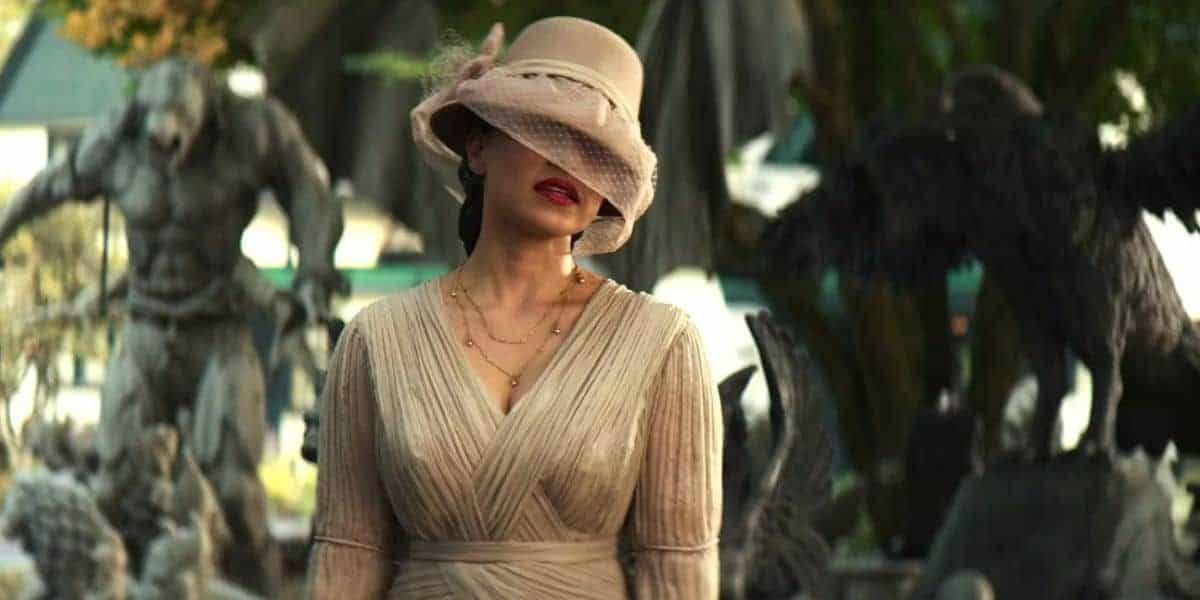
Classical mythology, however, paints a far more nuanced, heartbreaking, and provocative picture.
In ancient literature—most notably immortalized in Ovid’s Metamorphoses—Medusa was not born a monster. She was one of three Gorgon sisters, born to the primordial sea deities Phorcys and Ceto, but she was the only mortal among them. Celebrated for her breathtaking beauty and exquisite hair, she served as a devoted priestess in the sacred temple of Athena.
Her life shattered when Poseidon, god of the seas, violently assaulted her within Athena’s holy sanctuary. Instead of punishing the divine Olympian perpetrator, the goddess directed her divine wrath at the mortal victim. Athena cursed Medusa, transforming her golden locks into a nest of hissing vipers and making her gaze so horrific that any living creature looking into her eyes was instantly turned to stone. Banished to the isolated edges of the earth, Medusa lived as a despised outcast until Perseus was dispatched to slay her and use her severed head as a tactical weapon.
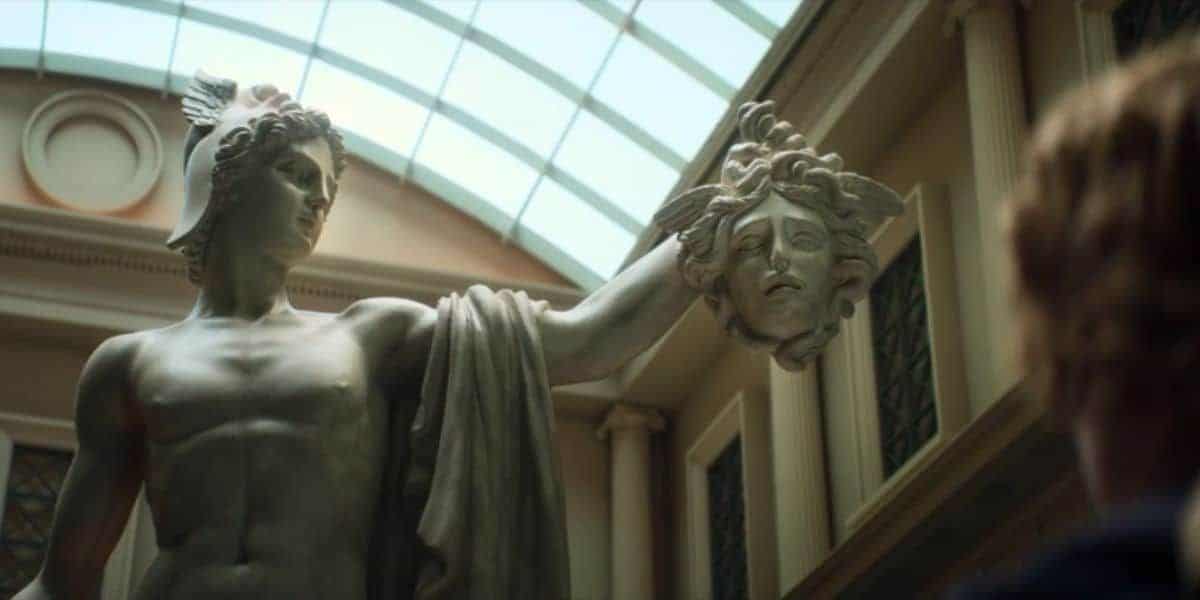
In recent years, feminist literary scholars, cultural critics, and modern retellings have reclaimed Medusa as an enduring symbol of survival, divine injustice, feminine rage, and tragic defiance.
By bringing Michael Montemayor on board, Disney has tapped a writer seasoned in balancing emotional character arcs with large-scale fantasy world-building. Rather than delivering a routine monster-slaying adventure, early reports indicate Montemayor’s script will offer a fresh, distinct perspective on the myth. The narrative presents an opportunity to take the Maleficent or Wicked approach—deconstructing decades of cinematic caricature to explore how divine betrayal transformed a devoted mortal into a misunderstood legend.
The Seven Bucks Engine: Dwayne Johnson’s Golden Touch at Disney
Pairing Montemayor’s character-driven script with Dwayne Johnson’s Seven Bucks Productions elevates Medusa from a niche mythological drama into a massive global tentpole.

Over the past decade, Disney and Seven Bucks have forged one of the most lucrative production relationships in the industry:
- Jungle Cruise (2021): Johnson starred in and produced the live-action adventure based on the classic Disney Parks attraction, turning a pandemic-era release into a box-office winner that spurred sequel development.
- The Moana Universe: Seven Bucks has been instrumental in shepherding the beloved Polynesian franchise, encompassing Johnson’s vocal return as the demigod Maui and the upcoming high-profile live-action Moana theatrical reimagining.
- Proven Blockbuster Scale: Between the multi-billion-dollar revitalization of the Jumanji franchise and globe-trotting action spectacles, Seven Bucks has consistently demonstrated an ability to blend intense visual effects with broad, universal family appeal.

While Johnson, Dany Garcia, and Hiram Garcia are currently attached solely in a producing capacity, speculation is already running rampant across Hollywood about whether Johnson will take an on-screen role. While it is unlikely the megastar would play the legendary slayer Perseus, an imposing appearance as an Olympian heavyweight—such as the thunderous Zeus or the ruthless Poseidon—would instantly ignite international box-office tracking.
The Visual Frontier: Breathing Life into the Gorgon
From a technical perspective, bringing Medusa into modern live-action provides one of the most tantalizing visual challenges in modern cinema.

Creating an authentic, believable Gorgon requires far more than placing rubber snakes on an actor’s head or rendering static digital effects. Modern creature pipelines and simulation engines offer Disney and Seven Bucks the opportunity to deliver a groundbreaking visual triumph:
- Expressive Serpents: Advanced fluid dynamics and muscle-simulation technology can turn Medusa’s serpent crown into an extension of her emotional state—hissing and flaring when threatened, coiling tightly during moments of sorrow, and softening in moments of intimacy.
- The Petrification Effect: Moving beyond generic gray skin overlays, modern visual effects can showcase petrification as a terrifying, organic crystallization process, honoring the physical horror and tragic weight of her curse.
- Blending Practical and Digital: By fusing sophisticated prosthetic artistry with high-end CGI, Disney can ground the character in raw, physical performance while maintaining a hyper-real mythological aesthetic.
Charting a New Mythological Cinematic Horizon
The development of Medusa comes at a pivotal turning point for major Hollywood studios. As superhero fatigue prompts audiences to seek fresh cinematic experiences, studios are searching for epic narratives with established global name recognition that are unencumbered by decades of convoluted comic-book continuity.
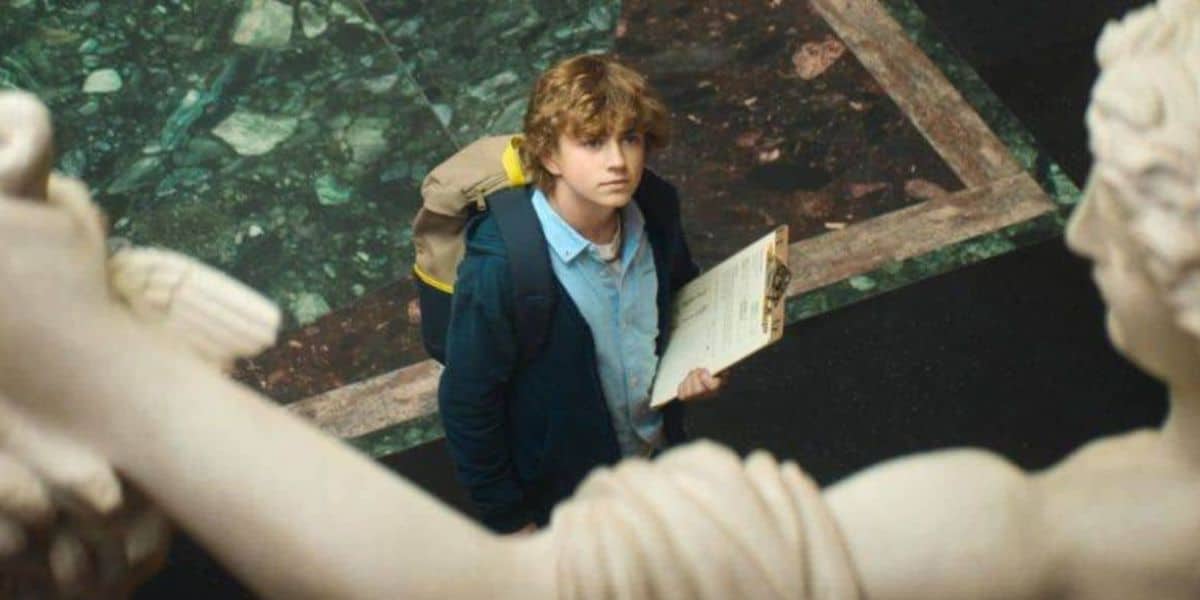
Classical mythology is the ultimate public-domain treasure trove. It offers universal themes of fate, tragedy, heroism, and hubris that have resonated across cultures for thousands of years.
If Medusa hits its mark, it could lay the foundation for a broader slate of live-action Greek mythological features at Disney. Standalone epics exploring the underworld drama of Hades and Persephone, the soaring tragedy of Icarus, the fierce independence of Atalanta, or the brutal hubris of the Trojan War could easily follow.
With Percy Jackson holding down the streaming front and Medusa gearing up for theatrical battle, Disney is charting a direct course back to Mount Olympus. By uniting the sharp storytelling instincts of Tangled’s writer with the theatrical blockbuster muscle of Seven Bucks Productions, the studio is setting the stage to turn a five-thousand-year-old tragedy into one of the most anticipated cinematic spectacles of the decade.