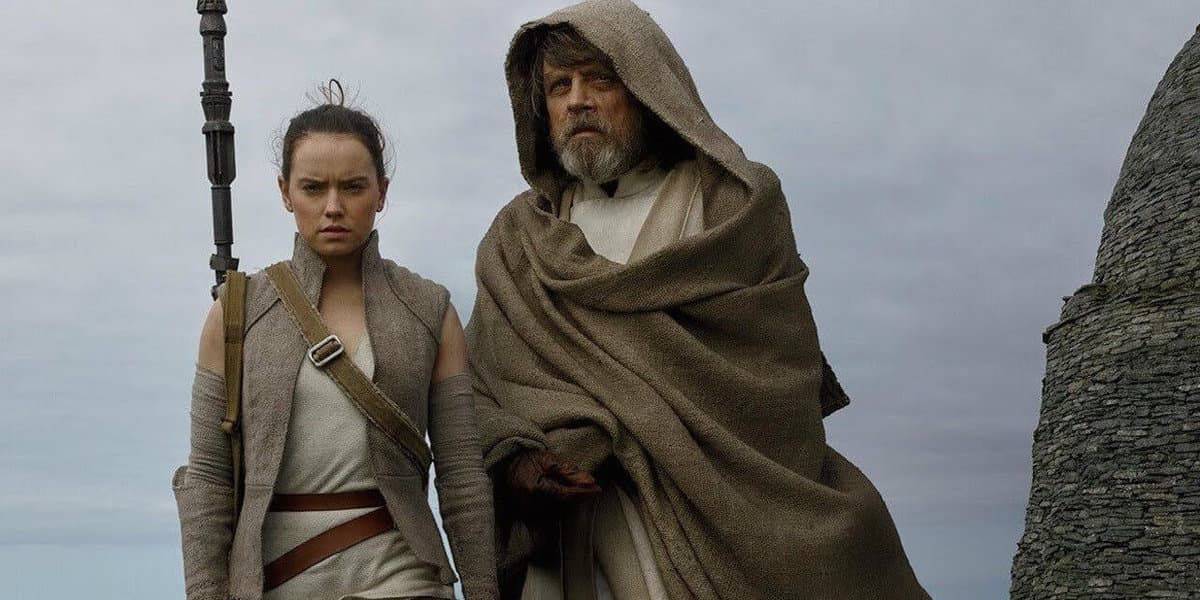
‘Star Wars’ Cannot Stop Rewriting the Disney Sequel Trilogy, New Rey Skywalker Ending Confirmed

Nearly seven years after its theatrical debut, Star Wars: Episode IX – The Rise of Skywalker (2019) is still inspiring debate across the fandom. While some viewers embraced its ambitious attempt to conclude the decades-spanning Skywalker Saga, others viewed the film as an uneven finale weighed down by rapid pacing, controversial story decisions, and an ending that left audiences sharply divided.

Now, new official material from Lucasfilm is revisiting one of the movie’s most discussed moments and offering a fresh interpretation of Rey’s final choice.
Directed by J.J. Abrams, the 2019 blockbuster reunited Rey, Finn, and Poe Dameron for a last confrontation against the resurrected Emperor Palpatine. The story followed Rey, played by Daisy Ridley, as she confronted the revelation that she was the granddaughter of Palpatine himself, a twist that dramatically reshaped the character’s place in the mythology.
Alongside her, John Boyega and Oscar Isaac returned as Resistance heroes Finn and Poe Dameron, while Adam Driver reprised his role as Kylo Ren, whose redemption arc became central to the film’s climax.
But while the film delivered large-scale spectacle and emotional callbacks to earlier eras of Star Wars, audiences were divided over several creative choices. Palpatine’s sudden return after the events of Star Wars: Episode VI – Return of the Jedi (1983) raised questions almost immediately, while fans also criticized the limited role of the Knights of Ren and the rushed introduction of Exegol, the hidden Sith world that became the setting for the saga’s final battle.

Many viewers also argued that the film spent considerable time responding to criticism surrounding Star Wars: Episode VIII – The Last Jedi (2017) rather than building naturally from it. That tension became especially apparent in Rey’s concluding scene on Tatooine.
At the end of the film, Rey buried the lightsabers of Luke and Leia Skywalker at the Lars homestead before identifying herself to a passing local simply as “Rey Skywalker.” The moment was intended to symbolize Rey choosing her own family and rejecting the legacy of Palpatine. Instead, it sparked one of the most heated conversations in modern Star Wars fandom.
Critics of the sequence argued that the ending undercut one of the strongest themes introduced in The Last Jedi: the idea that greatness in the Force did not require legendary lineage. In that earlier film, Kylo Ren’s assertion that Rey’s parents were “nobodies” resonated with many fans because it suggested heroism could emerge from anywhere in the galaxy.
By revealing Rey as a Palpatine and ending the trilogy with her adopting the Skywalker surname, some audiences felt the sequel trilogy had stepped away from that message.
Now, a newly updated edition of “The Secrets of the Jedi: The Chronicles of Luke Skywalker” from Insight Editions is adding additional context to Rey’s decision. The book includes a passage written from Rey’s perspective that reframes the moment less as a claim to the Skywalker legacy and more as an act of tribute to Luke Skywalker himself.

“I had to continue the fight and finish what he started. I had to stop Palpatine from rising again and regaining power. To redeem Ben Solo once and for all. And to proudly wear my Master’s name while doing so, in honor of his life and his sacrifice. Luke Skywalker may be gone from this plane, just like all the Jedi who came before him… but he will live forever.”
The updated material also revisits the film’s climactic “All the Jedi” sequence with another key reflection from Rey: “Because, in the end, I am all the Jedi. And maybe we all are.”
That line shifts the interpretation of the ending considerably. Rather than presenting the Skywalker name as a dynastic inheritance, the passage frames it as a philosophy tied to compassion, sacrifice, and hope. Under that interpretation, Rey’s choice becomes less about replacing her own identity and more about preserving Luke’s ideals after the fall of the Empire and the Sith.
The reassessment is part of a much larger effort by Lucasfilm to revisit elements of The Rise of Skywalker through supplemental storytelling. Since the movie’s release, books, comics, and animated series have expanded on several ideas that received limited development onscreen.

“The Secrets of the Sith” provided additional information regarding Supreme Leader Snoke’s origins, while Star Wars: The Bad Batch explored Emperor Palpatine’s growing obsession with cloning and Force-sensitive experimentation.
One of the most notable additions arrived earlier this year through Marvel Comics. Writer Jody Houser and artist Will Sliney released a five-issue adaptation of the film that included entirely new scenes absent from the theatrical cut.
The final issue delivered something many fans had wanted to see since 2019: a visual version of Rey’s “All the Jedi” moment. While the film only allowed audiences to hear the voices of Jedi from across Star Wars history, the comic depicted Force ghosts, including Qui-Gon Jinn, Obi-Wan Kenobi, Ahsoka Tano, and Luke Skywalker, standing with Rey during her confrontation against Palpatine on Exegol.
The additional imagery gave the sequence a more emotional presentation and further reinforced the idea that Rey was carrying the legacy of the Jedi collectively rather than claiming ownership of a single family name.

All of this arrives during a transitional period for Star Wars on the big screen. Lucasfilm has not released a theatrical Star Wars feature since The Rise of Skywalker in 2019, though that drought ends this year with The Mandalorian and Grogu (2026) from director Jon Favreau.
That project will be followed by Star Wars: Starfighter in 2027, directed by Shawn Levy. Other announced projects remain in various stages of development, including Dawn of the Jedi, New Jedi Order starring Daisy Ridley, and a New Republic crossover film.
Meanwhile, former Lucasfilm president Kathleen Kennedy confirmed in 2024 that producer Simon Kinberg is overseeing an entirely new Star Wars trilogy, though details about its relationship to Rey’s future remain under wraps.
What appears increasingly clear, however, is that Lucasfilm has no intention of leaving the sequel trilogy untouched. Through comics, novels, and companion books, the studio continues to revisit and reinterpret moments that once divided audiences — and Rey Skywalker remains at the center of that ongoing conversation.
How do you feel about this change to the Disney Star Wars sequel trilogy? Let us know in the comments down below!