For years, theme park fans have watched the rivalry between Disney and Universal evolve from friendly competition into something much bigger. What was once a race to build the next great roller coaster has transformed into a battle over entire vacation destinations, immersive storytelling, blockbuster intellectual property, and the future of themed entertainment itself.
That rivalry has accelerated dramatically over the last few years. Universal has expanded at a breathtaking pace, opening entirely new experiences, investing billions in attractions, hotels, and entertainment districts, and positioning itself as a destination capable of convincing families to spend an entire vacation on Universal property instead of treating it as a one-day stop.
Now, another shift is unfolding—one that most guests may never notice when they scan into the parks or board their favorite attraction. Yet behind the scenes, a corporate decision announced this week could ultimately become one of the most important developments for Universal’s long-term future.

Comcast Is Splitting in Two, but Universal Isn’t Being Left Behind
Comcast announced Monday that it intends to separate into two publicly traded companies over the next year, pending regulatory approval.
One business will focus on broadband and wireless services, while a newly independent entertainment company will house NBCUniversal, including Universal Pictures, Peacock, Sky, television studios, and perhaps most importantly for theme park fans, Universal Destinations & Experiences.
Executives stressed that guests shouldn’t expect immediate operational changes. Existing projects remain on track, and the parks will continue operating under the same leadership teams. Tickets, Annual Passes, hotels, and upcoming openings aren’t expected to be affected.
But what makes this announcement fascinating isn’t what changes tomorrow.
It’s what could change over the next decade.

Universal Parks Suddenly Become One of the Company’s Biggest Growth Engines
For longtime Universal fans, this is where the story becomes much more interesting.
Previously, Universal’s parks existed as one division inside a telecommunications giant whose business stretched across cable, internet, wireless service, television, streaming, and entertainment.
After the split, NBCUniversal becomes an entertainment-focused company whose strongest growth businesses include its theme parks.
That distinction matters.
Unlike traditional cable television—which continues facing subscriber losses—Universal’s parks have consistently generated billions in revenue while aggressively expanding around the world. Investor materials released alongside the announcement even highlighted the parks among NBCUniversal’s flagship assets, underscoring how central they are becoming to the company’s future.
What started as a corporate restructuring suddenly looks much more like a declaration of confidence in Universal’s theme park business.
Fans are already wondering what that could mean for the next wave of attractions, hotels, and entirely new destinations.
The Expansion Isn’t Slowing Down—It Could Accelerate
Corporate shakeups often make fans nervous. History has taught theme park communities that mergers and restructurings sometimes lead to canceled projects or budget cuts.
This announcement doesn’t appear to point in that direction.
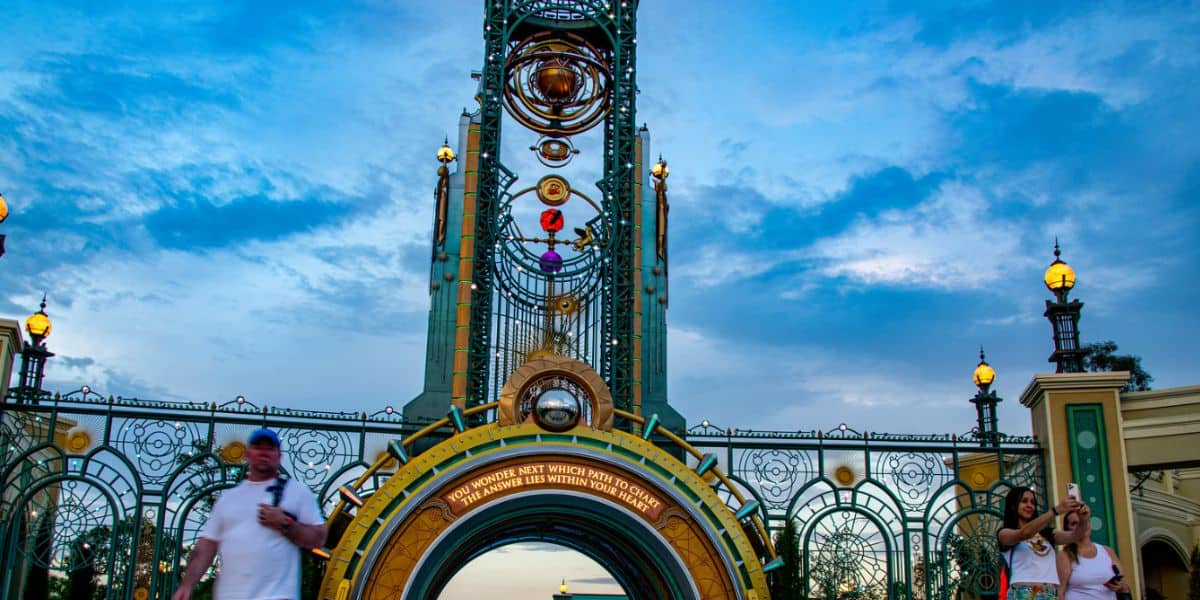
Universal already has an extraordinary expansion pipeline underway, including Epic Universe in Orlando, Universal Horror Unleashed, Universal Kids Resort, the planned Universal Great Britain resort, and continued international development.
Instead of signaling caution, this restructuring arguably strengthens the business case for continued investment.
Without Comcast’s broadband division dominating the broader corporate strategy, NBCUniversal has greater incentive to keep doubling down on one of its fastest-growing businesses.
That’s welcome news not only for Universal fans, but also for Disney guests.
Competition has rarely been stronger, and every major Universal investment places additional pressure on Disney to continue innovating.
For park visitors, that competitive cycle often leads to the biggest winners being the guests themselves.
Movies and Theme Parks Could Become Even More Connected
Another intriguing possibility is how closely Universal’s entertainment businesses could become aligned.
The new NBCUniversal will continue overseeing Universal Pictures, DreamWorks, Illumination, Peacock, and Universal’s parks under the same corporate umbrella.
That creates powerful opportunities to expand successful franchises across multiple platforms.
Recent successes like Super Nintendo World have demonstrated just how valuable that strategy can be, while properties including How to Train Your Dragon, Jurassic World, Wicked, Minions, and Universal Monsters continue offering new possibilities for immersive experiences.
Rather than treating films and theme parks as separate businesses, NBCUniversal has every incentive to turn blockbuster movies into attractions—and successful attractions back into entertainment franchises.
It’s a strategy that has fueled Universal’s recent momentum, and one that could become even more important after the separation.
The Biggest Changes May Be Years Away—but They Could Reshape the Industry
Wall Street analysts are already debating another long-term implication.
As an independent entertainment company, NBCUniversal could eventually become a more flexible player for acquisitions or broader strategic partnerships. Company executives have firmly rejected suggestions that this restructuring is designed to pave the way for a sale, and the transaction itself limits near-term dealmaking.
Still, industry observers believe the long-term landscape becomes far more open once NBCUniversal stands on its own.
Whether that eventually leads to acquisitions, partnerships, or simply more aggressive investment remains to be seen.
For today’s guests, nothing changes.
You’ll still walk through the same park gates. Epic Universe will continue welcoming visitors. Hotels, attractions, and Annual Passes remain exactly as planned.
But beneath the surface, a surprising shift is unfolding.
Instead of being one division inside a telecommunications empire, Universal’s parks are becoming one of the defining pillars of a standalone entertainment company. If that translates into even greater investment, faster expansion, and bolder attractions, Disney’s biggest rival may have just gained another reason to keep pushing the industry forward—and that could shape the next generation of theme park experiences for millions of guests on both sides of the rivalry.