Universal Orlando has spent billions of dollars creating bigger attractions, more immersive environments, and entirely new reasons for visitors to choose its Florida resort.
But while the company continues looking toward the future, something important is disappearing from one of its oldest theme parks.
At Islands of Adventure, an area that once represented Universal’s creativity is gradually losing the landmarks that made it special.
And with another permanent closure confirmed for 2027, longtime fans have a legitimate reason to wonder whether Universal is sacrificing too much of its history.
The bigger question is whether whatever comes next can possibly live up to what is being lost.
A 27-Year-Old Piece of Universal History Is Disappearing
When Islands of Adventure opened in 1999, The Lost Continent offered something different from the franchise-driven experiences that dominate modern theme parks.
Rather than depending entirely on recognizable movie characters, the land transported guests into an elaborate world inspired by mythology and ancient civilizations.
Its towering structures, unusual pathways, and detailed environments helped establish Islands of Adventure as a destination built around exploration.
One of its most memorable landmarks was Mythos Restaurant.
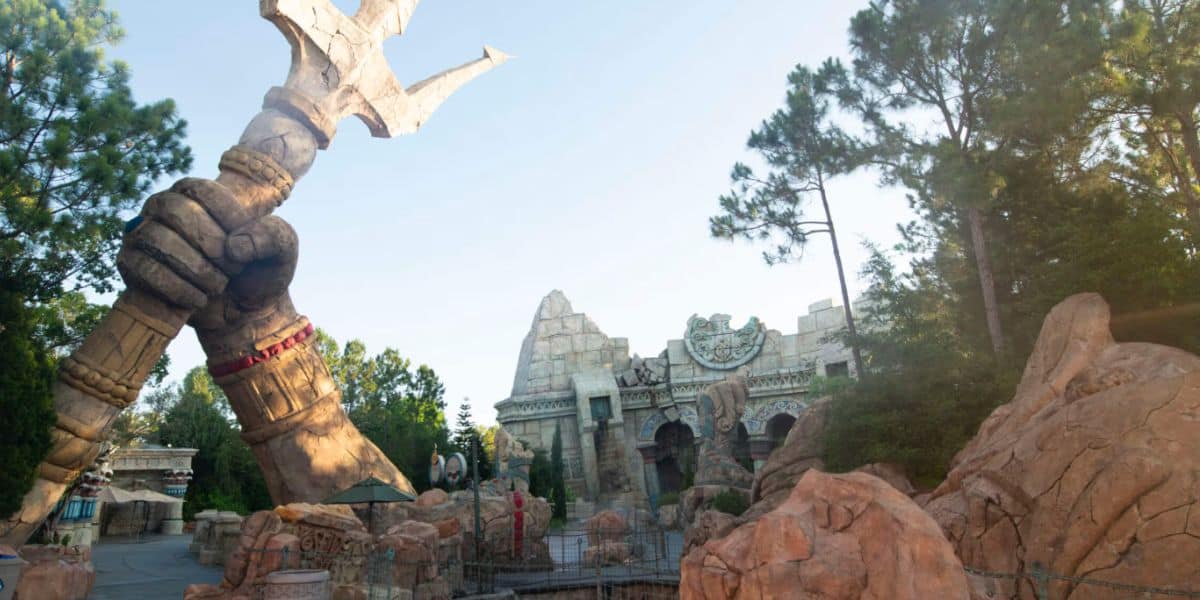
For 27 years, the restaurant’s massive rock formations and cavernous architecture have helped create one of the most distinctive settings anywhere at Universal Orlando.
Now, that history is approaching its end.
Universal has confirmed that Mythos will permanently close in 2027 as The Lost Continent prepares for a major transformation.
Recent reporting from WDW News Today has also documented apparent exterior demolition activity around the restaurant’s rockwork.
Mythos remains operational, and Universal has not announced its exact closing date. Nevertheless, the surrounding changes make the land’s uncertain future increasingly difficult to overlook.
Universal Is Losing More Than Another Restaurant
The biggest concern isn’t necessarily the loss of Mythos itself.
It’s what that closure represents.
The Lost Continent has already said goodbye to Poseidon’s Fury and The Eighth Voyage of Sindbad, two experiences that once helped bring the area to life.
Without those attractions, the land has become a shadow of its former self.
Now, the disappearance of another original landmark threatens to eliminate even more of what made the area recognizable.
And that’s where Universal should be careful.
Theme parks need more than impressive roller coasters and recognizable franchises. They need environments that make visitors want to explore, take photographs, enjoy a meal, or simply spend time soaking in the atmosphere.
Mythos has delivered that experience for decades.
Removing it without creating something equally imaginative could leave Islands of Adventure feeling less distinctive.
Epic Universe Has Raised the Stakes
The situation becomes even more complicated when considering Universal’s newest theme park.
Epic Universe opened in May 2025, introducing guests to elaborate themed environments and ambitious attractions.
Its arrival has also created a new challenge for Universal’s older parks.
Visitors now have three major Universal theme parks to compare, and Islands of Adventure cannot afford to feel outdated or neglected.
That makes The Lost Continent’s replacement particularly important.
Universal has confirmed that a new themed land is coming, but the company has not revealed what franchise or concept will take over.
Whatever Universal chooses, the replacement needs to offer more than one major attraction.
Families need reasons to explore. Guests need places to relax. Restaurants and entertainment should feel like natural extensions of the surrounding environment.
Most importantly, the land needs an identity that can stand alongside Universal’s newest creations.
Universal Has One Chance to Get This Right
There is nothing inherently wrong with replacing older attractions.
In fact, The Lost Continent has needed a meaningful investment since its major experiences began disappearing.
But Universal should recognize that the area’s original architecture and atmosphere helped make Islands of Adventure special.
A new franchise might generate enormous excitement when it opens, but that doesn’t automatically make it a better experience.
The real test will come years later, when the opening-day excitement fades.
Will guests still want to spend time exploring the area, or will they simply rush toward the biggest ride?
Universal has already demonstrated that it can create extraordinary themed lands.
Now, as 27 years of Islands of Adventure history approach their final chapter, the company must prove that its next big transformation is worth everything fans are being asked to leave behind.