The North American amusement park industry is navigating its most severe financial shakeup in decades. Following a string of regional park divestitures and the confirmed permanent shutdown of a beloved California landmark, Six Flags Entertainment Corporation finds itself pinned beneath nearly $5 billion in corporate debt.

As executive leadership urgently searches for ways to deleverage its balance sheet amid sluggish attendance, third-quarter net losses, and intense Wall Street pressure, the theme park giant is openly considering additional asset sales. Yet as Six Flags considers putting some of its largest, highest-profile properties on the auction block, a sobering market reality has brought negotiations to a standstill: finding willing, financially solvent buyers for premier regional theme parks is proving virtually impossible.
The Weight of a $5 Billion Debt Mountain
The roots of the current crisis trace directly to the July 2024 mega-merger between Six Flags and Cedar Fair, when the two regional amusement operators combined into North America’s largest regional park company. The newly minted corporation inherited a massive debt load—one that has become increasingly expensive to service in a high-interest-rate environment.
During the company’s third-quarter 2026 earnings call, Six Flags CEO John Reilly delivered a blunt assessment to investors: “We carry more debt than we want… bringing it down is a priority.” With quarterly revenue slipping 11%, net losses reaching $366.1 million, and annual net interest expenses consuming nearly half of the company’s earnings before interest, taxes, depreciation, and amortization (EBITDA), Reilly emphasized that “optimizing the portfolio” remains a top mandate.
Earlier in 2026, Six Flags moved aggressively to trim its smaller regional holdings, closing a deal with real estate investment trust EPR Properties to offload seven parks—including Worlds of Fun in Missouri, Valleyfair in Minnesota, Michigan’s Adventure, Schlitterbahn Galveston, Six Flags St. Louis, Six Flags Great Escape, and Canada’s La Ronde. That divestiture followed the permanent closure of Six Flags America in Bowie, Maryland, after the 2025 season, with leadership still targeting a late-2027 sale of the shuttered site.
Yet even after shedding seven operating parks and shuttering Maryland’s flagship property, the cash generated hasn’t been nearly enough to hit Reilly’s target of reducing net debt to roughly four times EBITDA—meaning the company still needs to trim well over $1.4 billion in debt. With smaller regional sales failing to move the needle fast enough, institutional analysts are increasingly looking toward the company’s crown jewels.
End of an Era: The Closing of California’s Great America
Adding to the sense of contraction across Six Flags’ coastal footprint, the company recently confirmed the permanent closure of one of Northern California’s most iconic entertainment landmarks: California’s Great America in Santa Clara.

In November 2026, park officials announced that the 2027 operating season—running from March through Labor Day—will officially serve as the 51-year-old park’s “Farewell Season.” (The announcement does not affect Six Flags Great America in Gurnee, Illinois, which shares its 1976 Marriott heritage and name with the Bay Area park.)
The shutdown stems from a real estate transaction executed before the Six Flags–Cedar Fair merger. In June 2022, former operator Cedar Fair sold the 112-acre Silicon Valley parcel underneath the park to Bay Area industrial logistics giant Prologis for $310 million, leasing the property back to keep operating the park. Although that lease agreement permitted operations through June 2028—and included an option to extend through mid-2033—Six Flags officially declined to renew, sealing the park’s permanent closure after Labor Day 2027.

Originally opened in 1976 as Marriott’s Great America, the Santa Clara destination entertained generations of Bay Area families for over half a century. While Six Flags has promised nostalgic tributes and special events throughout its 2027 Farewell Season, the ultimate fate of its roller coasters and flat rides—and whether they will be relocated to other parks in the chain or scrapped—remains undecided.
Why Selling Premiere Parks Is Easier Said Than Done
With smaller regional parks already sold off and California’s Great America winding down toward permanent closure, Wall Street observers have noted that selling one or more of Six Flags’ premier flagship parks—massive, high-attendance resorts in the tier of Cedar Point, Kings Island, or Six Flags Great Adventure—could theoretically generate the nine-figure windfall required to slash corporate debt in a single stroke.
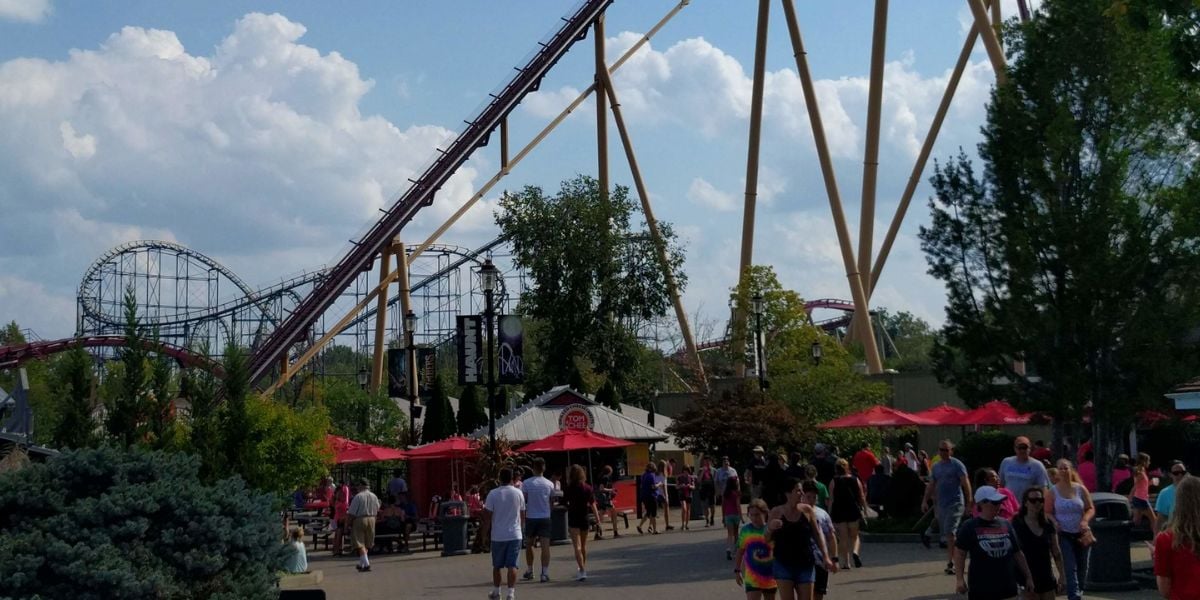
In practice, however, putting a premier amusement park up for sale runs straight into an economic brick wall: there are virtually no viable buyers.
The market for massive, high-overhead regional theme parks is extraordinarily narrow due to several structural barriers:
- Staggering Capital and Operating Overhead: A premier amusement park is not a passive real estate play; it is a highly complex operational machine that requires tens of millions of dollars annually for structural coaster maintenance, liability insurance, seasonal staffing, and safety compliance. Very few private equity firms or regional groups possess the liquidity—or the specialized operational infrastructure—to absorb a tier-one resort without destabilizing their own balance sheets.
- The Real Estate Zoning Trap: While commercial or residential developers might covet hundreds of acres of land near major metropolitan corridors, strict local zoning ordinances, municipal tax agreements, and fierce community pushback frequently prevent amusement park land from being easily rezoned for warehouses or housing subdivisions.
- No Strategic Consolidators Left: Because Cedar Fair and Six Flags already merged, the pool of large-scale domestic industry buyers has largely evaporated. Destination giants like Disney and Universal have zero appetite for seasonal regional coaster parks. At the same time, smaller operators like Herschend Family Entertainment or entertainment REITs such as EPR Properties focus on lower-overhead regional assets rather than massive flagship properties.
- The Earnings Paradox: Financial analysts also point out a painful mathematical catch: premier parks generate the lion’s share of Six Flags’ cash flow. Selling a flagship property removes its earnings from the balance sheet right alongside the sale proceeds, making it difficult to meaningfully improve the company’s debt-to-EBITDA ratio unless a buyer pays an unusually steep premium.
A Precarious Road Ahead for Regional Parks
Being unable to find buyers for premier parks while carrying nearly $5 billion in debt puts Six Flags leadership in a tight financial vise.

If the company cannot substantially reduce its leverage through additional asset sales, it must rely on tightening internal operations and growing organic cash flow. This path often translates into scaled-back operating calendars, deferred capital investments in major new roller coasters, higher in-park food and parking prices, and leaner staffing models. For theme park fans across North America, the corporate debt crunch serves as a stark reminder that even the industry’s biggest powerhouse is facing a steep uphill climb.