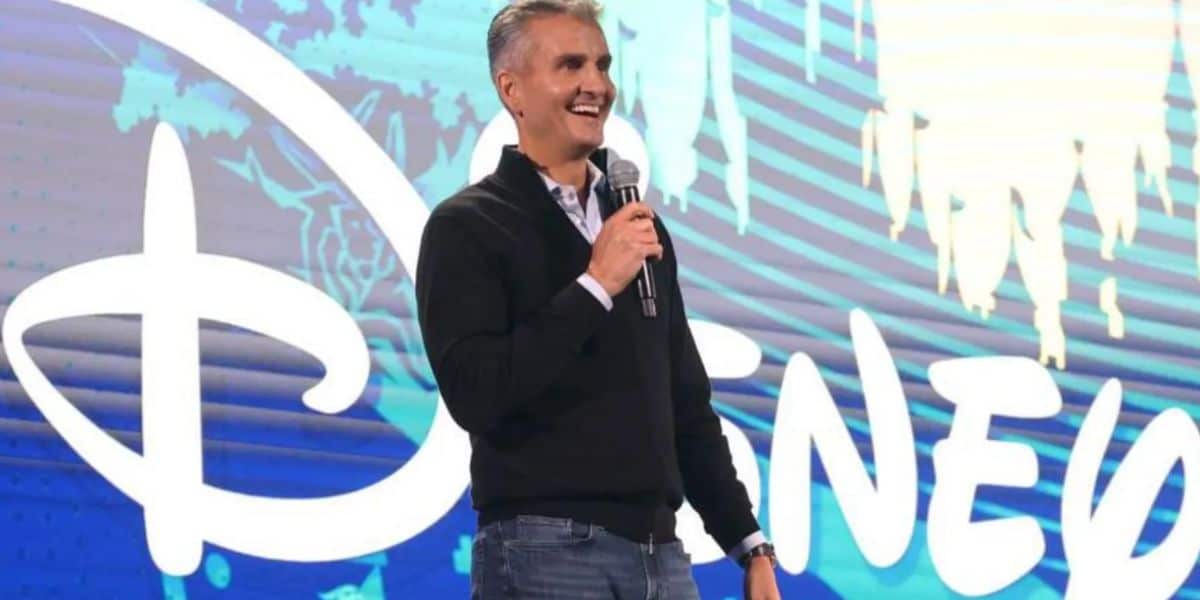
When the board of directors selected Josh D’Amaro to succeed Bob Iger as the Chief Executive Officer of The Walt Disney Company, the move was widely viewed as a return to cultural orthodoxy. D’Amaro, famous for his immaculate, untarnished brand image and deep-rooted history running Disney’s sprawling theme parks division, seemed like the ultimate peace-time executive. Wall Street anticipated a leadership style centered around shareholder reassurance, incremental asset optimization, and a heavy dose of corporate nostalgia.
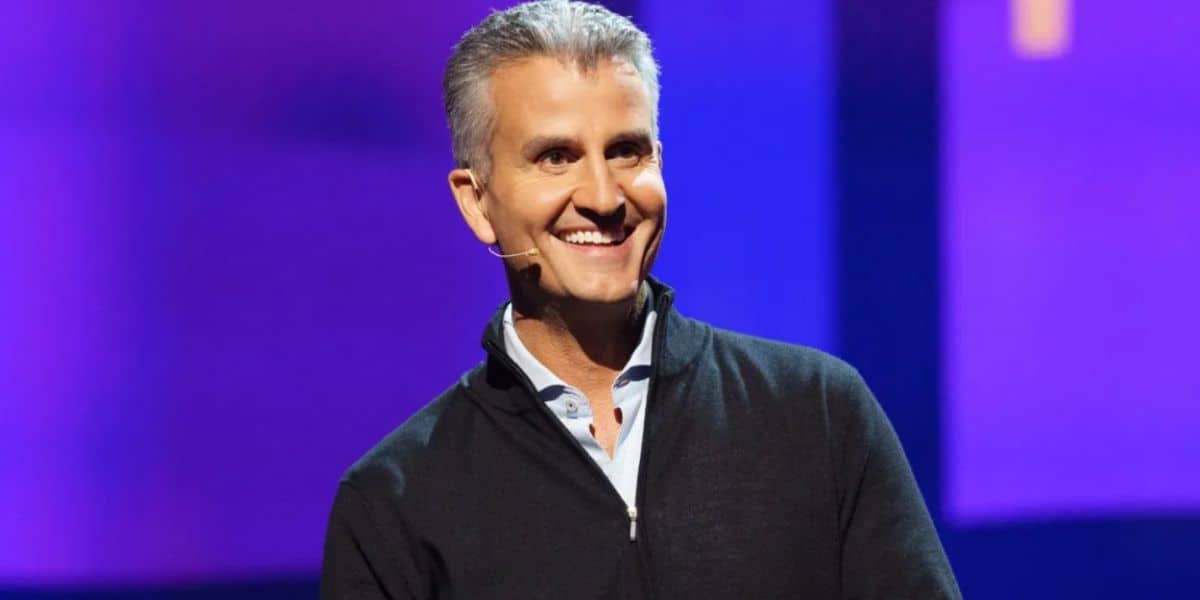
Instead, D’Amaro’s first 100 days in office have fundamentally shattered those expectations. While his internal operational adjustments have been intentionally minimal, his external positioning has dropped the entertainment giant directly into an aggressive, high-stakes constitutional proxy war. Rather than ducking for cover, the executive known for walking Main Street U.S.A. with a flawless smile has chosen to launch a fierce, uncompromising defense against a regulatory push by the Trump administration to strip ABC News of its local broadcasting licenses.
The Quiet Kingdom: Why the Status Quo Reigns Internally
From an administrative standpoint, D’Amaro’s opening act has been a masterclass in calculated inertia. In the corporate theater, a new CEO is expected to clear the executive suite instantly, announce sweeping structural reorganizations, and pivot strategy to capture headlines. D’Amaro has done none of this. He stepped into a corporate architecture that Bob Iger’s second tenure had heavily restructured, and he wisely recognized that another wave of institutional realignment would inflict severe whiplash on an already fatigued workforce.

As a result, D’Amaro has prioritized operational execution over disruptive change. He left Iger’s executive reporting lines untouched, allowing Disney Entertainment co-chairs Alan Bergman and Dana Walden to maintain complete creative sovereignty over the studio and streaming pipelines. On the balance sheets, D’Amaro’s primary internal objective has been a quiet continuation of late-stage corporate strategy: driving consistent profitability in the direct-to-consumer streaming segment, stabilizing subscriber retention on Disney+ and Hulu, and meticulously managing linear television assets.
In the Parks division—the very kingdom D’Amaro spent years ruling—the strategy has similarly focused on delivering on pre-existing promises. The massive $60 billion capital expenditure plan remains the North Star, with construction teams pushing ahead on massive expansions like the dark, cinematic Villains Land at Magic Kingdom. By maintaining an internal status quo, D’Amaro projected a vital sense of institutional stability that successfully calmed Wall Street’s initial anxieties about a theme-parks executive running a complex, multi-faceted global media conglomerate.
The FCC Weaponization: ABC News in the Political Crosshairs
While the peace held inside the walls of Team Disney Burbank, a major crisis was mounting in Washington. Following a highly polarized political cycle, the Trump administration rapidly shifted its anti-media rhetoric into concrete regulatory hostility. The administration focused on Disney-owned ABC News, leveraging a highly politicized Federal Communications Commission (FCC) to mount an aggressive challenge to the over-the-air broadcasting licenses held by the network’s owned-and-operated local television stations.
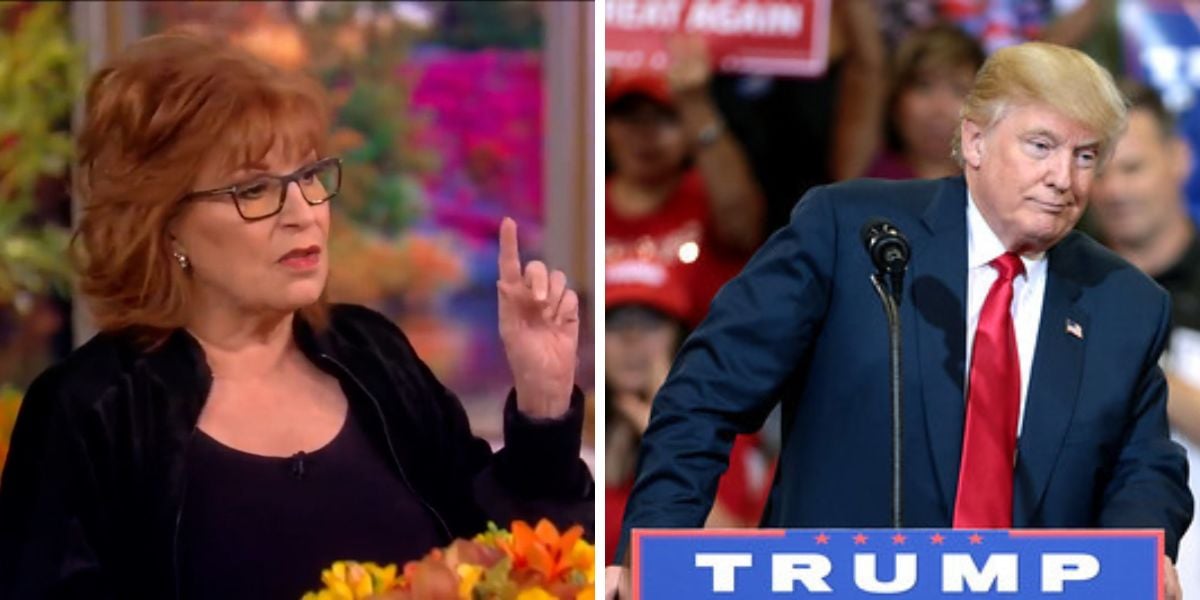
These licenses are not merely bureaucratic technicalities; they represent the foundational economic framework of linear broadcast television. ABC owns major local stations in core metropolitan markets, including New York, Los Angeles, Chicago, and Philadelphia. If the FCC successfully delays, challenges, or revokes these local broadcast credentials, it wouldn’t just result in a standard regulatory fine—it would structurally dismantle the reach, advertising power, and financial baseline of the entire ABC network.
Historically, media executives caught in the crosshairs of a hostile presidential administration tend to seek the path of least resistance. The corporate textbook dictates behind-the-scenes diplomacy, muted neutrality, or subtle editorial concessions designed to pacify regulatory bodies and protect the immediate stock price. Many political analysts assumed that D’Amaro, given his non-partisan background in guest hospitality, would follow this predictable script and seek a quiet compromise with the White House.
Drawing the Line: D’Amaro’s First Amendment War
They miscalculated. In his first true trial as chief executive, D’Amaro discarded the passive corporate playbook and stood his ground. Recognizing that an attack on ABC’s broadcasting licenses was an existential threat to the independence of Disney’s media portfolio, he launched a comprehensive legal and public counter-offensive.
Behind closed doors, D’Amaro immediately mobilized Disney’s formidable legal apparatus, authorizing a team of elite First Amendment attorneys and veteran administrative lawyers to prepare an ironclad defensive wall against any formal FCC interference. Publicly, he altered his corporate tone from a polite executive to an uncompromising defender of constitutional norms. In strategic media briefings and direct messages to Disney’s global workforce, D’Amaro framed the regulatory battle as a fundamental defense of the free press and editorial independence, explicitly stating that Disney would not allow its journalism to be weaponized or leveraged for political capital.
This aggressive stance has fundamentally altered the industry’s perception of D’Amaro’s leadership capabilities. By refusing to blink under intense federal pressure, he proved that behind his polished, consumer-friendly public persona lies a highly strategic, battle-ready media executive completely capable of navigating the complex, highly volatile intersection of global commerce and national politics.
The Verdict on the First 100 Days
As Josh D’Amaro crosses the historic milestone of his first 100 days, the blueprint of his corporate legacy is becoming clear. He has successfully mastered a dual-track strategy: preserving absolute calm and continuity on the inside while executing an unyielding, high-stakes defense on the outside.

The political war over ABC’s licenses will likely drag on for quarters to come, but D’Amaro has already secured an essential psychological victory. He has proven to activist investors, Hollywood creatives, and political regulators alike that the House of Mouse will not be intimidated. Josh D’Amaro is no longer just the charismatic executive protecting the parks—he is a battle-tested CEO armed with an unyielding will to fight for the future and the independence of his corporate empire.