

For decades, The Walt Disney Company has gone to extraordinary lengths to erase one of the most controversial entries in its corporate history. Released in 1946, Song of the South gave the world the Oscar-winning song “Zip-A-Dee-Doo-Dah” and introduced audiences to Br’er Rabbit. Yet today, the film is completely absent from Disney+, unlisted on digital storefronts, and unavailable on physical home media.

Despite Disney’s deliberate efforts to lock the movie away in the “Disney Vault,” a passionate subculture of film archivists, collectors, and Disney fans continues to defy the studio’s unofficial ban.
The latest clash between corporate erasure and digital preservation played out directly on social media when an X user (@followsmoke0) posted the entire 94-minute feature film directly to their timeline. Garnering thousands of views and reposts, the upload highlights a growing digital reality: in the internet age, media conglomerates no longer hold a monopoly over their historical archives.
Guerrilla Preservation: Uploading the Unreleasable
The viral post from @followsmoke0 is part of a larger, persistent underground movement. Across platforms like X, YouTube, and the Internet Archive, full-length uploads, fan-restored 4K transfers, and bootleg rips of Song of the South surface regularly.
Whenever Disney’s legal teams issue copyright takedown notices to scrub the file, new copies inevitably pop up elsewhere. Fans utilize private torrent networks, digitize rare international LaserDiscs, and leverage social media video players to ensure high-definition versions remain widely circulated.
For the collectors and archivists spearheading these preservation efforts, sharing Song of the South isn’t simply about nostalgia—it is viewed as an active stance against corporate revisionism and the permanent loss of historical media.
Why Is Song of the South So Problematic?
To understand why Disney placed Song of the South under lock and key, one must look at the deep cultural controversies surrounding the film since its 1946 premiere.
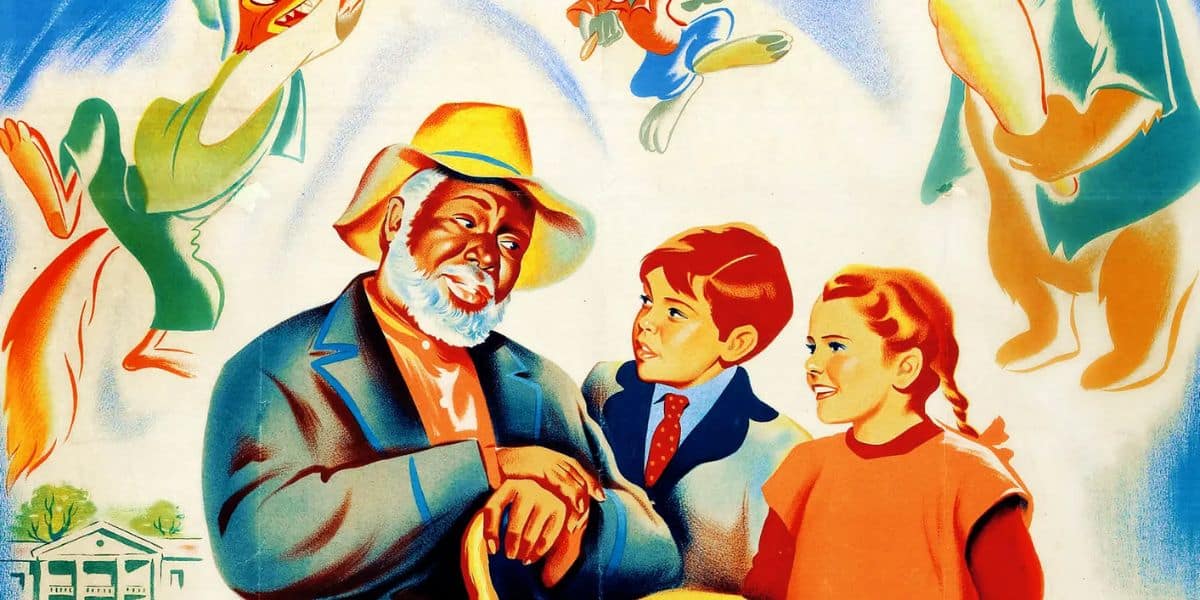
Based on Joel Chandler Harris’s 19th-century “Uncle Remus” folklore, the movie combines live-action scenes with animated sequences featuring Br’er Rabbit, Br’er Fox, and Br’er Bear. Set in Georgia during the Reconstruction era, the story centers on Uncle Remus (played by James Baskett, who received an Honorary Academy Award for the role), a Black worker living on an idyllic southern plantation.
The film’s primary controversies stem from three main issues:
- Idealized Plantation Life: Upon its initial release, civil rights organizations—including the NAACP—criticized the film for romanticizing plantation life. The Black workers are depicted as uniformly joyful, submissive, and nostalgic for the antebellum South.
- Historical Ambiguity: The movie glosses over the harsh realities of slavery and the brutality of Jim Crow in Georgia. By blurring the line between whether Uncle Remus is an enslaved man or a sharecropper, the narrative creates a whitewashed depiction of post-Civil War racial harmony.
- Racial Caricatures: Both the live-action dialogue and the animated animal characters heavily feature exaggerated dialect and tropes rooted in minstrel-era stereotyping.
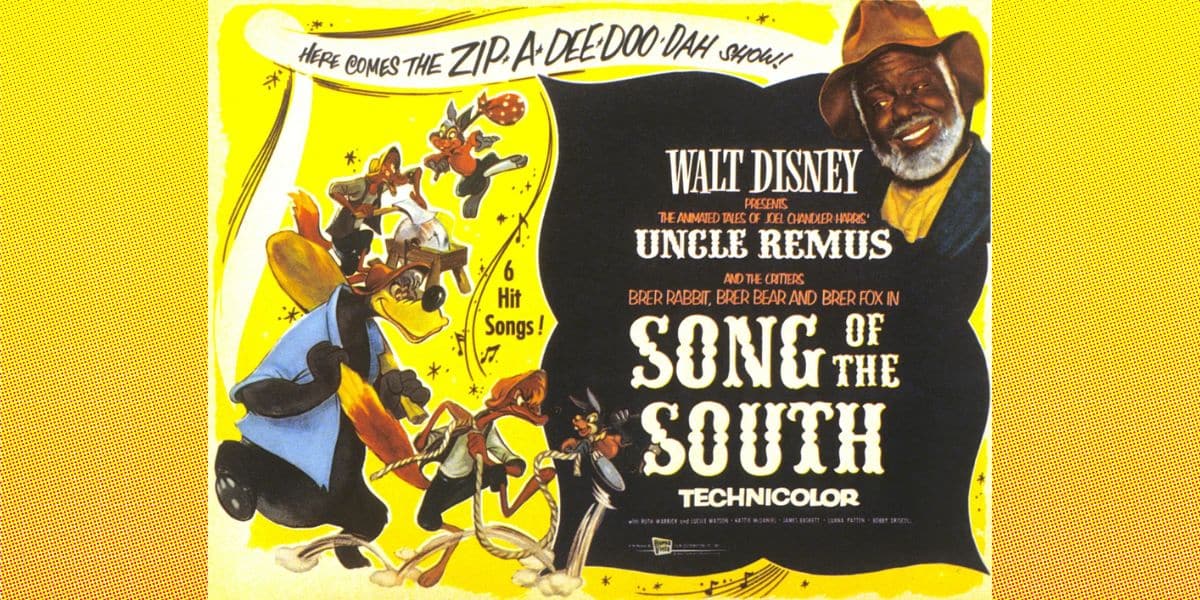
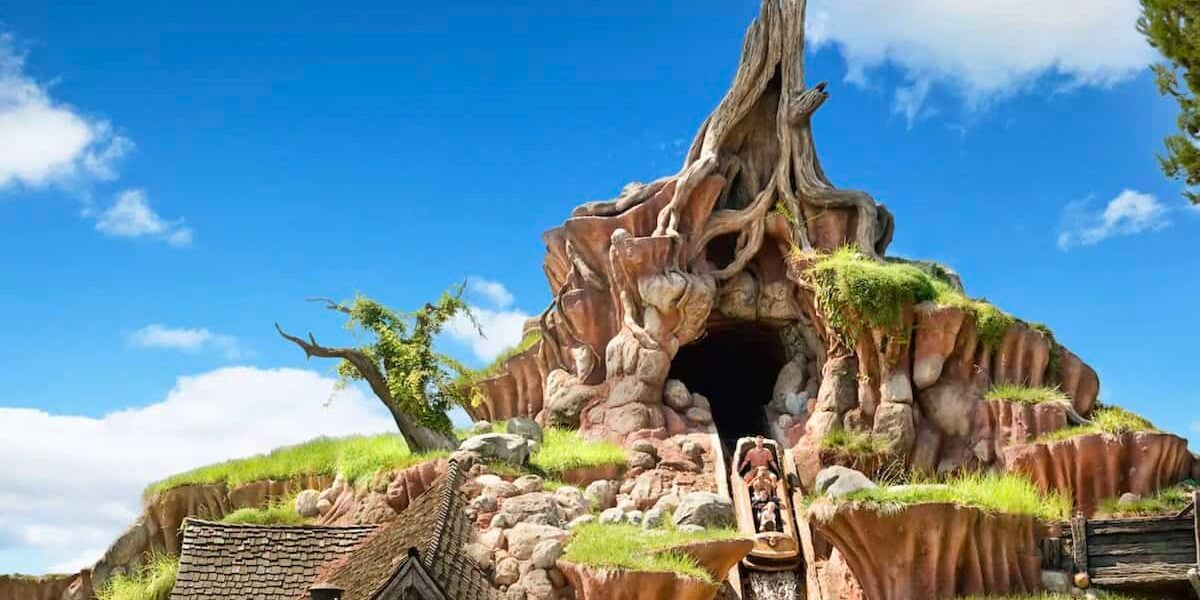
Recognizing the immense reputational risk, Disney permanently pulled the movie from U.S. theatrical rotation following its final 1986 re-release. In recent years, Disney severed its last remaining connection to the film in its theme parks by retheming the iconic Splash Mountain log flume—which prominently featured the movie’s characters and music—into Tiana’s Bayou Adventure.
Why Fans Fight to Preserve the Banned Film
If Song of the South is so deeply flawed, why do fans continue to risk copyright strikes and legal notices to share it online? The motivations driving the film’s preservation movement are complex:

1. Technological Milestones and Black Film History
Technically, Song of the South was a major cinematic breakthrough. It was Disney’s first feature-length project to integrate live actors with animated characters seamlessly. Film historians argue that burying the movie erases key animation milestones and obscures James Baskett’s historic performance as the first Black man to receive an Academy Award.
2. The Anti-Censorship Philosophy
Many cinephiles and archivists oppose corporate sanitization on principle. They argue that hiding uncomfortable or offensive art prevents society from learning from past mistakes. Instead of hiding problematic films, preservationists advocate for providing historical context, content warnings, or educational disclaimers—similar to how Warner Bros. handles classic cartoons from the same era.
3. Nostalgia and Theme Park Connections
For generations of theme park visitors, the characters and soundtrack of Song of the South were core elements of their childhood memories through Splash Mountain. Seeking out the movie allows these fans to maintain a connection to a piece of pop-culture history that Disney has systematically retired from its parks and media outlets.
The Endless Tug-of-War Over Disney’s Past
The Walt Disney Company’s official position remains firm. Former CEO Bob Iger stated in 2020 that Song of the South “is not appropriate in today’s world” and would never be streamed on Disney+.

However, viral uploads like the recent post on X prove that corporate lock-and-key strategies struggle against modern file-sharing networks. As long as media companies attempt to erase controversial entries from their past, the internet will continue stepping in to keep those lost pieces of history accessible to the public.



I wish that Disney would get real. I have no problem with the movie “Song of the South”. I don’t know what the reaction is by the African-Americans, the same color as James Baskett and Hattie McDaniel was. I have not heard any of it. James Baskett’s acting was so superb, as was Hattie McDaniel’s.
Disney chickened out by removing Splash Mountain and making it Tiana’s Bayou Adventure. Who is playing the race card? Who is being overreactive?
It’s all on Disney.
When I watched Tiana movie, I found that it had the same weighting of sterotypes as Song of the South. All these things, speech patterns, work habits, and state of living were REAL and that’s why they are sterotypes.The only thing I saw in SOTS that could be changed was the scene where the Black workers were singing as they went to the fields to work. Although that occurred, it can generate racial overtones. For reference, I am over 70, grew up on a small farm in the south, worked that farm and my grandfathers since I was 7 yrs old, side by side with Black field hands. The fuss and indignity over Song of the South was entirely misplaced.
Disney should follow in the footsteps of Warner Bros, whose iconic Looney Tunes cartoons have many problematic themes. I own many sets of those on DVD, and one has a great commentary by Whoopi Goldberg. In it she addresses the recurring themes and characters. They should be kept, she says, because the cartoons are classics. And the problematic themes should initiate conversations about the good and bad parts, and why we don’t see cartoons like that now. She also points out that WB was an industry leader in hiring and promoting women and people of color at all levels.
I think Disney management is worried that SOTS will look bad, but people are less likely to drag them for it. And the themes that need to be discussed – should be. We don’t put Gone With the Wind in a locked vault, and the storyline and themes were WAY more problematic. For that matter, look at South Pacific, largely regarded as a classic. The colonial themes, the white-centric attitudes, the stereotypes of the South Pacific islanders, they are all problems.
Release the movie. Let us see it again. Let us enjoy the music and the characters. And let us discuss the reality of Reconstruction in the South and the truth about life for enslaved people and the fact that children are far less likely to be appallingly racist if they aren’t groomed into it.
My family has never been racist even a little bit growing up with strong morals. When I saw the movie as a child it made me feel even better with blacks and whites being friends, The music is unforgettable and it would be a shock to most people who have been on Splash mountain to see where it all started. You also learn that being smart like brear fox could save you in a situation and laugh about it. I never thought that da tar baby had any reference to anything but what it was. I know people were reaching too far. That’s like when I hear dumb things like in pool someone said that they don’t like the way they made the white ball hits the black ball into a hole to win……
If this is during Reconstruction, then the Black man must be a sharecropper, because all “slaves” were freed as a result of the 13th amendment. By removing this, Disney knuckled under to the extreme Left, who want to erase any vestige of historicity which might paint them in a negative light.
When the movie was made, it was EXPRESSLY set in the Reconstruction period. But the whiners who claim that the Blacks in the movie are ‘slaves” never really watched it…
I don’t think song of the south. I don’t think the movie or any of it is racial, but you can make anything racial, and we got so much stuff going on in this country. With gangs and everything else, the song of the south is one of the least work. Things to say racial, but then again, when they put Trump into the hall of presidents, they want to shut it down and bulldoze your way, but back to the song of the south. It is a great tune great song. Great people played in the movie. Not only everything and I mean 2 of the best black actors, uncle Ramos, and then the maid and played in it. I mean, what else could you ask for to be great everyone’s on our minus, no different than angel. Mama taking angel mama off when they was getting paid, because they would change black women every so many years, and then she would get paid royalties for so many years. But stupid people, mostly California and stuff like that, had to put that on there. And say, oh no, this aint gonna work. We gotta take it down. And I’ll well, my thing is, just take Disney, just do away with it. And quit paying out that $50 million a year to the Big people at Disney, you know, take their houses and the private school’s away for their kids and their investments that they can make, don’t give them any oh part of Money of Disney to have turn vast. And just throw Em out, hey, throw them in the dagum water with the Crocodiles and the alligators that is on the property that Disney owns they let them get out there and fight them, instead of fighting all this other Ellen wanted stuff that is not got anything to do. With being bad about, like the pirates stuff when the women are chasing around with the brooms and things. Oh, that was bad. So they had to change all that, then they gotta go and change over the river boat. And oh, that part of Disney, it makes meware. This is the Last year that I’m putting any Money into sending my grandkids to Disney. Because it’s my granddaughter’s 18th birthday. Yeah, I can’t say that. I won’t do it when my grandson turns 18, but he’ll probably won’t be motorcycle. Which that will suit me? And I will buy him a nice one. But I do have to say my oldest child’s 43. My youngest child is fixed to be 37, and they Love Disney, and there are kids love Disney, you know, and I went to Disney the first year it opened Disney World, and I loved it too. My things are, it’s a small world, Peter PAN, the hall of presidents the Bear show. And then all right, I think you already said the hall of presidents, but those was the best things of course, splash mountain pressure. But I could get on in my oldest child, he doesn’t like it’s a small world, cause the thing plays over and over, but he knows that I was sitting there. And write it over and over at times it then got so crazy now, but I mean, it won’t be long. And the Muslims will be running it. And it will be Muslim, haven, so you know, the only thing I can say is, get ready for a true Civil War.
As a Woman who’s been Black all of her life, some of these comments are tone deaf, self centered and appalling!
There’s a reason that race relations are in the toilet right now!
Exactly what era in history is MAGA wanting to return to? I can tell you some have told me, and it’s nothing nice!
To promote and advocate for a film so blatantly racist, regardless as to who it offends, speaks volumes, to the levels of selfishness that Non-Blacks are willing to go to, just as long as you’re entertained?
It’s the racist twin of “shut up and dribble”!
Do better!