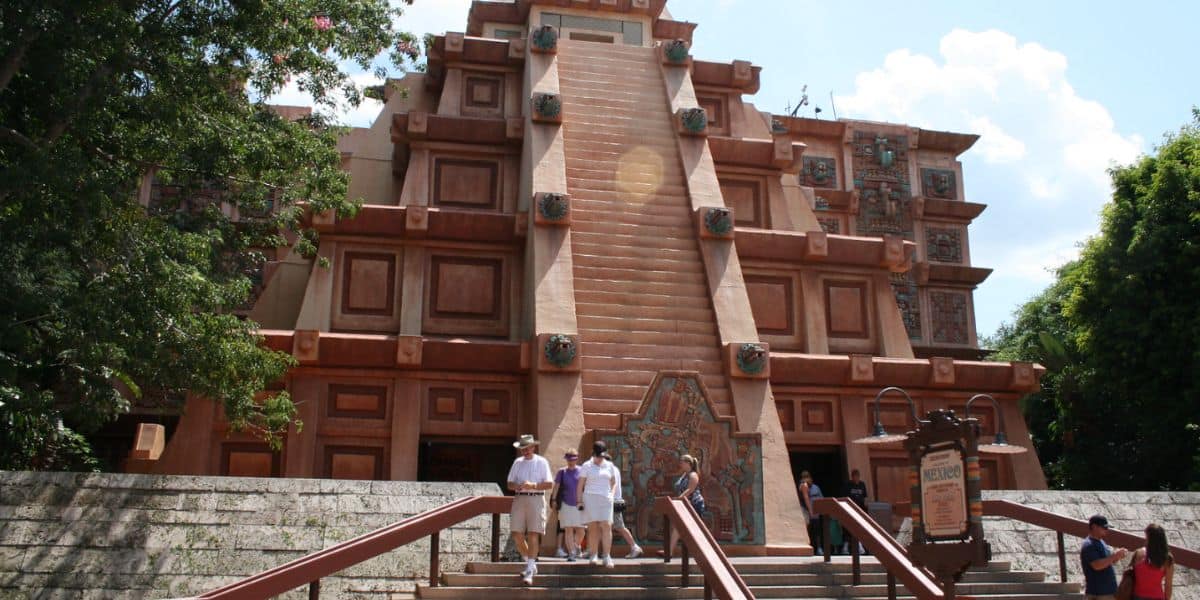
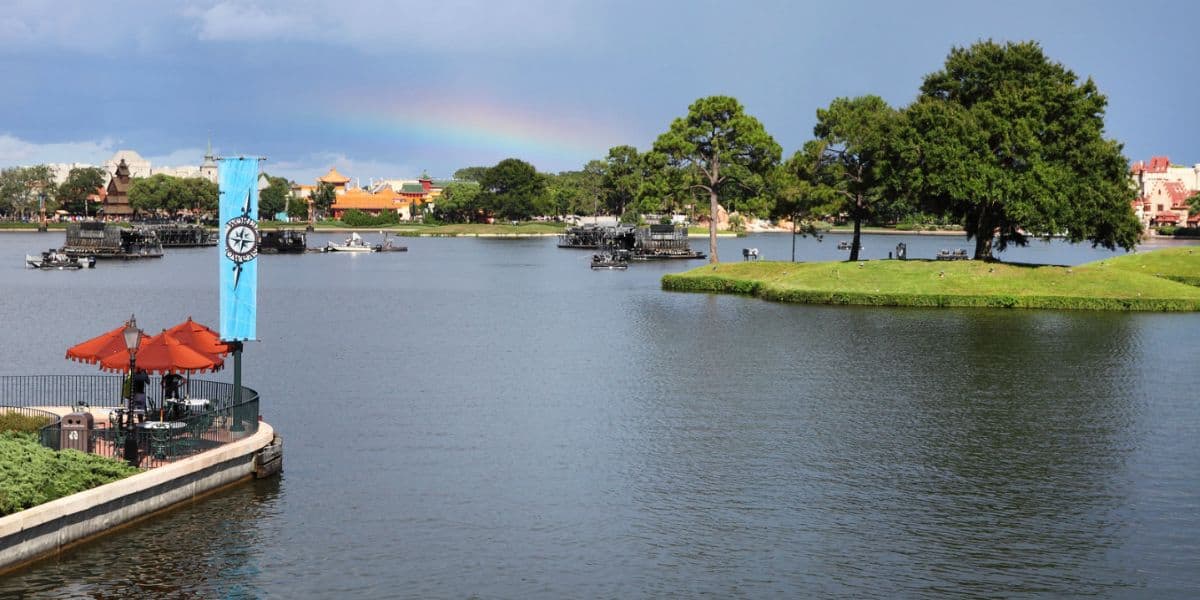
Theme park fans strolling past World Showcase Lagoon at EPCOT have watched scaffolding go up around the Mexico Pavilion’s towering Mesoamerican pyramid in recent months. Modeled after the ancient Aztec Temple of Quetzalcoatl in Teotihuacan, the iconic structure has long served as the visual centerpiece and gateway for EPCOT’s international promenade.
Now, as scaffolding comes down and fresh paint dries, a striking transformation is coming to light. Disney is not just performing routine maintenance; workers are restoring the pyramid to its vivid 1982 opening-day appearance, complete with bold reddish-brown relief work and brilliant turquoise highlights. Yet, step through the heavy wooden doors into the twilight-lit Plaza de los Amigos, and the experience presents a far more complicated picture as traditional cultural offerings are quietly removed and reorganized.
Restoring a 1982 Legend: The Exterior Overhaul
When EPCOT Center made its grand debut in October 1982, the Mexico Pavilion stood as a masterpiece of theatrical design. Imagineers painted the pyramid’s exterior with rich, saturated accents that emphasized its intricate Aztec relief carving and animal sculptures. Over the past four decades, however, Central Florida’s intense sunlight, heavy rains, and humidity took a toll. The once-vivid paint weathered away, leaving the pyramid in a muted, monochromatic stone gray shade.
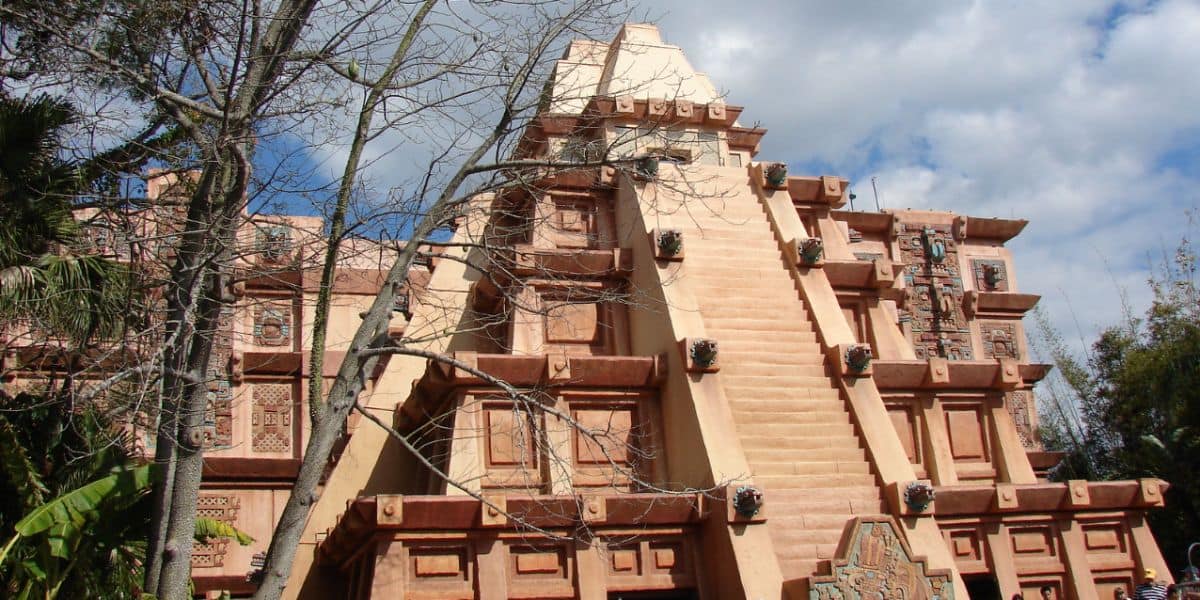
The ongoing exterior refurbishment marks the most extensive visual update the pyramid has received in decades. Rather than keeping the weathered look, Disney’s preservation team is leaning into nostalgia:
- Vivid Reddish-Brown Trim: Painters have applied deep reddish-brown paint along the horizontal relief bands and structural borders, providing crisp definition against the main stone facade.
- Brilliant Turquoise Accents: Intricate serpent heads, animal carvings, and geometric motifs along the pyramid’s terraces are highlighted in bright turquoise, directly echoing the original 1982 color palette.
- Refreshed Walkways: At the base of the structure, crews are replacing aging pinkish-tan smooth concrete with modern textured pavement in natural stone tones, giving the entryway a clean look.
- Phased Entrance Access: Scrims and metal scaffolding were erected in sections, allowing the main entrance doors to reopen systematically as work on each facade block finishes.
This exterior refresh showcases an extraordinary dedication to visual history, giving long-time EPCOT fans a rare chance to see the Mexico Pavilion looking as detailed as it did over forty years ago.
The Extinction of Resident Artisans Inside Plaza de los Amigos
While the exterior of the Mexico Pavilion celebrates park history, the atmosphere inside Plaza de los Amigos tells a story of shifting operational priorities. For decades, the indoor twilight plaza was celebrated for its authentic artisan craft demonstrations, where guests could watch traditional Mexican art forms created right before their eyes.
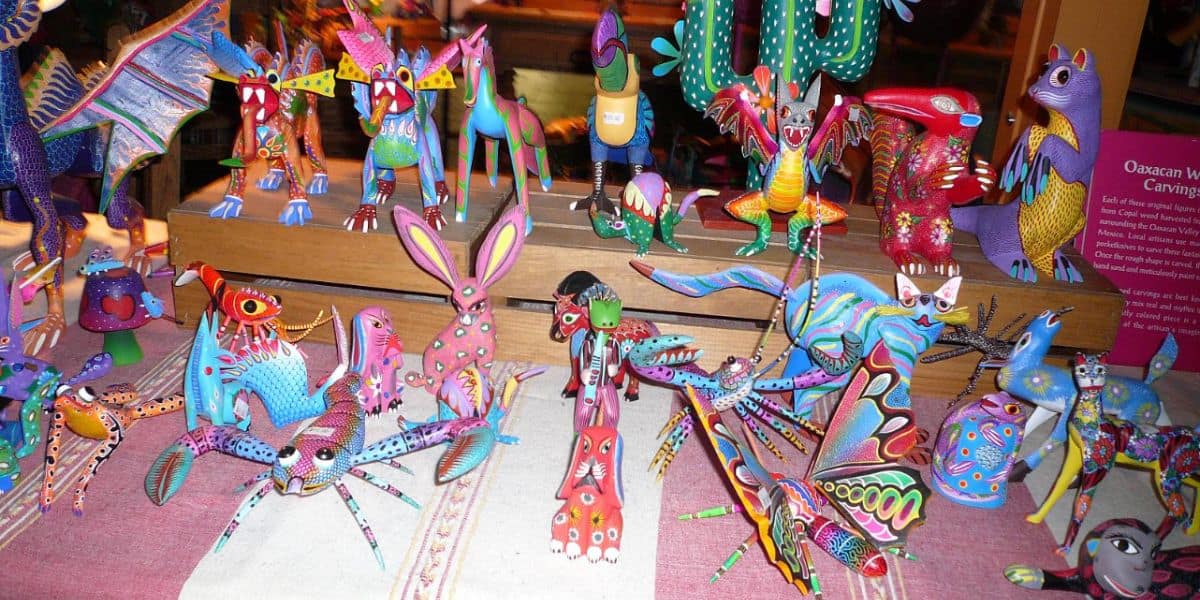
That tradition came to an abrupt end on August 31, 2026, when master artisan Alba Hernandez Santiago packed up her paints and walked away from her workbench inside the pyramid. For 24 years, Santiago served as the pavilion’s resident Oaxacan wood-carver, meticulously painting intricate wooden animal figures known as alebrijes in the traditional Arrazola style. Disney provided minimal public notice before placing the artisan booth’s remaining inventory on a 50% clearance sale and permanently closing the operation.
The loss of the Oaxacan wood-carving station is symbolic of a broader shift across World Showcase. Over the past decade and a half, EPCOT has gradually lost several signature master craftspeople, including Germany’s egg painter Jutta Levasseur in 2012 and Japan’s candy sculptor Miyuki Sugimori in 2013. With Santiago’s departure, the long-standing resident craft tradition inside the Mexico Pavilion has officially ended. Speculation among theme park insiders suggests the newly cleared space could eventually serve as a queue overflow for the nearby, extremely popular La Cava del Tequila bar.
Kidcot, Mariachi Cobre, and the New Indoor Layout
The removal of the wood-carving operation has sparked a domino effect of spatial reorganization inside the pyramid’s marketplace, leading Disney to adjust several entertainment and family offerings to optimize foot traffic.
Mariachi Cobre Moves Indoors
Mariachi Cobre, the legendary musical ensemble that has performed traditional Mexican folk music at EPCOT since opening day in 1982, has officially transitioned its primary performance location indoors. Previously, the band performed outdoors along the World Showcase Lagoon promenade near La Cantina de San Angel. The group now takes the stage inside Plaza de los Amigos, utilizing the indoor space previously occupied by cultural exhibits and craft tables. Performing indoors shields musicians and guests from Florida’s extreme heat while filling the Plaza with rich acoustic music.
Relocated Kidcot Fun Stop
To accommodate Mariachi Cobre’s indoor stage and keep the central Plaza clear of bottlenecks, Disney relocated the Mexico Pavilion’s Kidcot Fun Stop. The station—where children pick up craft stamps and cultural mementos—has been moved from the central market area to a dedicated table just inside the pyramid’s main entrance. This placement allows families to participate in the activity immediately upon entering, before navigating the busier marketplace.
The Modern EPCOT Paradox
The dual project at the Mexico Pavilion perfectly encapsulates the delicate balance Disney faces across EPCOT today. On the outside, Imagineers are spending substantial effort and capital to honor the park’s founding design language, painstakingly restoring 1982 color schemes to preserve architectural heritage.
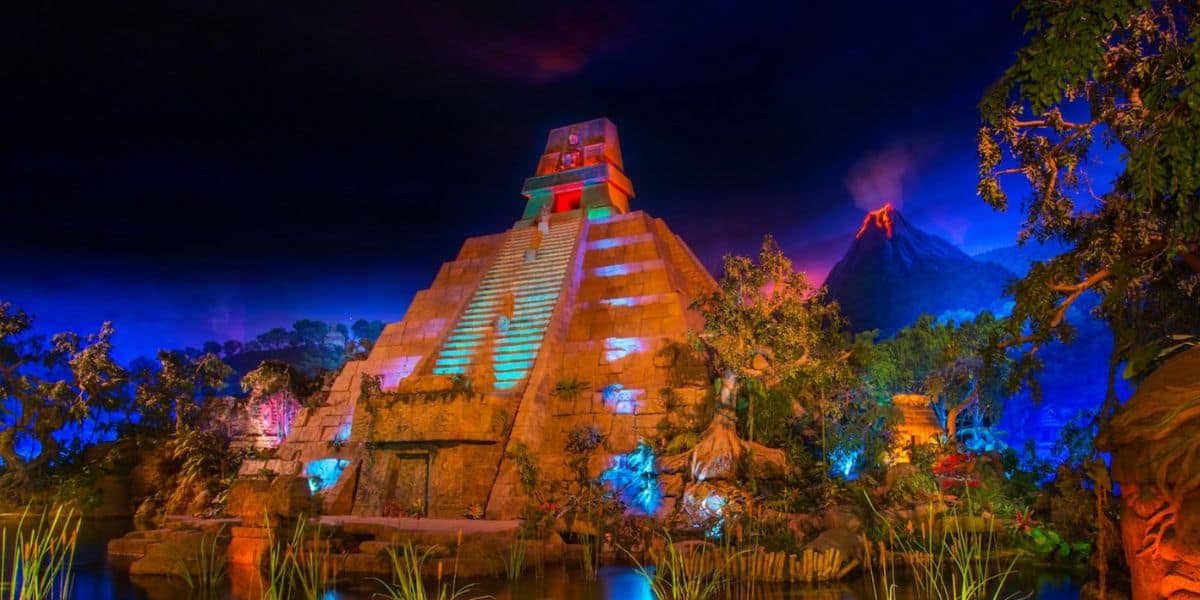
On the inside, however, operational realities lean toward high-capacity entertainment, expanded food-and-beverage space, and franchise intellectual property like the Gran Fiesta Tour Starring The Three Caballeros. While visitors will enjoy the vibrant new paint and air-conditioned mariachi performances, the quiet magic of watching a master craftsperson carve wood in the twilight plaza is now a memory.
As scaffolding continues to come down around World Showcase, EPCOT guests get to experience a stunning visual link to 1982—even as the living cultural traditions inside continue to evolve into something new.