
We talk a lot about what to eat on the way to Disney World. The best stops on I-4, which Wawa is worth pulling over for, whether the Cracker Barrel near Kissimmee is worth the detour. But we have never done a proper breakdown of what happens after you get back in the car and actually start driving toward the resort, and lately we have been hearing from too many readers who ran into problems on the road that were completely avoidable.
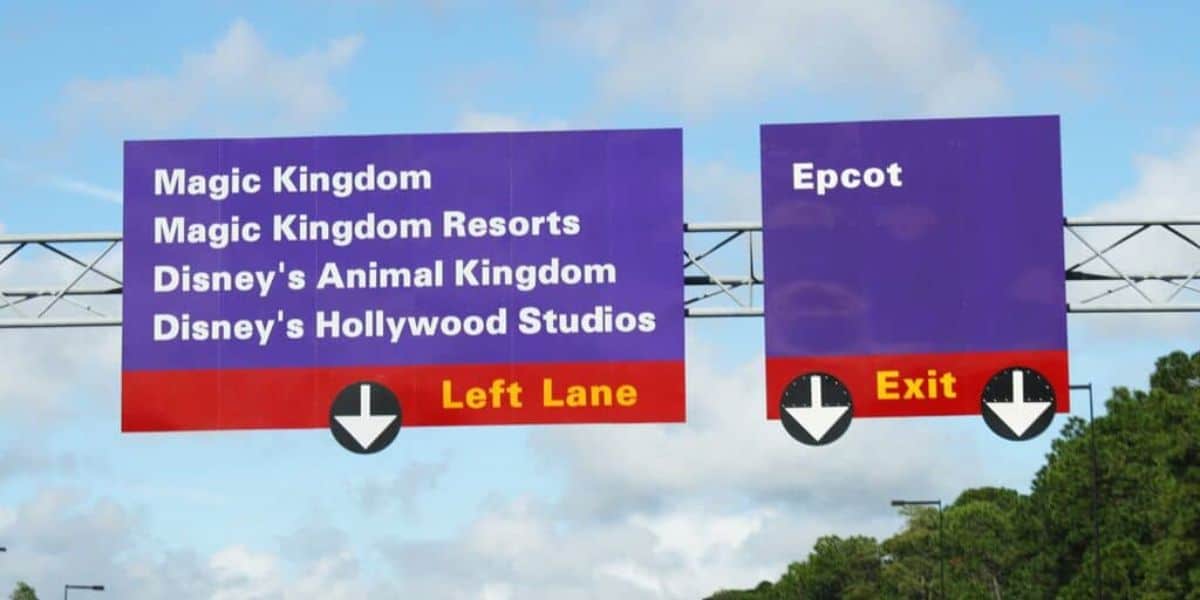
Florida has some specific driving laws that are different enough from other states to genuinely surprise visitors who think they know how to drive. Three of them in particular are responsible for most of the citations and fines that tourists pick up in Central Florida. There is also a new law taking effect in January 2027 that changes what appears on Florida driver’s licenses, which is worth knowing before your next trip depending on your citizenship status.
This is not complicated information. It just needs to be in front of you before you get in the car.
The Rain Rule That Gets Almost Everyone Wrong
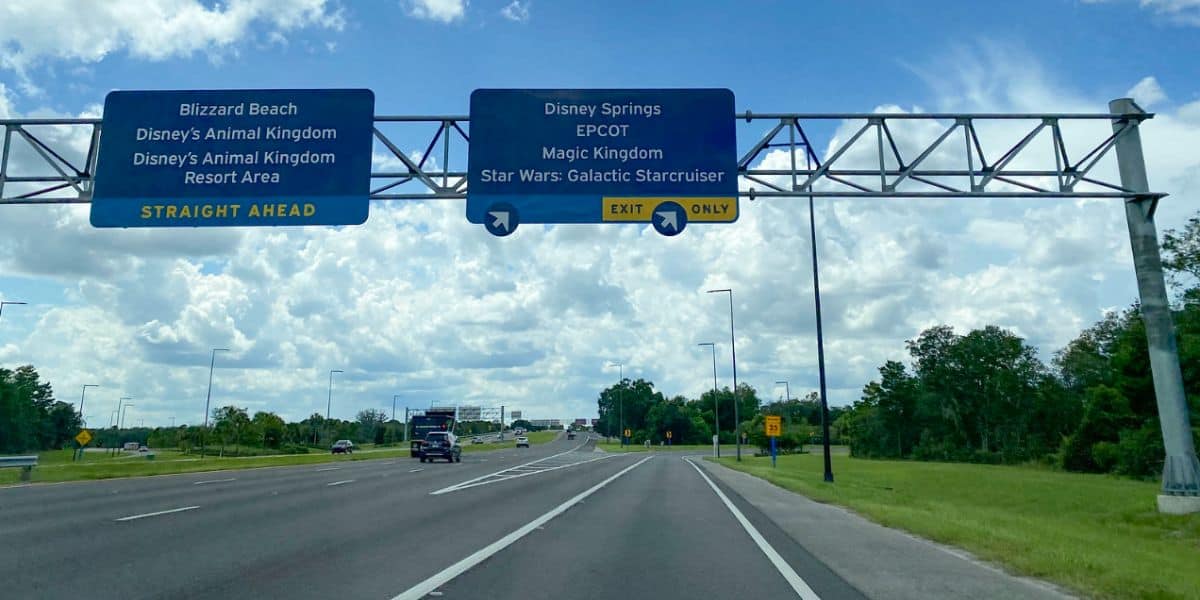
Florida summers mean afternoon storms. You already know this if you have been. What you might not know is that Florida law requires headlights to be on whenever you are driving in rain, smoke, or fog. Not just heavy rain. Any rain. When the wipers go on, the headlights go on. That is the law and it applies to those 20-minute storms that blow through while you are trying to get from EPCOT to your hotel.
Here is the part that trips people up even more: Florida prohibits the use of hazard lights while a vehicle is in motion. Full stop. A lot of visitors instinctively hit the hazards during a heavy downpour because that is what they do at home. In Florida, that is illegal while you are moving. Hazard lights are only for stopped or disabled vehicles that are pulled off to the side of the road.
So the correct move is: rain starts, headlights on, hazards stay off unless you have pulled over. That is it. That is the whole rule.
The Phone Law Has Teeth in Specific Zones

Florida currently bans handheld cell phone use in school zones and construction zones where workers are present. We are talking about holding the phone at all, not just texting. Holding it to check your GPS directions while rolling through a school zone counts. The fines are real and so are the license points.
For anyone driving in an unfamiliar area and relying heavily on Google Maps or Waze, this matters. Central Florida has construction zones all over the roads near Disney, which should surprise exactly nobody given how much infrastructure work is constantly happening in this area. The fix is simple and takes about 60 seconds before you leave: mount your phone, pair it to the car’s display, or set your route before you pull out. Most rental cars support this natively.
Do not be the person who gets a citation in a school zone at 8am because they were adjusting their navigation to Hollywood Studios.
Check the License Plate on Your Rental Before You Drive It
This one is probably the least intuitive law on this list and it catches people constantly. Florida prohibits anything that obstructs or even partially covers a license plate. Frames, reflective coatings, sprays, significant dirt buildup, all of it. Violations can escalate to a second-degree misdemeanor with fines up to $500 and in some cases potential jail time.
Rental cars are specifically where this becomes a problem for visitors. Some rental companies install their own branded frames on plates. Those frames may not comply with Florida’s plate visibility requirements, and if they do not, you are the one driving the car and you are the one responsible.
Before you leave the rental lot, spend 30 seconds looking at the front and rear plates. Make sure nothing is blocking them. If a frame is installed and looks like it might be covering part of the plate, ask the rental company to remove it before you drive off. This is a completely reasonable request and worth making.
Something Changing in 2027 That Florida Visitors Should Know
Starting January 1, 2027, Florida will add a citizenship indicator to all newly issued, renewed, or replaced driver’s licenses and state IDs. The requirement is part of the Florida SAVE Act, signed by Governor Ron DeSantis, and is designed for citizenship verification related to government services and voting eligibility.
The way it works: licenses issued to U.S. citizens will show citizenship status clearly. Licenses issued to non-citizens, including legal permanent residents, will carry the letters “NC” for “Not a Citizen.” Existing licenses stay valid until they expire. If a non-citizen becomes a citizen, the state will issue a free replacement card.
This does not affect anyone visiting Florida in 2026 under a currently valid license. But for international visitors, legal permanent residents, or anyone planning trips in 2027 and beyond, it is worth knowing how Florida will be categorizing and displaying ID information going forward.
Why We Are Telling You This
Look, nobody books a Disney World trip thinking about traffic citations. You are thinking about which park to hit first and whether the Dole Whip line is going to be manageable and if you remembered to book Space 220. Driving is just the part that gets you there.
But a fine, a citation, or anything worse on the road creates friction in a trip that is supposed to be entirely about the opposite of friction. The headlight rule, the hazard rule, the phone zones, and the license plate law are all avoidable with about five minutes of awareness before you start the car. We would rather you spend those five minutes now than spend an afternoon on the side of an Orlando highway dealing with something that did not have to happen.
Headlights on when it rains. Hazards off while moving. Phone mounted before you leave. Plates checked before you drive off the lot. That is the whole checklist.
If you are driving to Disney World and want to talk through anything about the roads, the best routes, or where to stop along the way for food that is actually worth stopping for, drop it in the comments. That is exactly the kind of trip planning we are here for.



Planning a ’27 trip with family from NH and Co. I don’t know which state driver’s licenses record citizenship.
Does the law state if it will accept a passport along with a license?