Cedar Point Cancels Major Summer Event as Wildfire Smoke Creates Dangerous Conditions
Six Flags Closes Other Parks as Well

Summer nights at Cedar Point are supposed to feel almost untouchable. The sun drops behind Lake Erie, coaster lights flicker against the shoreline, and the midway takes on the kind of electric energy that keeps families inside the park long after their feet begin to ache.
But this week, something unfamiliar settled over America’s Roller Coast. It was not an approaching thunderstorm that guests could watch on a radar map. It was not a burst of heavy rain that might pass in 20 minutes. The danger hung silently in the air, dulling the sky and transforming every outdoor breath into a potential health concern.
For guests who had planned vacations around one of Cedar Point’s newest summer experiences, the uncertainty became deeply personal. What started as a hazy afternoon was quickly becoming part of a much larger emergency stretching across multiple states—and the consequences were about to reach the park’s nighttime entertainment.
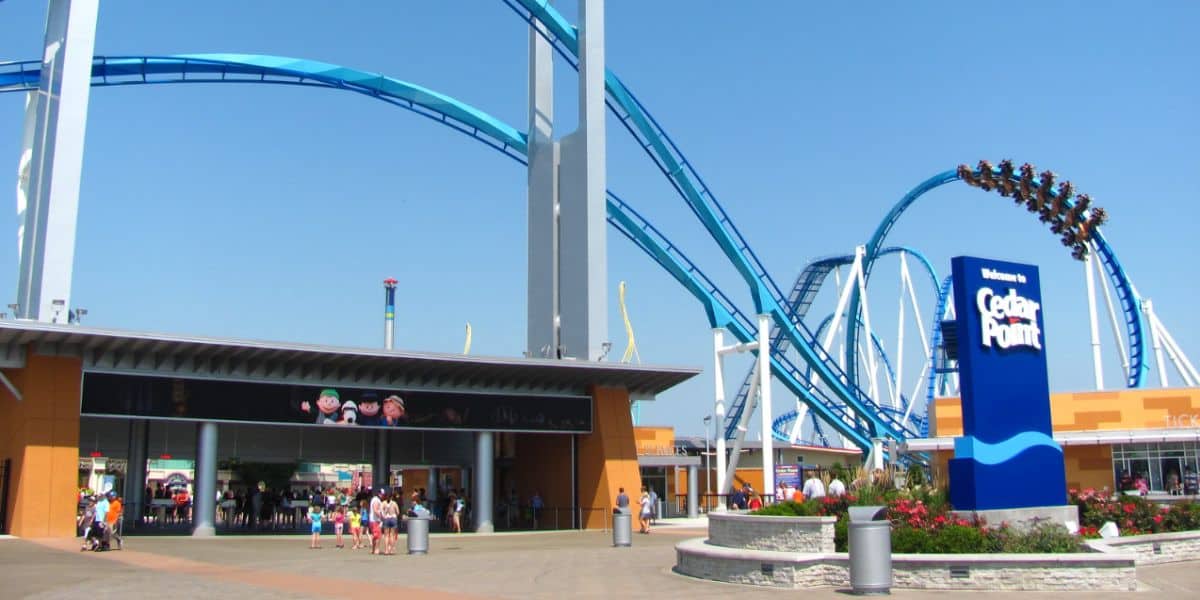
Cedar Point’s New Summer Celebration Never Reached Opening Night
Cedar Point canceled the July 17 opening night of Boardwalk Nights because of air-quality conditions affecting Sandusky and the surrounding region.
We have an important update to share about Boardwalk Nights.
The cancellation came one day after the Ohio amusement park closed early at 7 p.m. as dense smoke from Canadian wildfires pushed into the area. Cedar Point reopened on Friday, but its highly anticipated evening event did not move forward as scheduled.
Boardwalk Nights was designed to give guests another reason to remain inside the park after sunset, with live entertainment, food, games, and nighttime energy along Cedar Point’s historic Boardwalk. Instead, its opening night became another casualty of a smoke emergency disrupting daily life throughout the Midwest and Northeast.
For longtime Cedar Point fans, this feels significant. Weather delays are woven into the rhythm of a theme park vacation, but wildfire smoke presents a different and more unsettling kind of threat. Guests cannot simply wait beneath an awning until it passes.

Northeast Ohio’s Air Reached Emergency Territory
The numbers recorded across Northeast Ohio were difficult to comprehend.
Cleveland-area air-quality readings reportedly climbed to approximately 594 on July 16, while a monitor in Brecksville reached 677. Other locations remained in the “very unhealthy” range for prolonged periods.
Under the U.S. Air Quality Index, any reading of 301 or higher is considered hazardous. At that level, officials describe the situation as an emergency in which everyone is more likely to be affected—not only children, older adults, or people with respiratory conditions.
The primary danger was fine particulate matter known as PM2.5. These particles are small enough to travel deep into the lungs, turning an ordinary day of walking, working, and waiting in outdoor queues into a health calculation.
Local reporting described the event as among the worst air pollution Northeast Ohio has experienced in modern records, surpassing even the alarming wildfire-smoke episode of 2023. Cleveland extended hours at several recreation centers to provide residents with cleaner, air-conditioned shelter as officials urged people to limit outdoor activity.

Other Amusement Parks Were Forced to Make the Same Choice
Cedar Point was not confronting the smoke alone.
Six Flags Great America and Hurricane Harbor Chicago temporarily closed on July 17 as hazardous conditions spread across northern Illinois. Park officials said they would continue monitoring the air before determining whether normal operations could resume.
Elsewhere, the disruption widened. Pennsylvania amusement parks—including Kennywood, Idlewild & SoakZone, Dutch Wonderland, Waldameer, and DelGrosso’s Park—also closed as dangerous smoke covered the region. The Cleveland Guardians’ scheduled Friday game against the Pittsburgh Pirates was postponed because of the air quality.
The closures made one reality impossible to ignore: wildfire smoke is becoming an operational threat for outdoor entertainment far beyond the places where the fires are actually burning.
A theme park can prepare for lightning, extreme heat, flooding, and high winds. Smoke is harder to manage. Conditions can deteriorate rapidly, readings can vary between nearby communities, and a park may remain physically functional even when spending hours outdoors is medically discouraged.

Guests Are Being Asked to Rethink What “Safe to Operate” Means
For visitors, that creates a deeply uncomfortable gray area.
A park being open does not necessarily mean every guest should be there. Families may have already paid for hotels, driven several hours, or promised children an entire day of rides. Walking away from that investment can feel devastating—even when staying may carry genuine health risks.
That tension places tremendous responsibility on amusement park operators. Guests look to parks not only for operating hours but also for reassurance. When the danger is invisible, families need clear communication about changing conditions, event cancellations, ticket policies, and the precautions available to guests and employees.
The cancellation of Boardwalk Nights was therefore more than an entertainment adjustment. It was a public acknowledgment that the outdoor experience itself had become unsafe enough to alter.

This Could Become Part of the New Theme Park Summer
The immediate question is when Boardwalk Nights will finally receive the opening celebration Cedar Point intended. The larger question is how often parks may face decisions like this in future summers.
Wildfire smoke can travel hundreds or even thousands of miles, meaning theme parks far removed from active fires may still confront hazardous conditions. That could eventually force the industry to develop clearer air-quality thresholds, more flexible ticket protections, indoor alternatives, and emergency plans built specifically around smoke.
Guests will also be watching how consistently those standards are applied. If one park closes while another remains open under similar conditions, confusion and frustration can spread almost as quickly as the haze.
Cedar Point’s canceled celebration will eventually be rescheduled, and the Boardwalk will glow again. But this opening night may be remembered for something larger: the moment an invisible threat changed what a summer theme park emergency looks like—and left parks and families wondering how prepared they truly are for the seasons ahead.