When excerpts from former Disney CEO Bob Chapek’s explosive tell-all memoir, Behind the Castle Walls, hit the internet, Hollywood prepared for an all-out corporate war. In his book, Chapek launched a scorched-earth campaign—defending steep theme park price hikes, accusing Bob Iger of a relentless effort to undermine his authority, and alleging that Iger stepped down in early 2020 because he foresaw the economic devastation of COVID-19.

For days, media observers waited to see how Iger would react. Would he issue a fiery public statement? Would Disney’s legal team get involved?
Instead, Iger chose a far more lethal arena: the pages of Harvard Business Review. Sitting down with Nitin Nohria, former dean of Harvard Business School, for an expansive interview on corporate governance and executive leadership, Iger dismantled Chapek’s defense, admitted Disney made a profound mistake during the 2020 succession, and delivered a scathing critique of Chapek’s inability to manage a crisis.
And in a masterclass of executive passive-aggression, Iger accomplished it all without uttering the name “Bob Chapek” even once.
“We Discounted Them a Bit More”: The Admission of a Flawed Succession
When Bob Chapek was named CEO in February 2020, Disney framed the transition as a seamless handoff to a trusted insider. Chapek had served as Chairman of Disney Parks, Experiences, and Products, driving record profit margins through dynamic pricing and aggressive yield management. However, in his HBR interview, Iger admitted that familiarity blinded the board to obvious executive flaws.

Reflecting on the decision-making process that led to Chapek’s appointment, Iger acknowledged that the board rushed the process to check a box.
“We had a process back in 2019 and ’20 when we chose my successor,” Iger revealed in Harvard Business Review. “Looking back, perhaps it wasn’t as thorough as we thought, in part because we thought we knew the person extremely well. He’d worked for the company for a very long time and for me directly.”
In his memoir, Chapek portrays himself as an innocent victim trapped in a trap laid by Iger. But Iger’s account paints a very different picture: Disney’s leadership simply ignored Chapek’s clear limitations in a rush to complete the transition.

“I’m not suggesting that we discounted the weaknesses, but in our zeal to check a box with succession and enable me to move on, first as executive chairman and ultimately to leave, I’m not suggesting that we ignored some of the issues, but I think we discounted them a bit more,” Iger candidly stated.
Without naming Chapek, Iger’s admission was devastating. He effectively confirmed that Disney’s leadership knew Chapek had significant weaknesses—they just chose to overlook them because they were eager to complete the handoff.
Slams Crisis Management: “You Can’t Retreat to a Bunker”
Chapek’s 33 months at the helm of Disney were defined by relentless controversy: pandemic park shutdowns, high-profile lawsuits with talent like Scarlett Johansson, $1.5 billion quarterly streaming losses, and a disastrous political feud over Florida’s education legislation. In Behind the Castle Walls, Chapek frames these events as an unprecedented string of bad luck compounded by internal sabotage.

Iger rejected that excuse outright, explaining that the modern business climate demands a leader who thrives under pressure rather than crumbling under it.
“We live in a state of almost perpetual crisis, or an environment in which a crisis can occur almost on a very regular basis,” Iger noted. “I think that requires a different kind of leadership, and I don’t think we realize that at the time.”
Expanding on what separates a true leader from a failed manager during turbulent times, Iger delivered a direct critique of Chapek’s insular, combative management style.

“Now, this is, in a way, hindsight, but I realize today that leadership needs to be capable of managing an environment in perpetual crisis,” Iger explained. “So what does that mean? I think it puts even more emphasis on stamina. It puts even more emphasis on someone’s ability to, one, admit the crisis and deal with it, but never lose hope and optimism and balance that optimism and hope with realism.”
Then came the knockout blow aimed squarely at Chapek’s tendency to isolate himself during controversy: “You can’t retreat to a bunker.”
Fixing the Blueprint for Josh D’Amaro
Iger’s candid reflection on the 2020 transition wasn’t just a rebuttal to Chapek’s book—it also explained how Disney fixed its succession model when selecting current CEO Josh D’Amaro, who took over in March 2026.
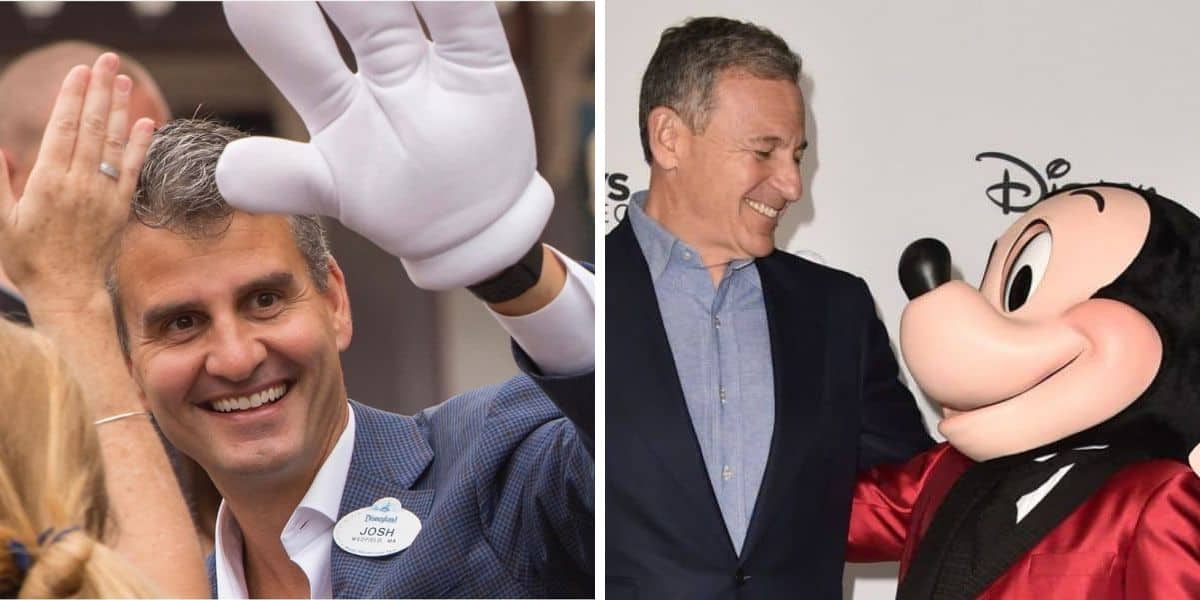
Iger revealed that the painful lessons learned from Chapek’s failed tenure directly informed the rigorous evaluation process for D’Amaro.
“We asked ourselves some of these very questions about that person,” Iger said regarding the search for Disney’s current leader. “Is he resilient? Does he have the stamina? Does he choose a good team? Is he someone who can call it what it is, meaning we’re in a real crisis, but then deal with it in a reasonable and sane and steady way, mature way?”
By highlighting those specific qualities, Iger made his opinion transparent: D’Amaro possesses the emotional maturity, resilience, and collaborative spirit that Chapek so glaringly lacked.
A Masterclass in High-Level Rhetoric
Where Bob Chapek’s memoir reads like an angry, score-settling tell-all filled with explicit grievances, Bob Iger’s interview in Harvard Business Review is a study in executive finesse.

By refusing to give Chapek the satisfaction of a named shoutout, Iger elevated the discourse to corporate governance, leadership stamina, and organizational resilience. Yet, between the lines of polished academic prose, Iger’s message echoed loud and clear across Hollywood: Chapek wasn’t sabotaged—he was simply the wrong man for the job.