The culture wars surrounding Walt Disney World were supposed to be cooling off following years of high-profile courtroom battles, legislative reshuffling, and eventual settlements between the entertainment titan and the state of Florida.

Then came the aftermath of Florida’s gubernatorial election.
Shortly after securing his victory, Florida Governor-Elect Byron Donalds reignited one of the most volatile debates in modern theme park history: the permanent closure and reimagining of Splash Mountain. During a widely circulated interview, Donalds pushed back against the core premise behind the attraction’s retirement, setting off a wildfire across social media and revitalizing an ardent, vocal faction of nostalgic fans known as the “Save Splashers.”
With an outspoken critic of corporate cultural retheming preparing to enter the governor’s mansion in Tallahassee, some members of this online subculture have latched onto an extraordinary, long-shot fantasy: could Florida’s incoming administration use state leverage to compel The Walt Disney Company to undo its redesign and bring the classic log flume back from the dead?

While the legal and logistical realities of private corporate ownership make such an intervention virtually impossible, Donalds’ remarks have forced the theme park giant, the political establishment, and everyday vacationers to re-examine the radioactive legacy of Disney’s 1946 film Song of the South and the lingering tensions over Disney’s modern corporate identity.
“Disney Has Lost Their Minds”: Inside the Byron Donalds Interview
The catalyst for the current online firestorm arrived during an appearance by Donalds with Florida’s Voice.
When the conversation shifted toward corporate culture, entertainment brands, and Disney’s shifting creative compass, Donalds directed his criticism directly at the retirement of the iconic Frontierland water ride. Rather than viewing the flume as a relic of racial insensitivity, the Governor-Elect framed Disney’s decision as an unwarranted capitulation to activist pressure.
“Splash Mountain isn’t racist. Disney has lost their minds,” Donalds declared without hesitation.
Elaborating on his argument, Donalds dismissed the idea that the animatronic animals—Br’er Rabbit, Br’er Fox, and Br’er Bear—carried racial prejudice. He argued that the millions of vacationers who waited in two-hour lines under the hot Florida sun over thirty-four years never viewed the experience through a sociopolitical framework:

“Nobody looked at Splash Mountain and thought about race until activists forced the issue. It was about childhood fun, a giant drop, and classic folklore. Erasing that history doesn’t fix anything; it just alienates millions of ordinary people who grew up loving the parks.”
For Donalds, the decommissioning of Splash Mountain serves as an emblem of what he describes as unnecessary corporate sanitization—a view that resonated deeply with the conservative voters who propelled him to the governor’s office.
The ‘Save Splashers’ Find Their Political Champion
Donalds’ comments ignited immediate celebration across digital enclaves like X, Reddit, and themed Facebook groups where the “Save Splashers” have congregated since 2020.
When Disney first announced plans in June 2020 to retheme Splash Mountain at both Magic Kingdom in Florida and Disneyland in California to the 2009 animated hit The Princess and the Frog, it sparked swift pushback. Digital petitions gathered hundreds of thousands of signatures, guests queued for hours to buy up character merchandise before it was pulled from gift shops, and when the Florida version officially shut down in January 2023, enthusiasts went so far as to bottle splash-down pool water and list it on eBay for hundreds of dollars.
Even though the revamped ride, Tiana’s Bayou Adventure, has officially opened to the public, the traditionalist community remained active online. For months, critics have scrutinized the new attraction’s ride systems, spotlighted mechanical downtime, and lamented the loss of signature Sherman Brothers anthems like “Zip-a-Dee-Doo-Dah.”
Donalds’ electoral victory and subsequent remarks offered this group an unexpected second wind. Optimistic posts speculated whether state authorities could flex their regulatory muscles against Disney. Some users questioned whether the Central Florida Tourism Oversight District (CFTOD) could hold up operational permits, while others floated the idea of consumer-protection investigations or tourism tax audits to pressure Disney into restoring the original show scenes.
However, theme park analysts, constitutional lawyers, and corporate governance experts point out that these ideas run up against hard legal realities:
- Private Property & Intellectual Property: Disney is a publicly traded corporation that maintains absolute legal ownership of its properties, designs, and attraction footprints. The state has no constitutional mechanism to dictate what fictional characters appear inside an indoor dark ride.
- Structural Irreversibility: Tiana’s Bayou Adventure is fully realized. Physical audio-animatronics of Br’er Rabbit and his woodland companions were dismantled, sold, archived, or retrofitted years ago. Reversing a multi-million-dollar structural overhaul is economically absurd.
- The Post-DeSantis Truce: Following extensive legal battles over the Reedy Creek Improvement District, Disney and Florida finalized a development agreement ensuring tens of billions of dollars in future capital investments. Blowing up that economic détente over a defunct log flume would be commercially destabilizing for Florida’s tourism tax base.
Yet even if the political hopes of the “Save Splashers” are grounded in wishful thinking, the viral reaction proved that the emotional attachment to the original ride remains potent.
The Irreconcilable Shadow of ‘Song of the South’
While defenders maintain that Splash Mountain was nothing more than an exhilarating water flume filled with catchy music, the root cause of Disney’s corporate pivot remains the troubling source material from which it was adapted: the 1946 hybrid musical Song of the South.

Based on the Uncle Remus folktales collected and compiled by Joel Chandler Harris in the late 19th century, the movie stars James Baskett as Uncle Remus, an elderly Black plantation worker who recounts animal fables to a young white boy visiting from Atlanta. Although Baskett’s magnetic and soulful performance earned him an honorary Academy Award, the production drew fierce protests from civil rights leaders, including the NAACP, upon its theatrical release.
Film historians, cultural scholars, and sociologists identify several core issues that make Song of the South historically toxic:
- Romanticizing Antebellum Ideals: While technically set during the Reconstruction era, the movie deliberately blurs historical lines to present an idyllic, pastoral vision of Southern plantation life. The brutal horrors of chattel slavery, the rise of Jim Crow segregation, and the poverty of post-war sharecropping are completely erased, replaced by an image of happy Black laborers joyfully singing as they tend fields for benevolent white landholders.
- The “Happy Slave” Caricature: Uncle Remus and Aunt Tempy have no visible autonomy, families, or personal desires outside of nurturing and entertaining the wealthy white plantation family. The narrative relies heavily on the antebellum trope that enslaved or newly freed African Americans preferred servitude to independence.
- Minstrel-Era Dialects: While the Br’er Rabbit stories genuinely originated as African oral trickster tales carried across the Atlantic by enslaved people, the scripted dialogue for the animated critters relied on exaggerated phonetic minstrel dialects popularized on 19th-century white vaudeville stages.
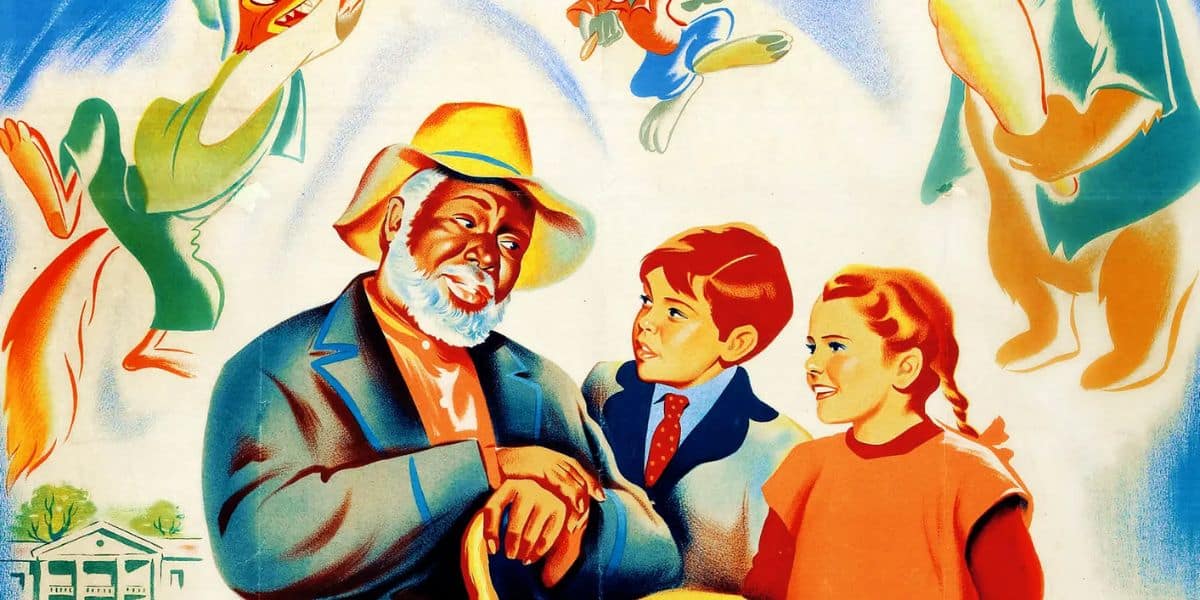
Because of this radioactive legacy, former Disney CEO Michael Eisner locked the film in the corporate vault during the mid-1980s. The film was never released on home video in the United States and remains explicitly excluded from Disney+, with CEO Bob Iger repeatedly stating it is not appropriate in the modern world.
Nostalgia vs. Brand Evolution
The political clash sparked by Byron Donalds encapsulates the fundamental tension facing modern heritage entertainment brands.

For millions of parkgoers who rode Splash Mountain during their childhoods, the attraction existed in a vacuum. Imagineering had intentionally scrubbed Uncle Remus and all live-action plantation scenes when constructing the ride in 1989, framing the experience purely as a whimsical critter chase with a breathtaking 50-foot plunge into the briar patch. To fans who share Donalds’ perspective, removing those animatronics felt like an erasure of cherished family memories to satisfy modern cultural sensibilities.
For Disney’s executives, however, the attraction was an untenable brand liability. As the company expands globally, maintaining a flagship attraction inextricably linked to a film deemed too offensive to show on its own streaming service created a glaring corporate contradiction. Retheming the flume to The Princess and the Frog allowed the company to celebrate African-American culture, New Orleans jazz, and Louisiana cuisine through its first Black Disney Princess—all while permanently severing ties with an antebellum fable.

While Governor-Elect Donalds has provided the “Save Splashers” with a high-profile megaphone, the physical reality inside the Magic Kingdom remains final. The briar patch has been cleared, Tiana’s logs are floating down the bayou, and the past is staying firmly in the vault.