More than three years after the final log flumes plunged down Chickapin Hill at Walt Disney World and Disneyland, the ghost of Splash Mountain continues to haunt the theme park community. While the physical flumes have been transformed into Tiana’s Bayou Adventure, the ideological and emotional rift created by the ride’s retirement has never truly healed.

That simmering cultural debate resurfaced in the headlines following candid remarks from retired Walt Disney Imagineer Kathy Mangum. Speaking with former Walt Disney Imagineering president Bob Weis on his podcast Dream Chasing, Mangum voiced profound regret over her work on the 1989 classic, bluntly labeling the decision to construct the log flume “a horrible idea.”
Her remarks quickly went viral across the Disney fandom, prompting an immediate wave of pushback from passionate parkgoers on social media who rallied around the shuttered headliner, calling it an undisputed masterpiece and arguing that only a small faction ever wanted it gone.
“A Horrible Idea”: Inside Kathy Mangum’s Candid Confession
Kathy Mangum, whose 42-year career at The Walt Disney Company included spearheading monumental projects like Cars Land at Disney California Adventure, did not mince words when discussing her early contributions to Splash Mountain.

The attraction drew its animated cast, southern briar-patch setting, and Academy Award-winning anthem “Zip-a-Dee-Doo-Dah” from Disney’s 1946 film Song of the South. The movie has remained locked away in the “Disney vault” for decades, withheld from modern home video and Disney+ due to persistent condemnation of its romanticized, paternalistic depiction of the post-Civil War American South and its racially stereotypical characterizations.
Reflecting on the ride’s genesis, Mangum explained that tying an enormous, permanent capital investment to a film the company was embarrassed to distribute was an undeniable misstep from the outset.
“I knew building Splash Mountain based on a movie we would not show was not a great idea,” Mangum confessed on the podcast. “It was a horrible idea.”

Mangum went on to state that she was “not proud” of her involvement with the attraction, specifically recalling a dialogue recording session for Br’er Fox that left her feeling deeply uncomfortable. Looking back from today’s vantage point, she noted, “I wouldn’t do it today. Neither would Disney, but we did it.” She praised the eventual retheming to The Princess and the Frog, calling the overdue shift to Princess Tiana “the right thing.”
Social Media Erupts: “Don’t Rewrite History”
While Mangum’s reflections were delivered as an honest creative retrospective, the reaction from the Disney fan community across X, Reddit, and park forums was swift and defensive. Rather than accepting her apology, thousands of fans accused her of engaging in revisionist history, arguing that calling the ride a “horrible idea” completely ignores its three decades of overwhelming critical and commercial success.
“Say what you want about the source film, but calling Splash Mountain a ‘horrible idea’ is insulting to the artistry of the Imagineers who made it,” wrote one user on X. “It was one of their most popular rides for over thirty years. Lines were consistently two hours long, and it defined childhoods.”
For millions who grew up riding Splash Mountain, the defense centered around several persistent themes:
- Separation of Fable from Film: Defenders repeatedly argued that the ride successfully extracted the animated folklore—Br’er Rabbit using his wits to outsmart Br’er Fox and Br’er Bear—while entirely stripping away the controversial live-action framing of the movie. Most guests who loved the flume had never seen Song of the South and viewed the characters simply as classic cartoon adversaries.
- The “Vocal Minority” Argument: A dominant talking point across online comment sections was that the overwhelming majority of everyday parkgoers never wanted the ride replaced. Fans frequently pointed to the massive four-hour standby lines that wrapped around the parks during Splash Mountain’s final operating weeks in 2023, along with the chaotic buying frenzy that saw ride-exclusive merchandise sell out in minutes, as proof of the attraction’s enduring demand.
- Peak Imagineering: Many enthusiasts asserted that strictly from a thematic and pacing perspective, Splash Mountain represented the golden age of Disney flume design. The balance of cheerful folk tunes, ominous atmospheric shifts in the dark show scenes, kinetic animatronics, and a 50-foot thrilling drop made it a high-capacity crowd-pleaser that rarely failed to deliver.
Imagineers at Odds: Mangum vs. Tony Baxter
Mangum’s public denunciation also brings a sharp creative divide among veteran Imagineers back into focus.
While Mangum expressed regret, Disney Legend Tony Baxter—the visionary lead designer who pitched Splash Mountain in 1983 as a solution to draw crowds to Disneyland’s sleepy Bear Country—has consistently defended the attraction.
Speaking on the Zeitgeist’s Spirit of the Time podcast, Baxter maintained that the ride was crafted with pure artistic intentions, arguing that it contained nothing offensive in its execution:
“There was nothing in the ride that in any way was detrimental to anybody,” Baxter said. “Whatever the controversy is that has come up with it is more related to what the film is. And I think we’re way overboard on that kind of sensitivity.”
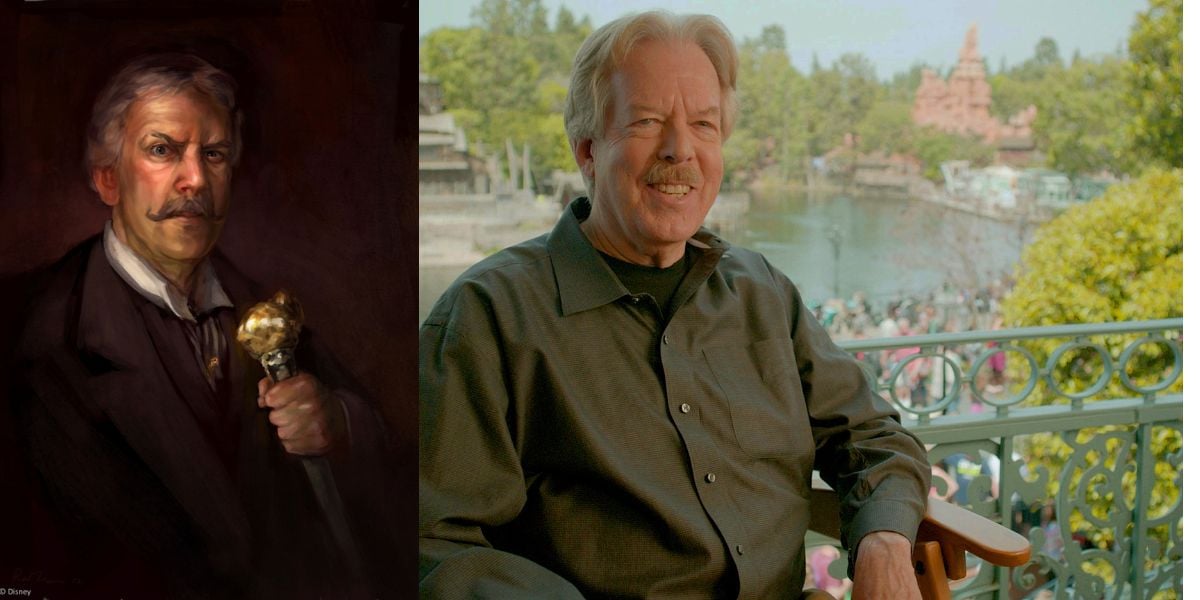
The contrasting perspectives bofMangum and Baxter reflect the same friction playing out within the fandom: one camp views the attraction’s foundation as fundamentally tainted by its source material. In contrast, the other views the ride as a triumphant, independent folk adventure that stands above the film it borrowed from.
The Never-Ending Debate
The resurgence of the Splash Mountain debate comes at a sensitive time for Disney operations. With Tiana’s Bayou Adventure currently operating on both coasts, Disney had hoped the discourse would naturally taper off as guests embraced the new storyline.
However, ongoing operational hiccups, persistent animatronic downtime, and an upcoming multi-week refurbishment at Magic Kingdom have led critics to compare the old and new iterations constantly. Every time Tiana’s Bayou Adventure faces a mechanical hiccup, nostalgic fans use the moment to champion the legacy of its predecessor.
Meanwhile, Splash Mountain remains very much alive in one corner of the globe. At Tokyo Disneyland, where the resort is owned and managed by the Oriental Land Company under a licensing agreement, Splash Mountain continues to operate in Critter Country, drawing massive daily crowds and showing no signs of disappearing.
Kathy Mangum’s admission may have offered rare, behind-the-scenes transparency into Imagineering’s internal unease, but it certainly hasn’t changed public opinion. To many, the decision to base a multi-million-dollar headliner on a buried film was a logistical time bomb. But to generations of fans who fell in love with its catchy songs and thrilling drops, Splash Mountain remains an untouchable theme park legend—and one they are nowhere near finished defending.