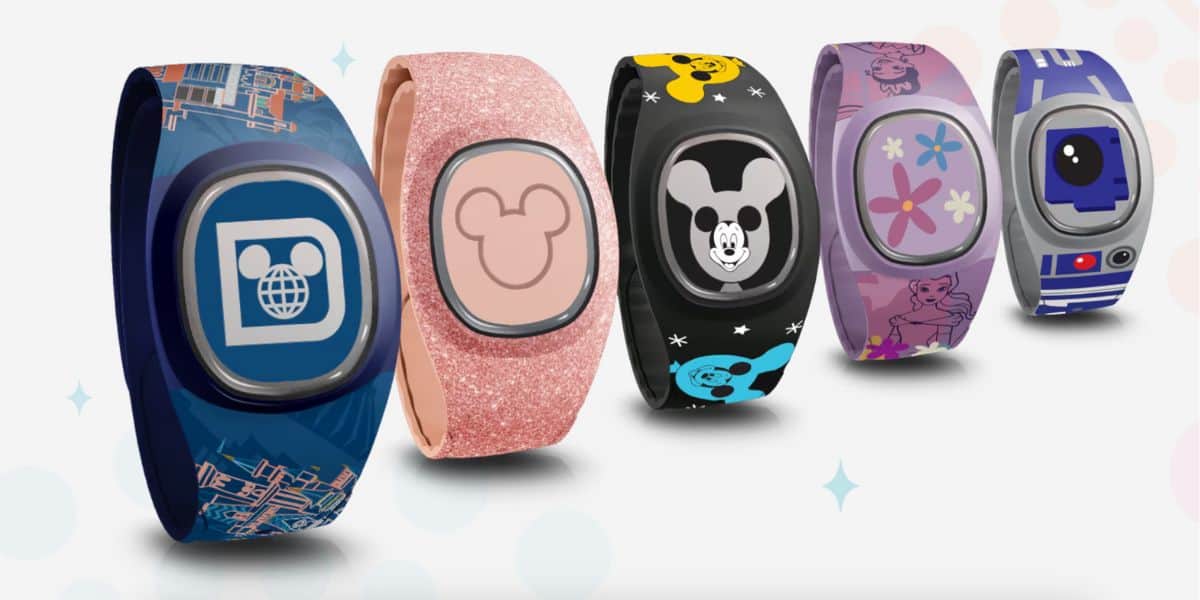
For more than ten years, wearing a colorful rubber wristband has been the universal rite of passage for entering Walt Disney World. Debuting in 2013, the MagicBand—and its current haptic sibling, the MagicBand+—completely transformed modern guest logistics. With a quick tap against a glowing Mickey touchpoint, travelers could bypass turnstiles, unlock resort doors, redeem Lightning Lane reservations, and buy snacks without ever touching a wallet.

It was widely considered one of the most successful, billion-dollar gambles in themed entertainment history.
Yet the very executive who pioneered the MagicBand is now betting that physical wearables are already yesterday’s technology.
John Padgett, the former Disney executive who spearheaded the development of the original MagicBand and MyMagic+ infrastructure, has launched a new company called Spaxial. As first reported by Forbes, Padgett is building what is described as the world’s first “experiential artificial intelligence platform”—a next-generation software architecture designed to make theme parks, cruise ships, resorts, and stadiums anticipate a guest’s every need without requiring wristbands, keycards, or glowing tap points.
The Mastermind Behind Theme Park Innovation
To appreciate the industry weight behind Spaxial, one has to examine Padgett’s career track record.

Over an 18-year career at The Walt Disney Company, Padgett rose to become the Head of Game-Changer Experience Development. During his tenure, he played a central role in several landmark operational shifts across Disney Parks:
- The MagicBand and MyMagic+: The sprawling, $1 billion IoT investment that unified resort booking, ticketing, and on-property spending.
- FastPass+: Disney’s pioneering digital reservation system, which served as the operational blueprint for modern digital queueing like Lightning Lane.
- Be Our Guest Restaurant: Magic Kingdom’s acclaimed Fantasyland dining venue, where rose-shaped RFID transponders allowed servers to track guests across sprawling themed dining rooms and deliver meals directly to their tables without assigned table numbers.
- Bibbidi Bobbidi Boutique: The experiential boutique makeover concept that became one of Disney’s most lucrative retail models.

After departing Disney, Padgett joined Carnival Corporation’s Princess Cruises as Chief Experience Officer (and later President). There, he pushed wearable technology further with the OceanMedallion. This quarter-sized wearable disc automatically unlocked stateroom doors on approach, accelerated embarkation, and enabled crew members to deliver food and beverages directly to wherever a passenger was sitting on the ship.
Now, through his development arm SpaxialWorks, Padgett is attempting to eliminate the physical wearable
What Is Spaxial, and How Does It Work?
While wearables streamlined transactions, they still introduced friction into vacation planning. Bands must be purchased, shipped, charged, synced, and constantly tapped against physical scanners. Smartphones, meanwhile, solve the hardware distribution problem but tether guests to their screens for hours during family vacations.

Spaxial aims to remove both hurdles by building an ambient Internet of Things (IoT) ecosystem layered directly on top of an operator’s existing digital framework.
According to Forbes, the platform operates through a patent-pending fusion of three core elements:
- Secure Identity: A frictionless, privacy-conscious architecture that authenticates guests without requiring them to scan credentials or present screens repeatedly.
- Precision Spatial Location: An array of location-based environmental sensors that track guest movement and flow across massive physical venues in real time.
- Proprietary Experiential AI: Machine learning models that continuously digest guest preferences, schedule changes, and live movements to trigger proactive service.
Traditionally, theme park operations are heavily fragmented. Hotel reservations, dining systems, mobile apps, queue management software, and point-of-sale registers rarely sync seamlessly. Spaxial acts as an intelligent digital overlay, integrating these isolated systems into one unified engine that understands not just who a guest is, but the exact real-time context of their visit.
Elevating Front-Line Staff Rather Than Replacing Them
While much of the current corporate rush into artificial intelligence revolves around automated chatbots and labor reduction, Padgett insists Spaxial is designed to achieve the opposite: empowering front-line staff to deliver richer, more personalized hospitality.

Speaking to Forbes, Padgett drew a sharp distinction between back-office cost-cutting and front-of-house guest experience:
“The leisure travel and entertainment industry is infusing AI into the call centers and the back office, and that certainly helps with cost efficiencies, but true topline value is created in front of the guest via better service delivery. That’s where Spaxial is focused.”
Instead of forcing staff to stare down at register screens or manually enter reservation confirmation codes, Spaxial provides them with contextual, real-time insights before an interaction even begins.
For example, when a guest approaches a hotel desk, guest relations window, or quick-service counter, the cast member can be automatically alerted to the guest’s name, dietary restrictions, party size, and even recent service disruptions—such as an unexpected ride breakdown earlier in the day. This enables staff to resolve issues and deliver proactive service before the guest even asks.
Where Will We See Experiential AI First?
Because Spaxial is an independent platform, it is not a Disney-owned product. With Walt Disney World heavily invested in its MagicBand+ lineup and the My Disney Experience app ecosystem, a near-term rollout in Orlando or Anaheim is unlikely.

Instead, international entertainment developers are emerging as the most probable testing grounds. As noted in industry reporting, a strong contender is Miral, the government-backed asset developer that operates the sprawling leisure hub on Yas Island in Abu Dhabi—including Ferrari World, Warner Bros. World, and SeaWorld Yas Island. Miral has invested substantial capital in contactless, biometric, and AI infrastructure and is partnering with Disney on upcoming entertainment initiatives in the region.
From paper ride tickets to plastic keycards and RFID wristbands, theme park technology has always marched toward friction-free convenience. If the inventor of the MagicBand succeeds with his latest venture, the next era of theme park vacations won’t require tapping a band against a reader at all—the entire resort will simply know who you are and what you need, entirely in the background.