Disney’s Changes Decades of ‘Star Wars’ Canon With New Sequel Trilogy Project

Nearly seven years after Star Wars: Episode IX – The Rise of Skywalker hit theaters in 2019, its ending is still one of the most argued-over moments in the entire saga.
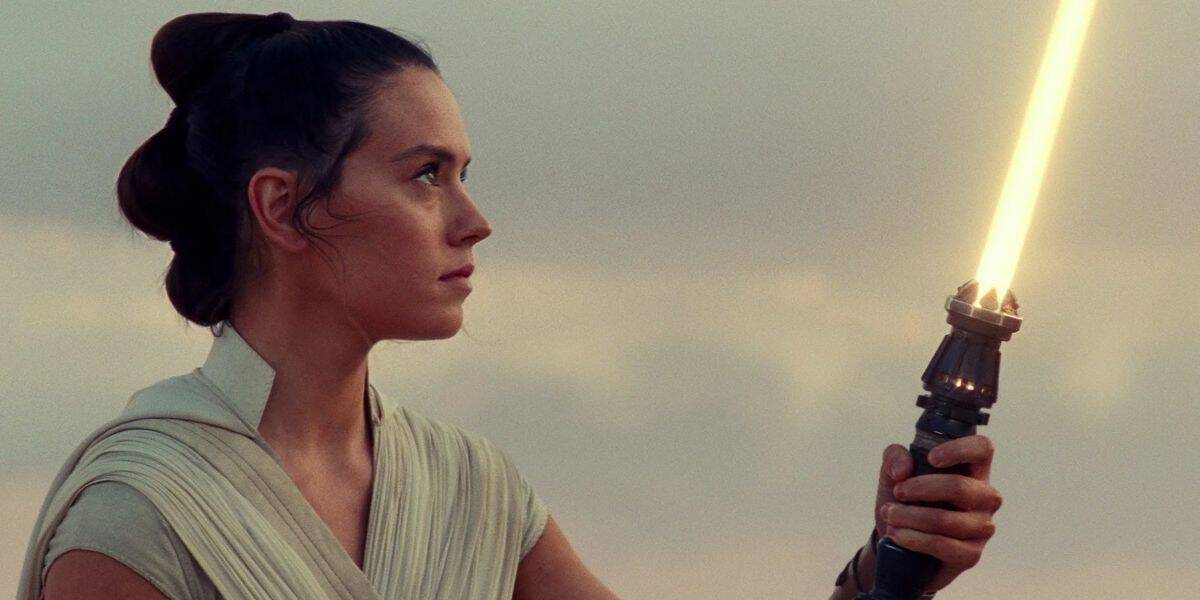
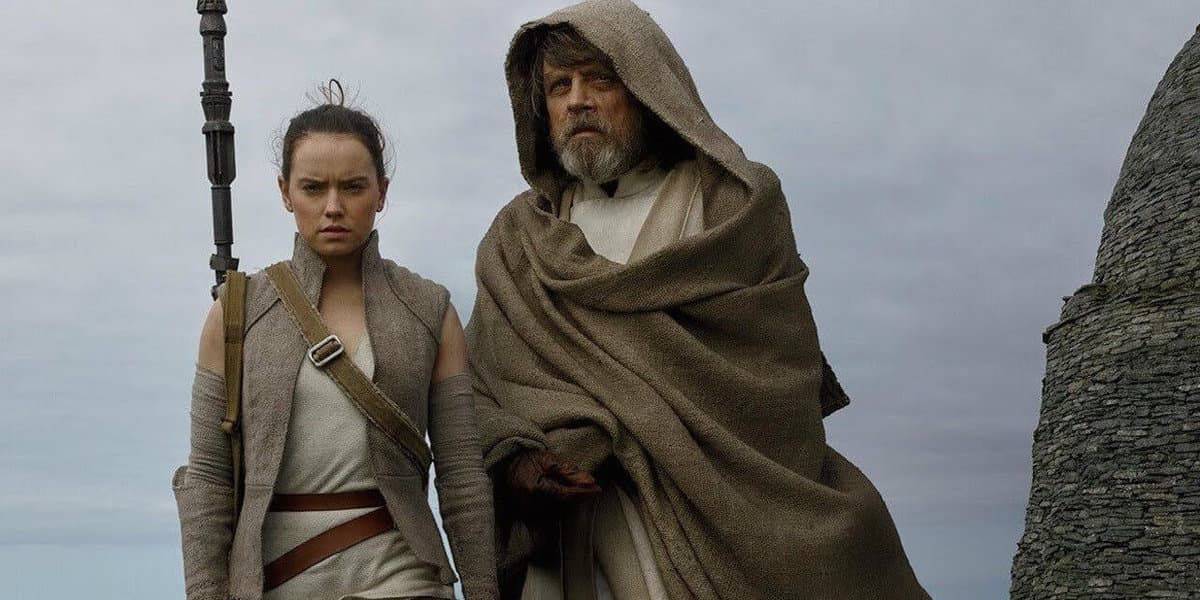
After Rey (Daisy Ridley) defeats Palpatine (Ian McDiarmid) on Exegol, she buries the lightsabers of Luke and Leia Skywalker on Tatooine and tells a passerby that her name is “Rey Skywalker.” For years, critics have framed that line as Rey simply crowning herself, an apparent contradiction of Star Wars: Episode VIII – The Last Jedi‘s (2017) message that heroism doesn’t require a famous last name. Now, two pieces of supplemental Star Wars canon are working together to change that reading entirely — and reshape what the Jedi Order itself is allowed to look like going forward.
Two New Stories Are Finally Explaining Rey’s Ending
The first piece of the puzzle comes from an updated edition of “The Secrets of the Jedi: The Chronicles of Luke Skywalker,” which added a first-person passage from Rey. In it, she explains that she took the Skywalker name to honor Luke’s sacrifice and to carry his fight forward, not to claim a bloodline. It reframes “Skywalker” less as an inheritance and more as a set of values Rey chose to carry.

A 2025 Marvel Comics adaptation by Jody Houser and Will Sliney added to that picture visually, finally giving faces to Force ghosts in the previously audio-only “All the Jedi” sequence — including Qui-Gon Jinn, Obi-Wan Kenobi, Ahsoka Tano, and Luke Skywalker.
But the most significant reframing yet comes from Madeleine Roux’s novel “Star Wars: Legacy,” set between The Last Jedi and The Rise of Skywalker. According to reports, the book’s final chapter shows Rey and General Leia Organa repairing the shattered Skywalker lightsaber together on the planet Tython. Once the weapon is whole again, Rey tells Leia the lightsaber “belonged to your family,” adding, “I don’t know if I could have done this without you. And this isn’t just mine; it belonged to your family.” Leia’s response is simple: “Rey, I think you know that it still does.” The novel’s final word, fittingly, is “Belonging.”
That single exchange changes everything about how Rey’s declaration on Tatooine reads. Instead of a spontaneous, self-authored claim to a legacy she wasn’t entitled to — the interpretation that drew so much backlash — it becomes something closer to an invitation Rey is finally accepting. Leia had already told her she belonged to the family before Episode IX even began. Combined with the passage from “The Secrets of the Jedi,” Rey’s ending now has two distinct threads of justification: Luke providing the “why” through values and sacrifice, and Leia, through “Legacy,” providing the “who says so” through an explicit familial welcome.

Rey Is About to Break One of the Jedi’s Oldest Rules
“Legacy” isn’t just softening a divisive ending — it’s setting up a fundamental break in how the Jedi Order itself is built.
Since the prequel trilogy, Jedi doctrine has treated attachment — romantic love, family ties, even personal loyalty — as a dangerous first step toward the dark side. Anakin Skywalker’s (Hayden Christensen) secret marriage to Padmé (Natalie Portman) and his refusal to let her go remain the clearest cautionary tale in the saga, and Luke Skywalker wrestled with the same warning decades later.
Roux’s novel challenges that doctrine directly. As Rey and Leia study Jedi history and texts while repairing Luke’s lightsaber, Rey begins questioning the Order’s past failures — from isolated temples built around trials and riddles, to the destruction of Luke’s school, to the long-standing practice of taking Force-sensitive children away from their families.

That questioning culminates in a direct challenge to the anti-attachment doctrine. Rey tells Leia: “Jedi were taught to let go of all attachments, but everyone needs something to fight for, and more than just ideas, people.”
It’s a line that reframes attachment not as a weakness to be trained out of every Jedi, but as a source of strength worth protecting — and it strongly suggests that whatever Order Rey eventually builds will look nothing like the isolated, emotionally restrictive institution seen in the prequels. It also lines up with ideas the sequel trilogy already raised, since Luke himself criticized the Jedi’s historical failures in The Last Jedi, and Rey’s arc has always centered more on found family than doctrine.
Where This Could Go Next
This shift is likely to play directly into the long-rumored “New Jedi Order” film from Sharmeen Obaid-Chinoy, first announced at Star Wars Celebration 2023 in London. That project has seemingly stalled but hasn’t been canceled, and there’s a real possibility it could eventually be folded into producer Simon Kinberg’s separately announced trilogy plans.

The timing matters, too. After a seven-year gap between Star Wars films, The Mandalorian and Grogu finally hit theaters in May 2026, with Shawn Levy’s Starfighter set for 2027. Three previously announced films — from James Mangold, Dave Filoni, and Sharmeen Obaid-Chinoy — remain stalled, leaving Rey’s future role in the saga genuinely uncertain.
A Franchise Looking Back to Move Forward
As all of this new Jedi history circulates, Lucasfilm is also revisiting where the saga started. With the 50th anniversary of Star Wars: Episode IV – A New Hope approaching in 2027, Disney and Lucasfilm have confirmed a full Welsh-language dub of the original film. Announced at the National Eisteddfod, the project — titled Star Wars: Gobaith Newydd — is a partnership between Lucasfilm, Disney, S4C, and the Welsh Government via Creative Wales, and will broadcast on S4C and its platforms starting Christmas Day.

The dub leans heavily on Welsh acting talent: Matthew Rhys voices Han Solo, Rhys Ifans takes on Obi-Wan Kenobi, and Aimee-Ffion Edwards plays Princess Leia. Mark Lewis Jones voices Darth Vader, while newcomer Osian Morgan steps into the role of Luke Skywalker. The supporting cast includes Llyr Ifans as C-3PO, Nia Roberts as Aunt Beru, Richard Harrington as Grand Moff Tarkin, Owain Arthur as Red Leader, and Rhodri Meilir as Gold Leader. Ellyn Stern directs, with Lucasfilm’s Director of Distribution Operations, Michael Kohn, producing.
Between a reframed ending, a challenged Jedi doctrine, and a fresh look at where the saga began, Star Wars is clearly in the middle of reassessing its own history — all while its future films remain very much up in the air.

What This Means for You
If you’ve spent years frustrated by Rey’s “Rey Skywalker” line in The Rise of Skywalker, the newly reported content from “Star Wars: Legacy” gives that ending a stronger textual foundation than the film itself provided — though it’s worth noting these are supplemental novel and comic details reported secondhand, not confirmed on-screen canon, so some particulars could shift as the book reaches wider release. The bigger story to watch is what kind of Jedi Order Rey builds next, and whether Sharmeen Obaid-Chinoy’s stalled film or Simon Kinberg’s trilogy ends up being the project that finally shows it.
How do you feel about the Star Wars saga moving forward? Let us know in the comments down below!