

For a lot of Disney World fans, the word “temporary” doesn’t carry the same weight it used to.
We’ve seen this before. A change rolls out quietly, usually tied to crowds or seasonal demand. Guests are told it’ll pass. Then it lingers. Then it sticks. And eventually, it becomes part of the experience whether anyone officially announces it or not.
That’s exactly why the latest bus restriction at Disney Springs is getting more attention than you might expect.
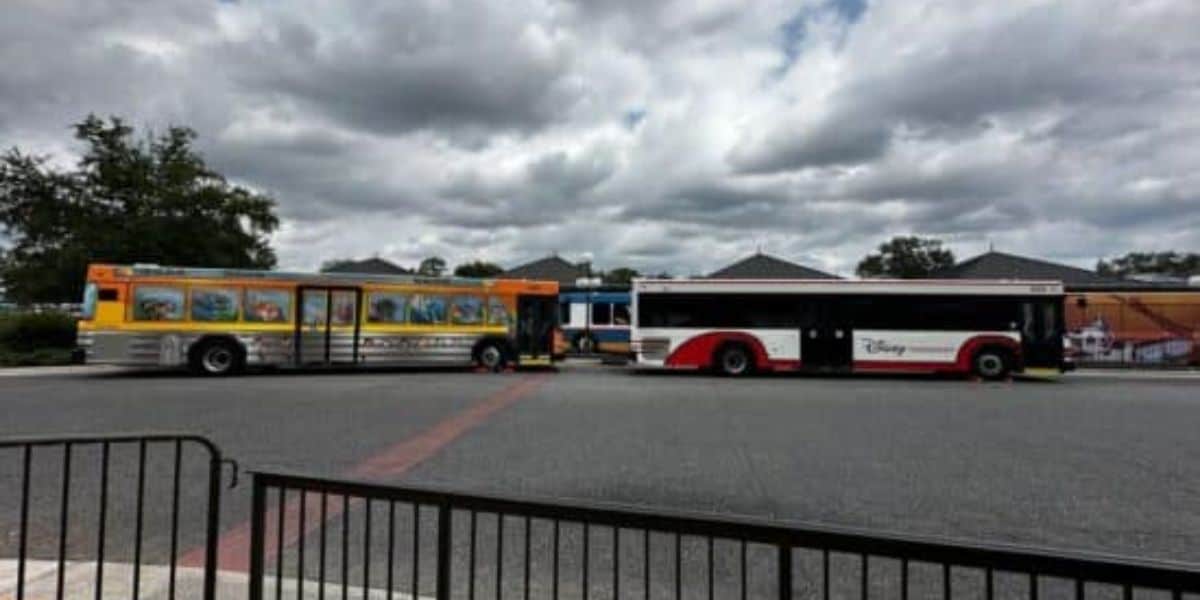
At first glance, this feels like a standard crowd-control move. During the busy Easter season, Disney has limited who can board buses from Disney Springs to its resort hotels. If you’re not staying at a Disney Resort—or don’t have a dining reservation or booked activity—you’re likely not getting on that bus.
Simple enough.
But the longer you think about it, the more this starts to feel like something bigger.
A System That Was Always a Little Too Open
For years, Disney Springs has quietly functioned as one of the easiest access points into the broader Disney World bubble.
Guests could park for free, walk around, grab a meal, and then hop on a bus to a Disney Resort hotel. No reservation required. No questions asked. It wasn’t necessarily promoted as a strategy, but it was widely known among frequent visitors.
And from a guest perspective, it made sense. Disney transportation felt like part of the overall experience—something that connected everything together.
From Disney’s perspective, though, it was a bit of a gray area.
You had guests using resort transportation without actually staying at those resorts. During slower times, that might not matter. But when crowds spike? That system starts to strain.
Why This Change Makes So Much Sense for Disney
Now look at what Disney is doing.
By limiting bus access to:
- Resort guests
- Guests with dining reservations
- Guests with booked experiences
Disney is tightening control over who gets to use one of its most in-demand transportation systems.
And honestly, from a business standpoint, it’s hard to argue against it.
Transportation costs money. Staffing costs money. Maintenance costs money. And if those buses are filled with guests who aren’t contributing to resort revenue, that’s a problem Disney has every reason to solve.
This restriction does two things immediately:
- It prioritizes guests who are actively spending within the resort system
- It reduces overcrowding on buses during peak times
If those two things improve the overall experience for paying guests, that’s a win in Disney’s eyes.
The “Temporary” Pattern Disney Keeps Repeating
Here’s where longtime fans start raising eyebrows.
Disney has a history of testing operational changes during high-demand periods. Holiday crowds. Spring break. Summer peaks. These are the moments when adjustments feel justified.
But once those changes are in place, they don’t always disappear.
We’ve seen it with resort perks. We’ve seen it with transportation changes in the past. We’ve seen it with the broader shift toward paid convenience systems like Lightning Lane.
What starts as a temporary measure often becomes the new baseline.
And the reasoning is simple: if guests adapt, and operations improve, there’s no real incentive to reverse course.

Guest Reaction Is Split—And That Matters
Not everyone is reacting to this change the same way.
For some guests—especially locals or frequent visitors—this feels like a loss of flexibility. Disney Springs used to be a reliable workaround, a place where you could pivot your plans and still access the resorts without much hassle.
Now, that option is limited.
But for resort guests, the experience may actually improve.
Fewer people competing for bus space. Shorter waits. A system that feels more exclusive and more aligned with what they’re paying for.
And that’s where Disney’s decision-making gets interesting.
If the feedback from resort guests is positive—and if operations run smoother—there’s a strong argument for keeping the restriction in place.
This Might Be About More Than Easter Crowds
It’s easy to frame this as a seasonal adjustment.
But it fits into a much larger trend happening across Disney World.
Over the past several years, Disney has been redefining what it means to stay “inside the bubble.” Perks that were once widely accessible are now more closely tied to being an on-property guest.
Transportation is one of the last pieces of that puzzle.
By limiting access at Disney Springs, Disney is reinforcing the idea that convenience is something you earn by staying on-site.
And if that becomes the standard, this change stops being temporary.
What Happens Next?
Right now, the expectation is that these restrictions will ease once the Easter crowds die down.
And maybe they will.
But if the system proves to be more efficient—and if Disney sees measurable benefits—it wouldn’t be surprising to see this return during future peak periods… and eventually stick around even longer.
That’s how these things tend to evolve.
The Bigger Shift You Can’t Ignore
At the end of the day, this isn’t just about buses.
It’s about how Disney World continues to refine its operations around its most valuable guests.
The era of completely open, flexible access across the entire resort is slowly changing. Not disappearing entirely—but becoming more structured, more controlled, and more tied to where you stay and what you book.
So yes, this bus restriction might be temporary.
But if history tells us anything, it’s that “temporary” at Disney World doesn’t always mean what it used to.
And this could very easily be the next change that sticks.



While I understand they want to limit it to just resort guests it’s kind of not fair to guests that have annual passes or those guests that choose to stay off property. If they aren’t staying at one of the resorts but still visit and spend money at those resorts than they’re still contributing to transportation costs. I’m a local annual pass holder and enjoy going over to the resorts to grab a bite to eat not necessarily one with reservations required. I love going over for different holidays to enjoy seeing the decorations and usually end up buying something whether it be food or souvenirs. Personally, I would much rather be able to park at a resort, go in do what I planned and leave but that’s not possible. There really is no other choice other than bus transportation from Disney Springs or park at one of the parks and use Skyline, monorail or boat.