The conversation surrounding theme park capacity at Walt Disney World has officially reached a fever pitch. With massive, multi-year expansions actively underway—most notably the earth-moving progress for the Cars franchise in Frontierland and the highly anticipated Villains Land—The Walt Disney Company is working hard to expand the physical boundaries of the Magic Kingdom.
The park needs to hold more people, distribute daytime crowds more effectively, and lower the astronomical standby wait times that can frequently bog down a vacation.
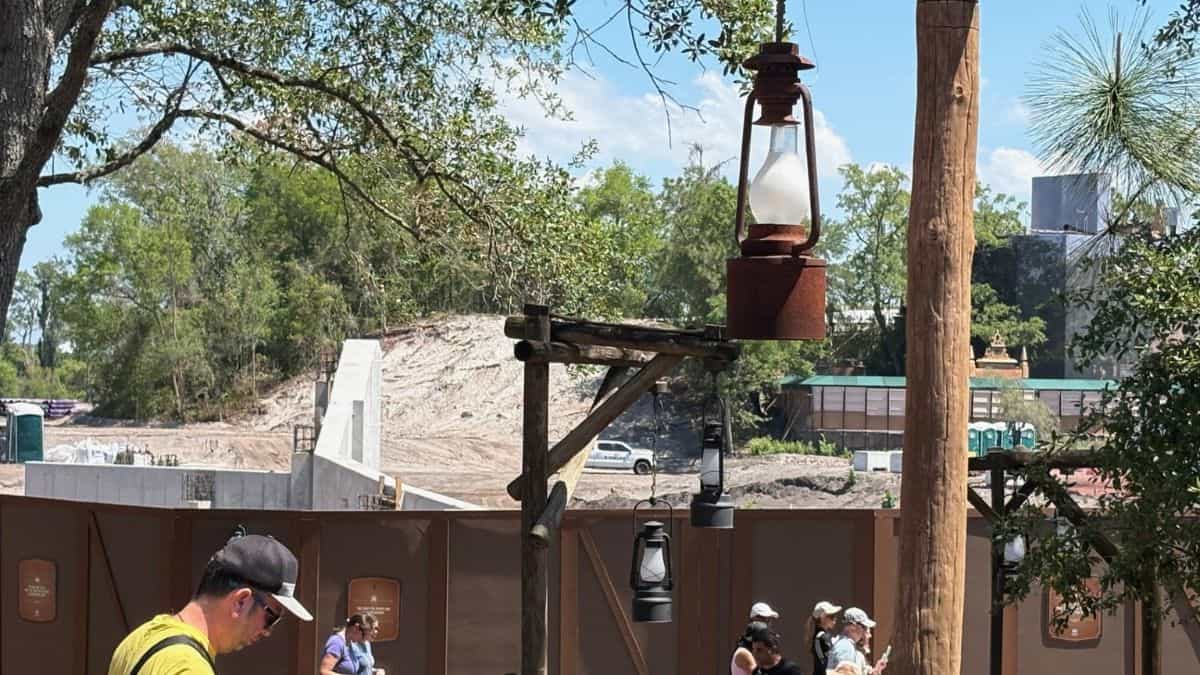
However, clearing uncharted territory beyond the park’s current railroad tracks takes a long time. Ground-up expansions require half a decade of environmental clearance, utility routing, and extensive foundation work before a single guest can board a new ride. This leaves a multi-year gap where Magic Kingdom must somehow absorb growing global attendance within its existing footprint.
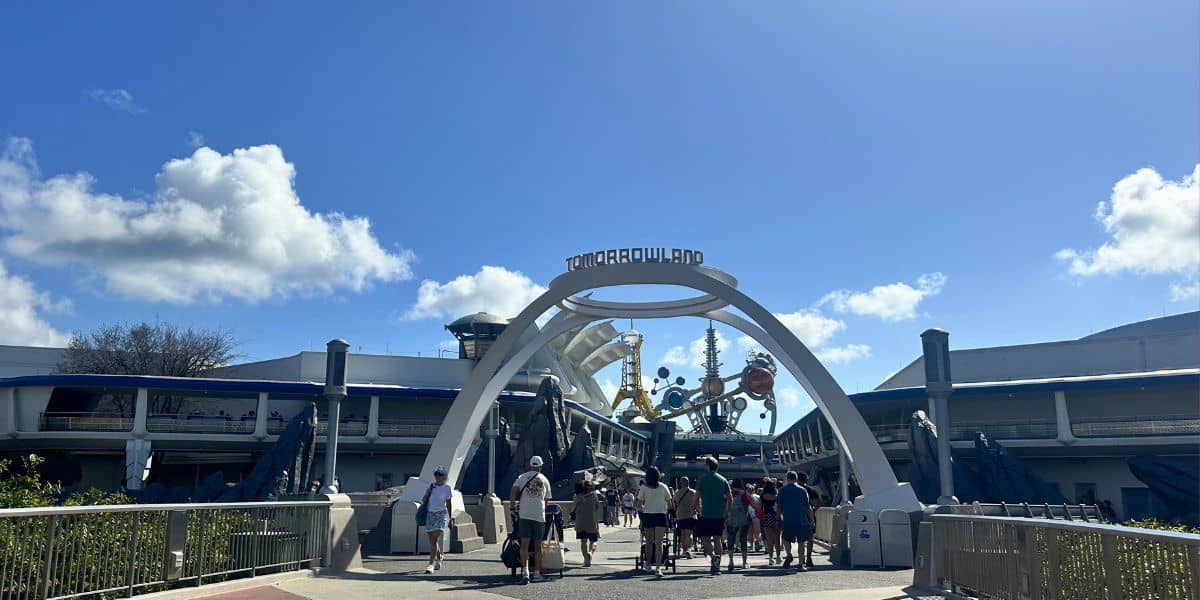
The most efficient solution to this capacity crisis doesn’t require clearing a single new acre of Florida forest. Instead, the ultimate fix is hiding directly beneath the neon signs and retro-futuristic beams of Tomorrowland.
As highlighted by theme park analysts and commentators, right-side congestion could be permanently solved if Disney finally capitalized on its most underutilized real estate: the completely abandoned Stitch’s Great Escape building and the massive, land-guzzling footprint of the Tomorrowland Speedway.
The 8-Year Vacancy: Activating the Haunted Stitch Building
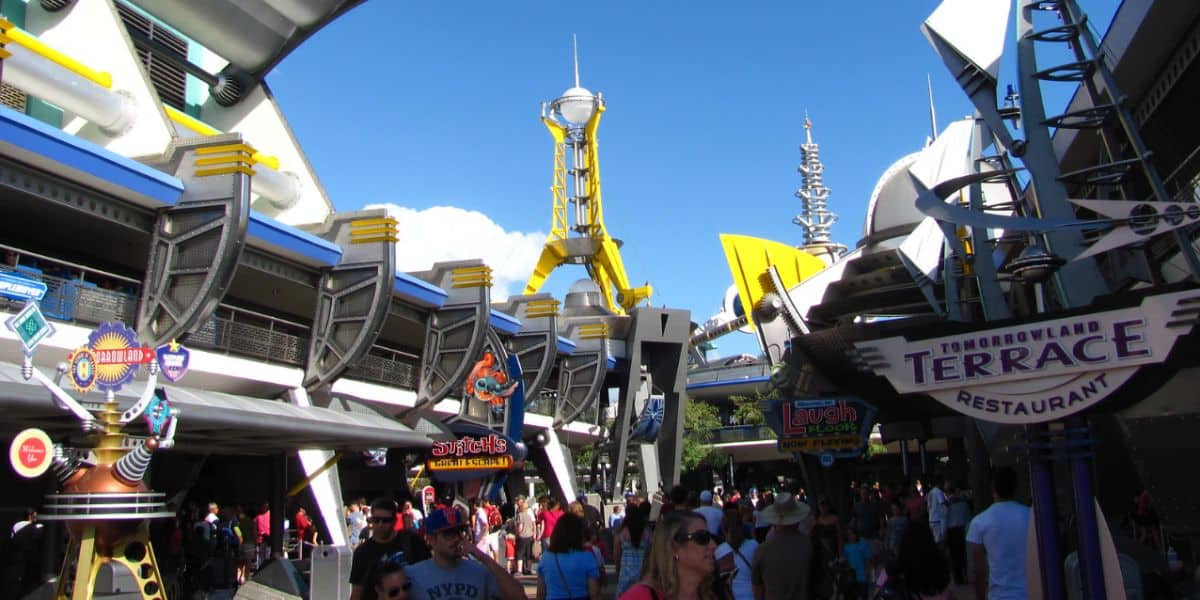
To understand the sheer scale of wasted crowd-absorption potential inside the Magic Kingdom, one only needs to look at the massive, dormant show building sitting directly across from the Monsters, Inc. Laugh Floor.

This premier double-theater complex was historically a foundational “people-eater” for the park. Over the decades, it successfully cycled thousands of guests per hour through various iterations, including Flight to the Moon, Mission to Mars, the terrifyingly brilliant ExtraTERRORestrial Alien Encounter, and finally, Stitch’s Great Escape! in 2004.
While the Stitch overlay divided fans due to its intense sensory mechanics (and that infamous, chili-dog-scented burp effect), the attraction executed a vital operational task: it pulled up to 1,000 guests per hour off the hot asphalt and into a controlled, air-conditioned indoor environment, significantly shortening the lines at nearby outdoor queues.
When the attraction quietly went dark in January 2018, it was initially placed on a seasonal schedule. By 2020, Disney officially confirmed its permanent retirement.
It is now 2026, and this incredibly valuable piece of theme park real estate has sat completely vacant for nearly eight years. Aside from the Tomorrowland Transit Authority PeopleMover gliding directly through its upper rafters—offering riders a brief, surreal glimpse into a pitch-black, hollowed-out room—the venue serves little more than a seasonal character-greeting alcove.
Leaving a dual-theater infrastructure empty in the world’s most heavily visited theme park is an incredible operational oversight. Imagineering wouldn’t need to pour a new foundation or build an external shell to fix this. The structural walls, internal wiring, and queue pathways are fully intact.

Whether Disney repurposes the space for a high-tech 3D media simulator, an interactive walk-through experience, or a trackless dark ride, reopening the Stitch building is the single fastest, lowest-risk avenue to immediately injecting vital crowd capacity into the front of Tomorrowland.
Reclaiming the 5-Acre Exhaust Cloud: The Speedway Dilemma
If the Stitch building represents a failure to utilize existing indoor structures, the Tomorrowland Speedway represents a failure to maximize premium physical land.

Opening alongside the park on October 1, 1971, the Speedway holds immense historical significance. For generations of young children, getting behind the wheel of a “real” car for the first time has been a quintessential childhood milestone. But as the park navigates the late 2020s, the ride’s current format feels profoundly out of step with Tomorrowland’s thematic goals and the park’s logistical realities.
The Tomorrowland Speedway occupies roughly five acres of prime theme park real estate. The concrete track winds across a massive swath of land wedged directly between the Mad Tea Party in Fantasyland and the ultra-sleek TRON Lightcycle / Run plaza.
When evaluated from a capacity-to-footprint ratio, the math simply fails. The attraction demands a massive amount of physical space while yielding a remarkably low hourly guest throughput due to slow loading times, strict spacing requirements, and frequent operational vehicle delays.
Furthermore, the ride’s loud, gas-guzzling internal combustion engines emit constant noise pollution and an overwhelming smell of exhaust fumes, an aesthetic conflict with the clean-energy, high-tech vibe anchored by TRON.
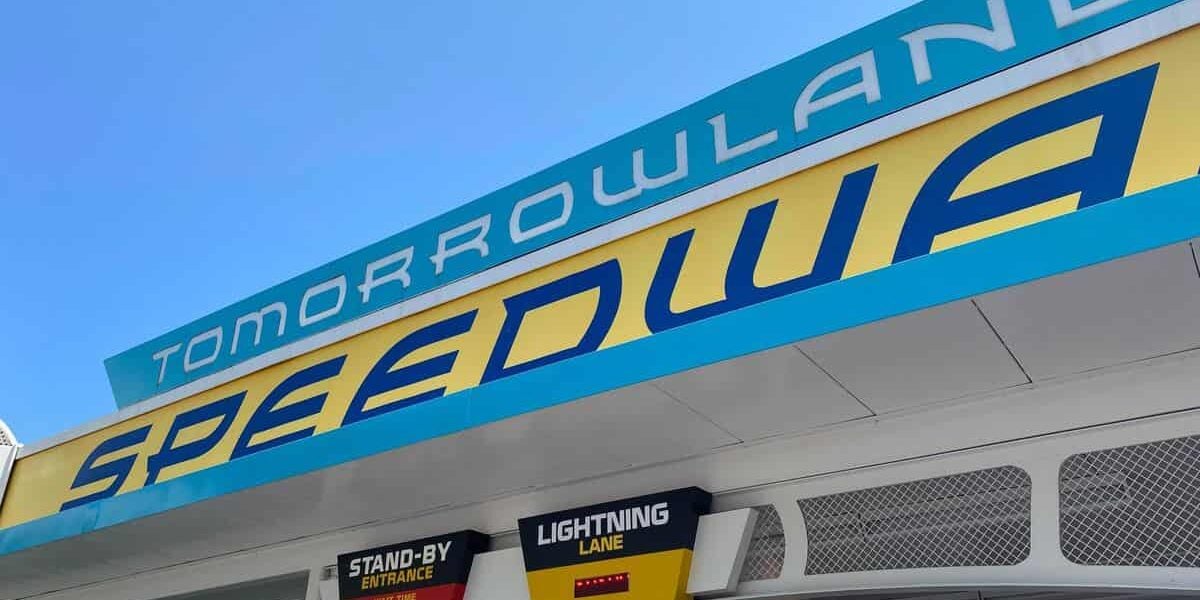
If Disney wants to truly future-proof the right side of the park, removing or radically downsizing the Tomorrowland Speedway for a higher-capacity experience is the ultimate move.
The acreage currently occupied by the Speedway track is large enough to accommodate a massive, multi-launch indoor steel coaster, a cutting-edge dark ride, or an entire, highly themed mini-land. Alternatively, Disney could execute a “Speedway Swap”: transitioning the ride to a vertically stacked, high-efficiency electric vehicle (EV) racing layout. This would preserve the nostalgic joy of a driving attraction for families while freeing up over half the land for a brand-new, high-capacity E-ticket attraction.
Balancing the Magic Kingdom Ecosystem
Optimizing Tomorrowland is no longer just a creative preference; it is a park-wide operational necessity.
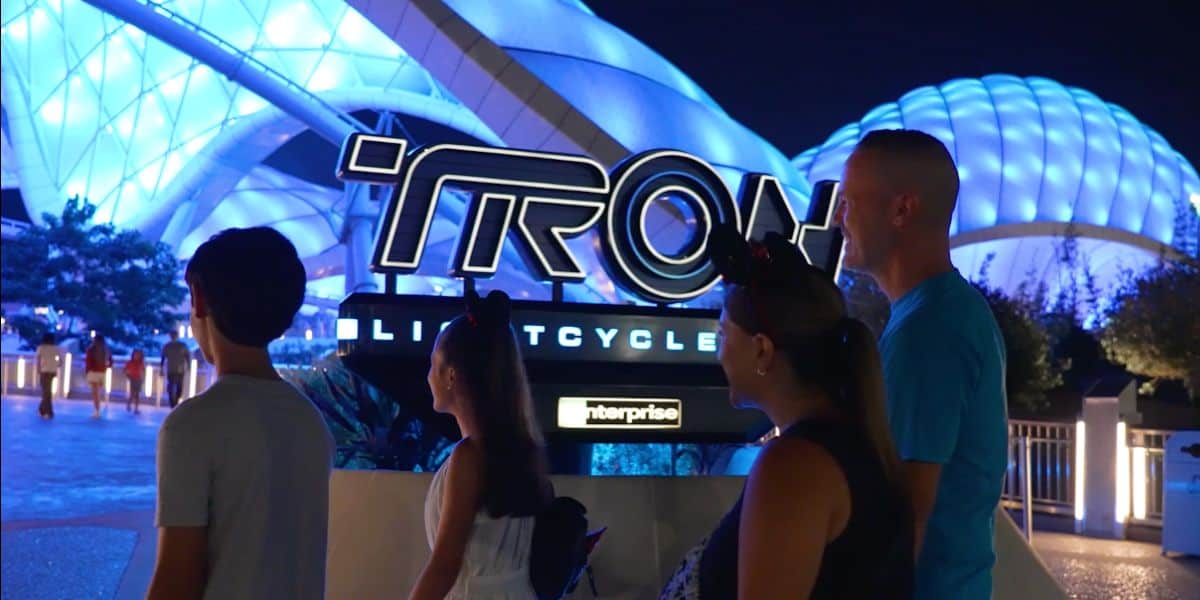
While the debut of TRON Lightcycle / Run successfully drew millions of guests toward the back right corner of the park, it relies heavily on a digital Virtual Queue and Lightning Lane framework. Guests who do not secure a riding group, or families traveling with toddlers who do not meet the strict height requirement, are frequently left with very few high-capacity options in the immediate vicinity.
By simultaneously unlocking the dormant Stitch show building and replacing or modernizing the aging Speedway, Disney can build a perfectly balanced ecosystem on the right side of the park. These changes would provide high-capacity, family-friendly alternatives that keep guests engaged, fed, and entertained without forcing them to return to the heavily congested central hubs of Fantasyland and Main Street, U.S.A.
The fastest path to relief for the Magic Kingdom doesn’t require waiting out half-decade expansion timelines. The structural foundations for immediate capacity relief are already built. They are sitting right inside Tomorrowland, waiting for Disney to turn the key finally.