

New Information Surfaces on ‘Star Wars’ Series Cancellation, New Ending Revealed

New details continue to emerge about one of Lucasfilm’s most hotly debated Disney+ experiments.

Set long before the Skywalker saga reshaped the galaxy, The Acolyte ventured into the High Republic era, a period rarely explored on screen. The series framed its story around a time when the Jedi Order wielded unmatched authority, while quietly planting the seeds of the ideological fractures that would eventually lead to its downfall.
Under the guidance of creator Leslye Headland, The Acolyte presented a version of Star Wars that resisted easy moral binaries. Rather than spotlighting chosen ones or familiar heroes’ journeys, the show emphasized conflicting interpretations of the Force, ethical compromise, and the earliest signs of Sith ideology creeping back into the galaxy.
That creative gamble quickly placed the series at the center of intense debate.
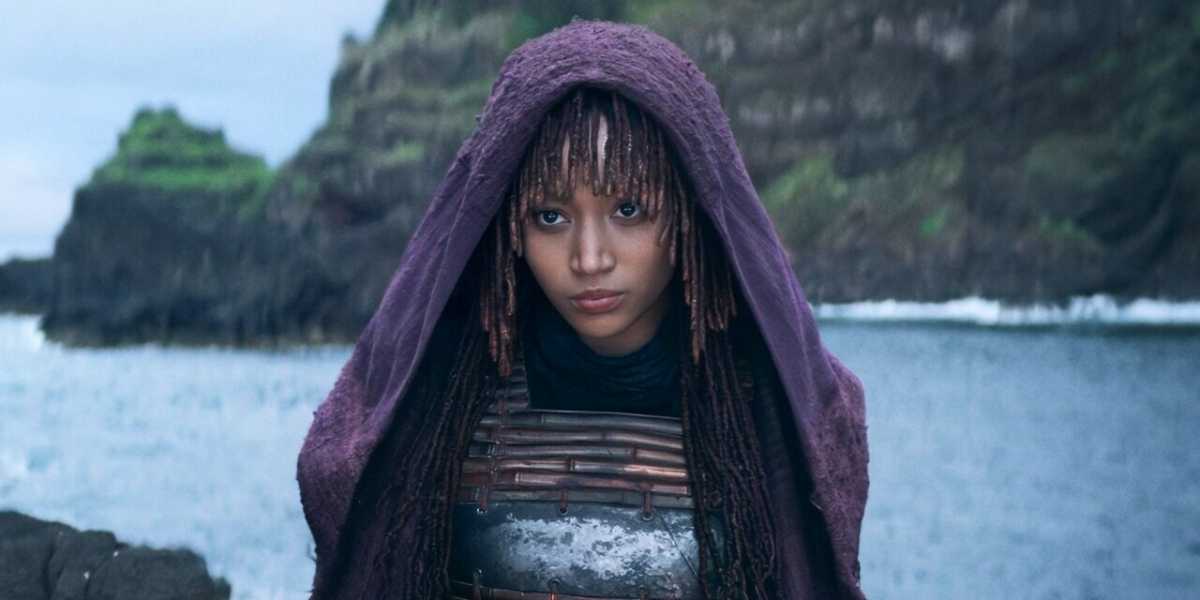
Following its premiere, The Acolyte sparked immediate and sustained discussion across fandom spaces. Viewers dissected its approach to canon, its darker tone, and its willingness to challenge long-held assumptions about the Jedi. Online conversations became increasingly polarized, with the show often positioned as a referendum on the future direction of Star Wars storytelling.
Among the most heavily discussed scenes was Osha’s decision to bleed a kyber crystal, shifting its color from blue to red. Rooted deeply in established lore, the moment resonated strongly with some fans, while others questioned its implications.
Despite strong acting and a narrative unafraid of experimentation, the series came to an abrupt end. Lucasfilm confirmed that The Acolyte would not return for a second season, with early reports citing underwhelming viewership as the primary reason.

That explanation, however, failed to convince everyone.
A sizable portion of the audience argued that the show’s cancellation reflected more than performance metrics. As debate intensified, cast members and creatives became targets of personal attacks. Amandla Stenberg (Osha/Mae Aniseya), Lee Jung-jae (Jedi Master Sol), Manny Jacinto (Qimir/The Stranger), and Jodie Turner-Smith (Mother Aniseya) were all subjected to online hostility that extended well beyond criticism of the series itself.
From its announcement, The Acolyte stood out for centering women and underrepresented voices within the franchise. Headland, a queer woman, led a diverse cast in a story that broadened the scope of Star Wars perspectives. Supporters praised the approach, while detractors accused Lucasfilm of placing social commentary ahead of traditional narrative priorities.

Disney leadership later addressed the cancellation more directly. Disney Entertainment co-chairman Alan Bergman pointed to financial realities, noting that the expense of producing a second season—particularly one set in the High Republic with its heavy reliance on visual effects and new environments—made continuation difficult. Yet analytics complicated that claim.
Data tracking audience demand suggested The Acolyte performed competitively within the franchise’s Disney+ lineup. Reports indicated the series surpassed Obi-Wan Kenobi, The Book of Boba Fett, and even Ahsoka in demand metrics, challenging the idea that interest had waned.
Taken together, the circumstances suggest a more complex outcome. The Acolyte appears to have fallen victim to a convergence of rising production costs, corporate recalibration, and a fractured fan response rather than a simple rejection by viewers.

Whether Osha, Qimir, and the early Sith storyline will ever be revisited remains uncertain. Still, the series continues to shape conversations about Star Wars, reflecting the same layered tensions that defined the era it sought to portray.
Additional insight into The Acolyte’s development reveals how close the series came to intersecting directly with the prequel trilogy.
Although the show concluded after a single season, its creative legacy has expanded through tie-in material, including novels and behind-the-scenes publications that shed light on unused ideas.

One of the most revealing additions is “The Art of Star Wars: The Acolyte” by Kristin Baver, scheduled for release on February 3, 2026. The book explores early concepts, design work, and commentary from the creative team, offering a clearer picture of what might have been.
As reported by The HoloFiles, the art book confirms that a late-cut scene would have featured the Galactic Senate building—a location synonymous with the prequel era. The structure famously appears in Star Wars: Episode I–The Phantom Menace (1999), Star Wars: Episode III–Attack of the Clones (2002), and Star Wars: Episode III–Revenge of the Sith (2005).

The removed sequence was planned for the finale and followed Vernestra Rwoh (Rebecca Henderson) as she exited the Senate. Outside the complex, she would have encountered Senator Rayencourt, engaging in a brief exchange meant to emphasize the political ramifications of her choice to betray Jedi Master Sol.
According to Headland, the scene clarified Vernestra’s internal conflict, culminating in a pointed remark from Rayencourt as she gazed up at the Senate building—an acknowledgment of her entry into the morally compromised world of galactic governance.
Ultimately, pacing concerns led to the scene’s removal. Headland explained that transitioning from the Senate moment back to Vernestra’s interaction with Yoda created tonal dissonance that proved difficult to resolve in the final cut.

Despite understanding the necessity of the decision, the showrunner expressed lingering regret.
“But as we were cutting things together, it did seem a little odd to end Vernestra’s story, but then come back to her talking to Yoda…It didn’t work in the edit, but it’s just one of those things that I really miss, you know,” Headland said (via The Direct) I’m so sad we had to cut this. It was a good one.”
For longtime fans, the inclusion of the Galactic Senate would have strengthened the connective tissue between eras. The chamber plays a pivotal role in Palpatine’s rise and the fall of the Republic, and its appearance would have subtly reinforced the long arc leading to the Jedi’s collapse.
Even without that moment, revelations like these continue to reshape perceptions of The Acolyte as a project that nearly embedded itself deeper into Star Wars cinematic history than initially realized.

The same art book also outlines ambitious plans for a second season—plans that would have extended the show’s reach into sequel trilogy territory.
Headland revealed that Qimir/The Stranger, portrayed by Manny Jacinto, was conceived as a foundational figure in dark side lore. Alongside the introduction of Darth Plagueis, Qimir was meant to establish a Sith-adjacent cult that would eventually evolve into the Knights of Ren.
In this framework, Qimir would have become the first Knight of Ren, forging a lineage that leads directly to Kylo Ren in Star Wars: Episode VII–The Force Awakens (2015) and Star Wars: Episode IX–The Rise of Skywalker (2019).
The Knights of Ren debuted in The Force Awakens as a shadowy group devoted to the dark side, operating outside Sith doctrine. By the sequel era, they served as Kylo Ren’s enforcers, representing chaos and raw power rather than structured hierarchy.

With The Acolyte concluded, Lucasfilm’s focus has shifted elsewhere. Ahsoka Season 2 is currently in production, The Mandalorian and Grogu (2026) is set to debut in theaters this year, and Shawn Levy’s Starfighter is scheduled for release in 2027. Additional projects remain in development as the studio continues refining its approach to the franchise.
How do you feel about this alternate ending to The Acolyte? Let us know in the comments down below!






I’m glad it was cancelled. The showrunner had no idea what she was doing. And as for the knights of ren in the old republic era, well thats just nonsense and evidence that they didn’t know what they were doing. The knights of Ren were named after Kylo so how could they have existed 1000 years earlier? Thanks for killing the franchise, Leslye.
Connecting Qimir to the Knights of Ren would have been interesting, his helmet has a Kylo Ren vibe to it, but it also would have been confusing. Kylo worshipped Vader, as seen in Force Awakens, not Qimir. Also the timelines between Qimir’s existence and the sequel era Knights of Ren are so far apart, even if there were a second season of Acolyte it would have come across as a desperate attempt to try to justify the useless Knights of Ren.
No, Disney mucked it all up proper and as much as I respect Kathleen Kennedy, she should have lead the Star Wars ship to much greater heights and much better movies. It’s shocking that such a great movie producer that literally had unlimited creative resources at her disposal would end up in a situation like this. I think it only proves that Disney made the most crucial mistake in the very beginning by tapping her as head of Lucasfilm. She was out of her depth, and again, for a woman that has handled so many massive movie productions in her career- extremely disappointing.
let’s get real…the real reason it didn’t do well, like other Disney projects of late…they had to muck up the Star Wars franchise with there Woke ideologies. plain and simple. Tell me I’m wrong.
I didn’t have time to watch Acolyte. Nor will I ever. Show is a waste of time. The show runner does not genuinely love star wars.
The show failed because too much about contradicted cannon. And to make it worse, Disney redefined what was cannon and still managed to screw up. The twins come from a mother and the Force. Yet such a thing had never happened before Anakin according to the Jedi council. Bleeding a crystal is done with a ritual that takes time. So far everything Disney has done with the franchise has been bad in some way. They need to step back from the franchise and only use people that love Star Wars and, most importantly, respect and have knowledge of the entire franchise including Legends.