Maurer Rides has introduced a new PeopleMover concept ahead of IAAPA Expo 2026 in Orlando, offering a striking comparison with Walt Disney World Resort’s familiar Tomorrowland attraction. Its Spike PM360 cabin stays level even when the track turns vertical or overhead. For Magic Kingdom visitors, however, the announcement establishes no replacement project, construction timetable or impending Tomorrowland shutdown.
The interesting question is what installing different technology would involve. The PeopleMover travels through an existing themed environment, making any hypothetical conversion a question of buildings, access and daily operations as well as vehicles.
What the Maurer Peoplemover Changes
In its official announcement, dated October 27, 2026, Maurer describes an electrically powered passenger transport system with a pivoting cabin. Each vehicle carries its own drive and braking equipment, using the company’s Spike rack-and-pinion technology.
The manufacturer presents potential applications including resort shuttles, urban connections and standalone attractions. Those are proposed uses, rather than named Disney installations. Its release says the PM360 is available for project inquiries.
IAAPA’s official exhibitor directory lists Maurer Rides for the Orlando event. The organizer’s schedule places the show floor at the Orange County Convention Center from November 17 through November 20, with education beginning November 16.
That puts the announcement in an industry marketplace where suppliers can discuss future projects. An exhibition listing does not establish a purchase by a particular park operator.

Why Magic Kingdom Presents a Different Challenge
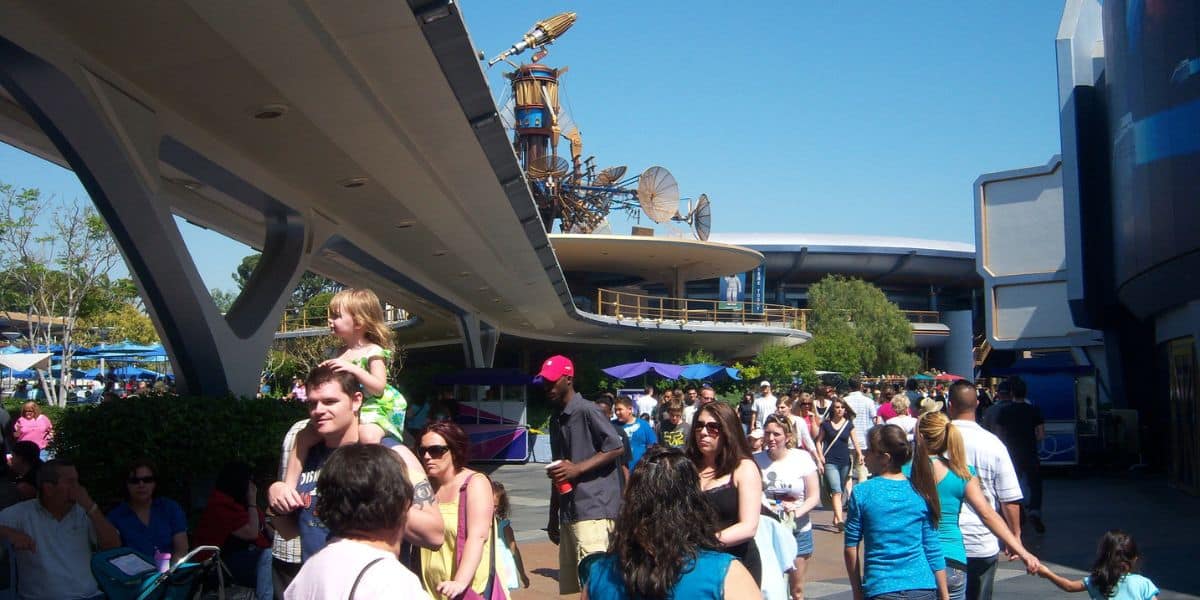
Disney describes the Tomorrowland Transit Authority PeopleMover as a ten-minute elevated tour powered by linear induction motors. Its route includes behind-the-scenes views of Space Mountain, Buzz Lightyear’s Space Ranger Spin and Star Traders, alongside the Progress City model.
Inside the Magic’s history of Disney’s PeopleMover traces the Magic Kingdom attraction to its July 1975 opening. Its appeal includes the relationship between the ride and the surrounding land, rather than simply the journey around a track.
Our earlier coverage of PeopleMover views inside Space Mountain illustrates that relationship. A replacement discussion would therefore need to address what happens along the route, including where vehicles pass through other attractions.
This is an operational inference from the documented route, not a published engineering assessment. Neither Disney’s attraction description nor Maurer’s announcement establishes whether PM360 could use the existing structure.

Construction Questions Remain Unanswered
A different propulsion system does not automatically require rebuilding every building beside it. Equally, a manufacturer’s flexible track designs do not demonstrate that its vehicles could operate on Disney’s existing guideway.
Before anyone could responsibly predict construction impacts, a conversion proposal would need to identify vehicle clearances, structural requirements, station arrangements and evacuation provisions. These are questions for a hypothetical design review, not findings about defects in Tomorrowland.
Past construction offers useful perspective without providing a replacement timetable. Inside the Magic previously documented Cool Ship construction beneath the PeopleMover’s elevated viewpoint, showing that nearby work and the ride’s operation can coexist.
Our coverage of entrance work at Buzz Lightyear’s Space Ranger Spin also shows how changes around one attraction can become visible from another. Neither example proves that replacing the PeopleMover would require closing Space Mountain or shutting down the entire land.
Calling that prospect a multi-year structural nightmare would put an unsupported conclusion ahead of an actual plan.

What This Means for Vacation Planning
For travelers, the distinction matters more than the concept art. The manufacturer’s announcement gives guests no reason, by itself, to remove the PeopleMover from an itinerary or anticipate construction walls across Tomorrowland.
Disney’s official attraction page remains the relevant starting point for ride information. Visitors should check Disney’s current operating information near their travel dates, since a product announcement cannot establish an attraction’s availability months later.
Changes also vary enormously in scope. Inside the Magic’s reporting on PeopleMover narration changes offers an example of an adjustment to the existing experience, rather than a new transportation system.
If Disney ever proposed a conversion, the practical questions would include the closure window, available alternatives and whether neighboring attractions would remain accessible. No such answers appear in the manufacturer’s release.

What to Watch at IAAPA
The next useful developments would be a detailed installation announcement, a named customer or technical information explaining how the system can fit a particular site. For a Disney story, an attributable Disney statement would carry considerably more weight than a shared product name.
At the expo, capacity, accessibility and loading arrangements would be useful subjects for further reporting. Those details could help explain where the product belongs in the market, while leaving any comparison with Magic Kingdom dependent on the requirements of that specific attraction.
Until then, PM360 represents another option in the passenger transportation market. Its capabilities invite comparison with Tomorrowland, but any claim about Disney buying it, replacing its PeopleMover or accepting years of disruption needs evidence that has not been established here.