The Walt Disney Company has spent seven decades cultivating its theme parks as carefully curated, immersive environments insulated from real-world politics. Within the berms of the Magic Kingdom and Disneyland, contemporary debates, corporate friction, and partisan campaigns are intentionally kept outside the gates. Maintaining this neutral atmosphere requires an extensive rulebook backed by a sophisticated private security network. While thousands of guests run afoul of minor regulations each year, few cases have tested Disney’s enforcement mechanisms quite like that of Dion Cini.
Between September 2018 and February 2019, Cini, a New York resident and former Marine, set off a nationwide legal and public-relations clash by staging repeated political demonstrations inside Disney theme parks. By the end of his campaign, he had accomplished something virtually unprecedented in modern amusement park history: receiving three separate lifetime trespass bans across both Walt Disney World in Florida and Disneyland in California.
This is the complete breakdown of how a sequence of campaign banners triggered Disney’s harshest operational penalties, and what the incidents reveal about how the world’s largest theme park operator polices speech, safety, and private property.
The First Warning: The Main Street U.S.A. Train Station (September 2018)
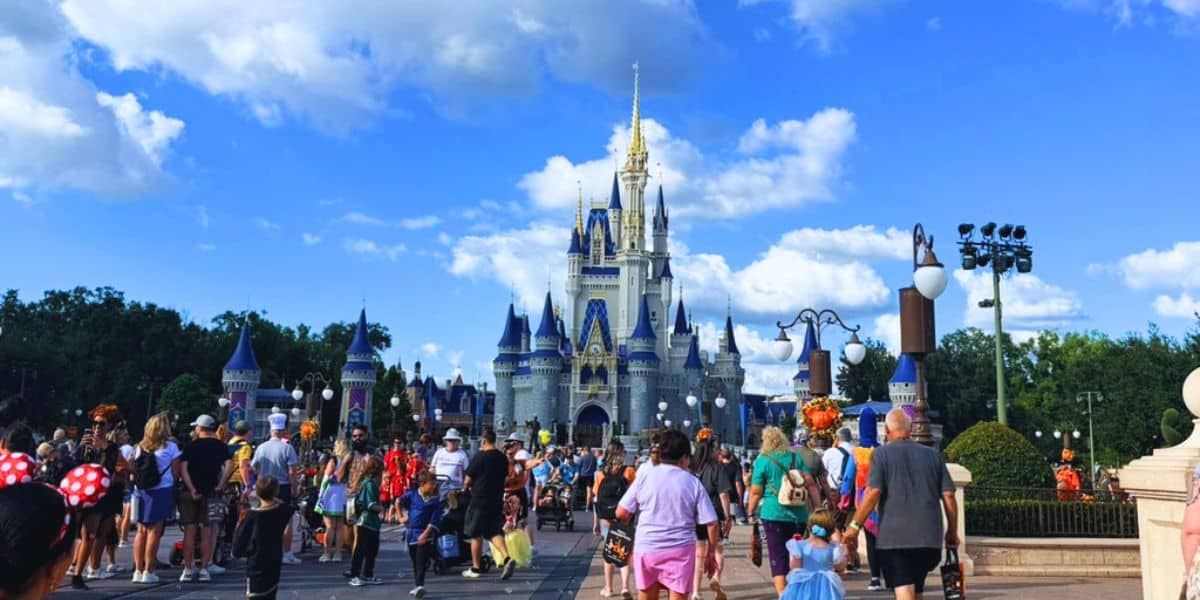
The conflict began in late September 2018 at the entrance of Magic Kingdom in Lake Buena Vista, Florida. Cini entered the park carrying a massive, custom-printed sign advocating for Donald Trump’s 2020 reelection campaign.
Rather than blending in with the crowds heading down Main Street, U.S.A., Cini climbed the grand staircase of the Main Street Train Station. Leaning over the second-floor balcony railing—directly above the turnstiles where thousands of arriving guests enter the park—he unfurled a banner measuring roughly 20 feet across.
Disney security intervened swiftly. Ejected from the park on the spot, Cini had his Annual Pass revoked and was served with a formal trespass notice by park security.

What happened next, however, was an anomaly in Disney’s operational history. Rather than upholding a permanent expulsion, Disney management opened a dialogue with Cini. Park officials agreed to lift the trespass order and reinstate his park privileges under one strict condition: he had to sign an agreement committing not to display signs, banners, or political propaganda designed to disrupt operations or provoke fellow visitors.
It was a remarkably lenient resolution from a company legendary for protecting its guest environment, but the compromise was short-lived.
Defiance on Splash Mountain: The Florida Lifetime Ban (November 2018)
On November 7, 2018—less than two months after receiving his conditional reinstatement—Cini returned to Walt Disney World to test the park’s enforcement threshold.

Instead of staging a stationary demonstration in an open plaza, Cini took his strategy onto the attractions themselves. Boarding Splash Mountain in Frontierland, he concealed a “Trump 2020” banner beneath his jacket. As his hollow log tipped over the final precipice and plummeted down Chickapin Hill, Cini held the banner high, angling it directly toward the high-speed automated camera that feeds Disney’s PhotoPass system.
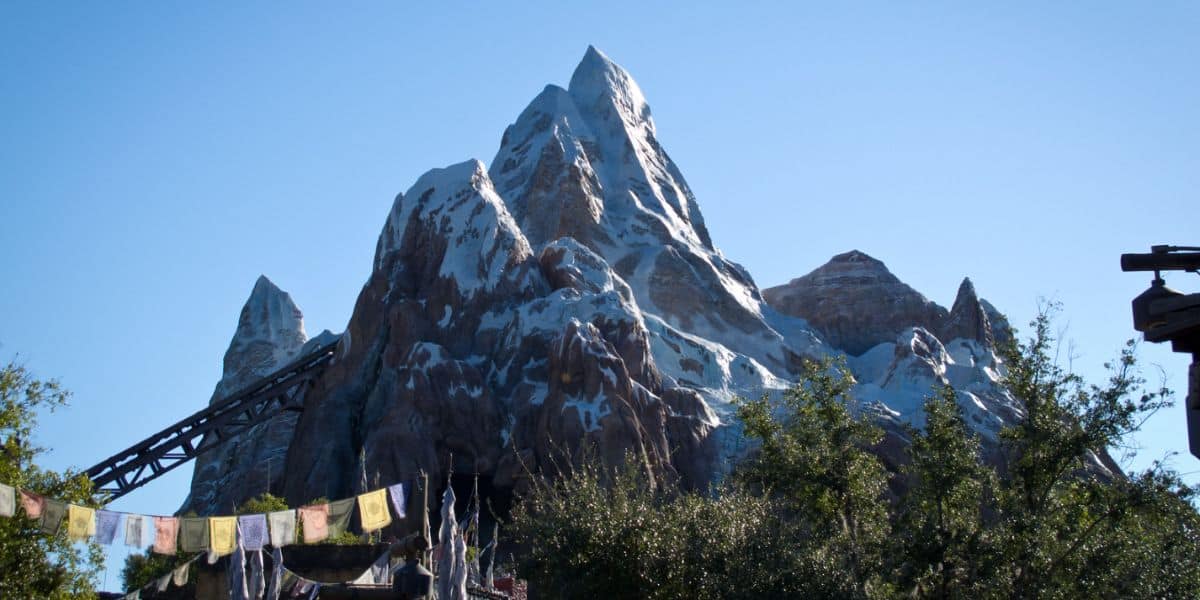
The image was automatically transmitted to the ride’s exit monitors, broadcasting the political slogan to hundreds of waiting families. Not content with a single stunt, Cini walked over to Disney’s Animal Kingdom later that afternoon and repeated the same maneuver on the 80-foot drop of Expedition Everest.
When Cini disembarked, deputies from the Orange County Sheriff’s Office and Disney security supervisors were waiting. There were no second chances this time. Deputies served him with a comprehensive, indefinite trespass warning legally barring him from:
- All Four Major Theme Parks: Magic Kingdom, EPCOT, Disney’s Hollywood Studios, and Disney’s Animal Kingdom
- Both Water Parks: Disney’s Typhoon Lagoon and Disney’s Blizzard Beach
- Resort Infrastructure: All 30+ Disney-owned hotels, the ESPN Wide World of Sports Complex, and Disney Springs
- Surrounding Property: All private roadways, waterways, and parking infrastructure across the entire 25,000-acre district
Cini argued on social media that his actions were peaceful and claimed he had not “incited a crowd” because no crowd was riding in his log. Disney’s legal department, however, pointed directly to physical safety hazards and violations of contractual rules.
Coast-to-Coast Confrontation: The Mark Twain Riverboat (February 2019)
With Walt Disney World legally off-limits, Cini shifted his focus 2,500 miles west to Anaheim, California. He had branded his personal political activism “Operation Flag Drop,” traveling to high-profile landmarks to hang conservative campaign banners.

On February 13, 2019, Cini entered Disneyland Park and made his way to Frontierland. He boarded the Mark Twain Riverboat, the iconic paddle wheeler that circles Pirate’s Lair on Tom Sawyer Island. As the vessel made its slow, visible turn along the Rivers of America, Cini live-streamed to his followers while unfurling a large “Re-elect Donald J. Trump: Keep America Great!” flag along the top deck’s outer railing.
The demonstration was brief. By the time the paddle steamer docked back at the Frontierland landing, Disneyland security personnel and officers from the Anaheim Police Department were already positioned on the platform.
Cini was escorted from the vessel through backstage corridors, stripped of access, and issued an official lifetime trespass warning for the entire Disneyland Resort. With this third intervention, Cini finalized a record-setting sequence: permanent lifetime expulsions from both American Disney resort complexes within five months.
Disney’s Rulebook: Free Speech vs. Private Property
High-profile controversies in theme parks frequently reignite public debate over constitutional protections. However, the legal realities inside the turnstiles leave little room for ambiguity.
Disney theme parks are privately owned facilities, not public forums like city sidewalks or government plazas. When guests purchase admission media, they legally consent to Disney’s Park Rules and Regulations. Under these terms, Disney explicitly forbids:
- Banners, Flags, and Signs: The display of any commercial, religious, or political signs, flags, or banners is strictly prohibited.
- Unauthorized Gatherings and Demonstrations: Any organized activity intended to deliver a public address, promote a specific ideological stance, or incite a crowd is grounds for immediate removal.
- On-Ride Safety Infractions: Deploying large, loose fabric banners or poles on thrill attractions poses severe physical danger. Items can catch high-speed wind currents, obstruct track sensors, or break free and strike passengers seated behind them.
- Commercial or Disruptive Photography: Using Disney attractions or park backdrops as staging grounds for monetization, self-promotion, or personal media stunts without corporate authorization violates standard ticketing agreements.
Disney applies these policies uniformly across all political affiliations, social causes, and commercial brands to preserve the immersive experience for everyday visitors.
How a Disney Lifetime Ban Actually Works
A Disney trespass warning is not just an administrative slap on the wrist—it is a legally binding directive enforceable by local law enforcement.
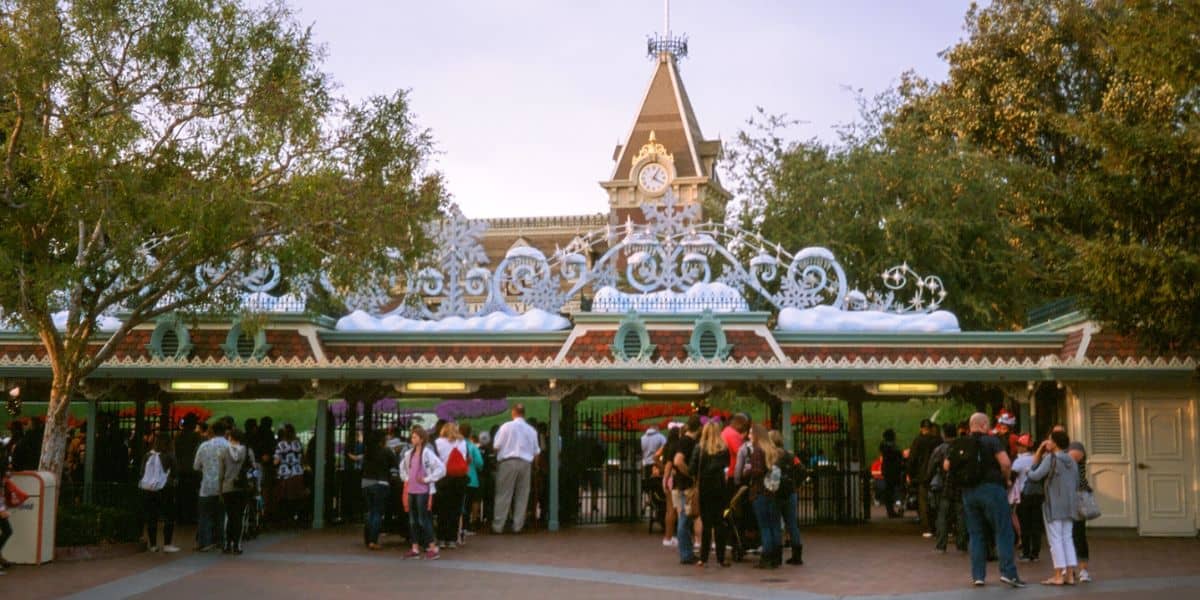
Once a trespass notice is logged with county authorities (such as Florida’s Orange County Sheriff’s Office or California’s Anaheim Police Department), any return to the property constitutes criminal trespass, leading directly to physical arrest and potential jail time.
Disney enforces these bans through a multi-layered security apparatus:
- Biometric & Facial Identification: Modern touchpoints link biometric data to park tickets, immediately flagging banned individuals who attempt entry.
- Account and Transaction Cross-Checks: Disney’s reservation and ticketing systems flag associated credit cards, physical billing addresses, and digital accounts.
- Coordinated Security Surveillance: Asset protection agents monitor high-traffic areas and maintain comprehensive files on individuals who have been previously ejected for organized disruptions.
While an individual can theoretically submit a formal written appeal to Disney’s legal division after several years, reversals are extraordinarily rare. Reinstatement is typically reserved for youthful indiscretions, not for calculated, repeated violations committed for public exposure.
The saga of the three lifetime bans highlights the strict boundaries of theme park operations. While Disney parks thrive on wonder and guest imagination, the rules that preserve those elements are uncompromising. When a guest attempts to turn the Magic Kingdom into an ideological staging ground, Disney’s security response is decisive, universal, and permanent.