

For the better part of a decade, a massive question has lingered over Disney’s multi-billion-dollar Star Wars theme park expansions: Why would a company intentionally build a Star Wars land that bans Darth Vader, Luke Skywalker, and Han Solo?

When Star Wars: Galaxy’s Edge opened at Disneyland and Walt Disney World, it was famously shackled to a strict Sequel Trilogy timeline. The decision baffled lifelong fans who had dreamed of stepping into the iconic worlds of the Original Trilogy. Now, the frustrating truth has been laid bare.
According to a former Walt Disney World executive, the land was originally designed to be the Tatooine-inspired paradise fans always wanted. That is, until a fateful meeting between former Disney CEO Bob Iger and former Lucasfilm President Kathleen Kennedy scrapped the Original Trilogy entirely. Today, under the guidance of Disney CEO Josh D’Amaro, the parks are desperately trying to undo that timeline disaster. Here is the inside story of how executive meddling stripped the magic from Galaxy’s Edge—and how the company is finally course-correcting.
The Hidden Bones of the Original Trilogy
If you know where to look in Black Spire Outpost, the ghosts of the Original Trilogy are everywhere. Imagineers initially spent over a year developing a classic Star Wars land, widely understood to be based on an iconic planet like Tatooine.

The current land’s physical layout still reflects this scrapped vision. Oga’s Cantina is a clear architectural and spiritual successor to the Mos Eisley Cantina. The Millennium Falcon sits in a recessed area that serves as a blatant stand-in for Docking Bay 94. Even Star Wars: Rise of the Resistance relies heavily on Original Trilogy nostalgia, swapping out classic Imperial AT-ATs for First Order ones, and using a Mon Calamari fleet commander who acts as a direct surrogate for Admiral Ackbar.
Walt Disney Imagineering had set the stage for the ultimate Original Trilogy experience. But at the eleventh hour, the rules changed.
The Meeting That Erased Luke Skywalker
In an eye-opening interview with Fox News, former Walt Disney World Vice President Dan Cockerell revealed the exact moment the rug was pulled out from under the Imagineering team.
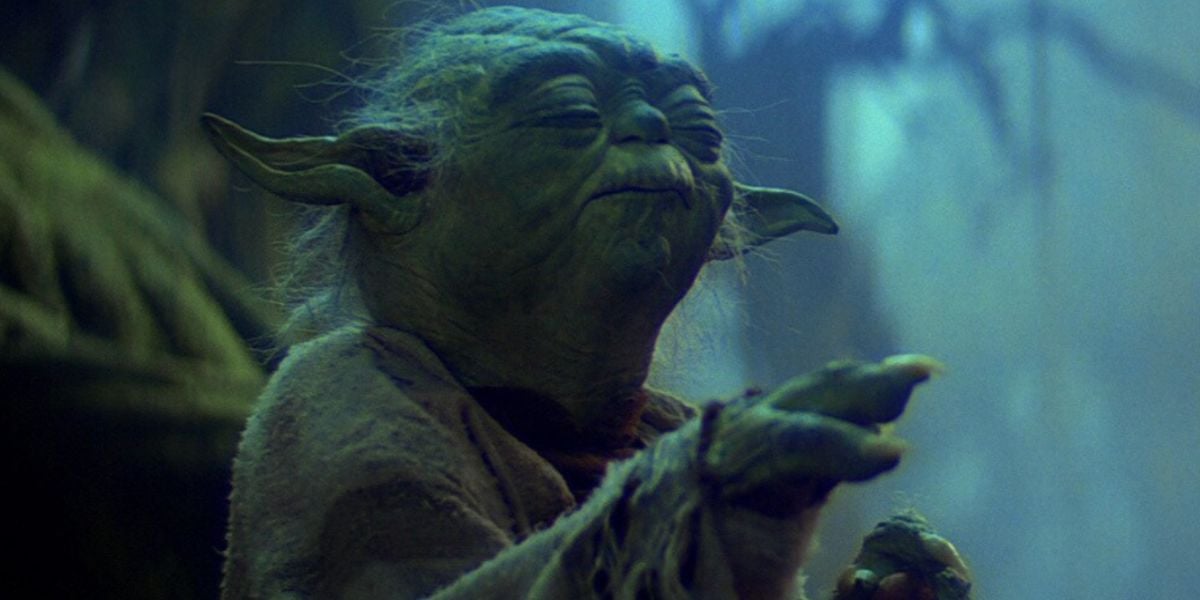
“We got a call one day,” Cockerell explained. “They said, ‘Well, we got some news for you all.’ And the Imagineering guys, they’ve heard this line many, many times during their careers. And I had never been through this.”
The directive to scrap the classic characters came from the absolute top of the corporate ladder, resulting from a private summit between Disney’s chief executive and the head of Lucasfilm.
“They said, ‘Well, yesterday Bob Iger met with Kathleen Kennedy, who as a lot of people may know was sort of George Lucas’ protégé and headed up Lucasfilm,” Cockerell recalled. “And they had a conversation. They had a meeting. And Kathleen Kennedy, her point of view was, there are way more Disney Star Wars stories ahead of us than behind us.”

According to Cockerell, Kennedy argued that the parks needed to abandon the older fans in favor of a younger demographic that would hypothetically flock to Rey, Finn, and Kylo Ren.
Cockerell detailed Kennedy’s argument: “So we really should think about do we want to build a Tatooine, and build what all the fifty-somethings remember Star Wars is or do we want to build something else which is going to appeal to all the upcoming generations who are going to know the new stories.”
Bob Iger, having seen early footage of the Sequel films and feeling overly confident in their cultural staying power, agreed. The decree was finalized: the older six movies were effectively banned from the new land.
The Cost of Alienating the “Fifty-Somethings”
The decision to shun the “fifty-somethings” proved to be a spectacular miscalculation. Kennedy and Iger failed to recognize that those older fans are the exact demographic holding the purchasing power to fund expensive family Disney vacations. By locking Galaxy’s Edge into a timeline where Original Trilogy heroes could not logically appear, Disney alienated its most passionate and affluent consumer base.

The most catastrophic result of this sequel-only mandate was the Star Wars: Galactic Starcruiser. Disney doubled down on the restrictive timeline for its ultra-expensive, immersive hotel. Stripped of the franchise’s most famous legacy characters, the Starcruiser failed to justify its massive price tag to the general public. It became a historic financial flop, permanently closing its doors after just a year and a half of operation.
Josh D’Amaro’s Campaign to Fix the Timeline
Recognizing the massive unforced error of ignoring the franchise’s roots, Disney’s current CEO, Josh D’Amaro, is stepping in to fix the mess. Realizing that a theme park should prioritize fun over restrictive continuity, D’Amaro’s team is actively breaking the Sequel-era rules that Iger and Kennedy established.

The course correction is already happening in California. At Disneyland’s Galaxy’s Edge, the strict timeline has been shattered. The majestic John Williams score—which was noticeably absent in favor of ambient noise—is being reintroduced to give the land its cinematic emotional core.
More importantly, the legacy characters have finally arrived. Guests are ecstatic to see Luke Skywalker, Princess Leia, and Han Solo roaming the outpost. By discarding the rigid narrative constraints, D’Amaro has allowed the land to become a celebration of all Star Wars, rather than a promotional tool for just the newest films.
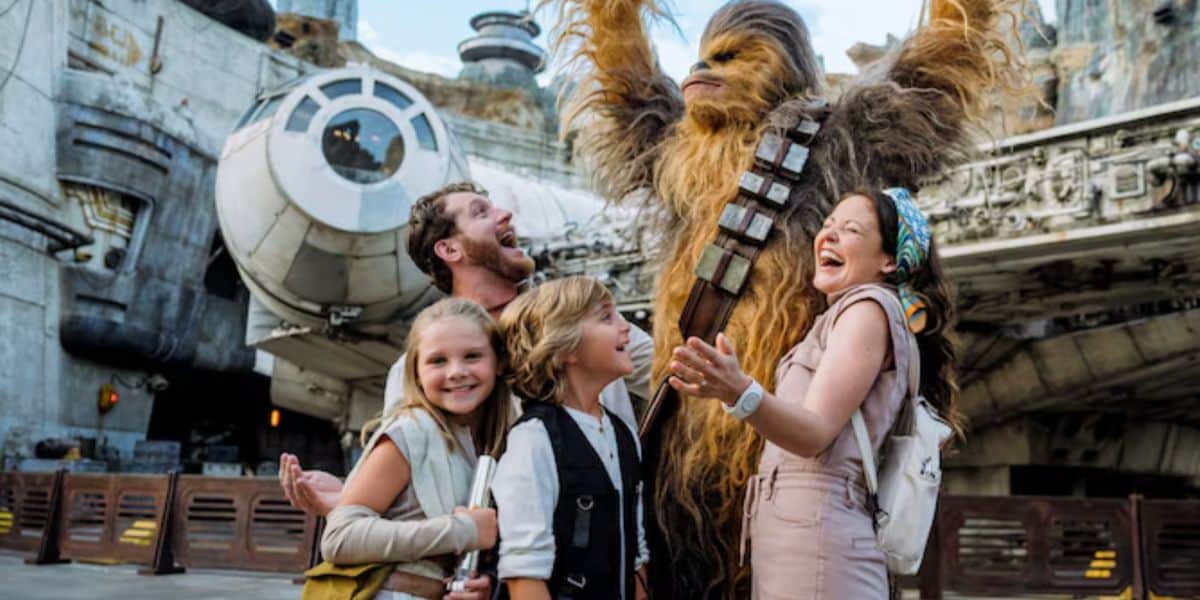
While these Original Trilogy additions have primarily rolled out at Disneyland, fans are hopeful that the Walt Disney World iteration will soon follow suit. It took years, billions of dollars, and one historic hotel closure. Still, Disney has finally learned its lesson: you cannot have a successful Star Wars land without the characters that made the galaxy far, far away worth visiting in the first place.


That is so very disrespectful to think that the park was made just for the young. Wasn’t Walt’s words from Kids From ALL AGES 1 TO 100. Your prices have gotten so out of control for families with more than 2 kids. The price of the hotel for Star Wars was CRAZY. Bring all the characters back into Star Wars and especially the STAR WARS WEEKEND.
You could also bring back SOAP OPERA WEEKEND for fans.
One of my favorite memories of HS was hearing the music and seeing the storm troopers marching. Bring it back.