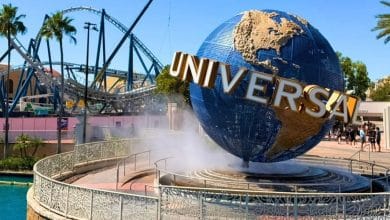
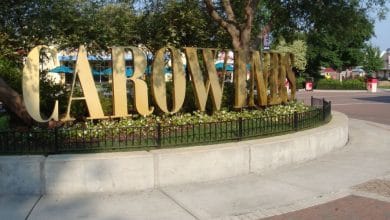
For years, the political battlefield between major corporate entertainment and Donald Trump focused squarely on one kingdom: The Walt Disney Company. Throughout public spats over Florida governance, corporate messaging, and fluctuating box-office receipts, Trump frequently weaponized his social media platforms to target Disney’s leadership, branding, and stock performance. But in a sudden shift that caught political observers and amusement park enthusiasts alike off guard, Trump has officially expanded his sights beyond the gates of Disney, setting his crosshairs directly on regional theme park titan Six Flags.

In a sharply worded post published on his Truth Social platform, Trump called for the immediate nationalistic rebranding of one of North America’s most storied wooden roller coasters, asserting that the ride’s heritage should be wiped clean in favor of American patriotism. Along the way, he made sweeping economic promises about local real estate values and delivered a stinging jab at Six Flags’ financial performance on Wall Street.
The Truth Social Broadside
On the afternoon of October 19, 2026, Trump published a message to his followers targeting an opening-day classic roller coaster:
“Mighty Canadian Minebuster should immediately change its name to Mighty American Minebuster. Six Flags is not a Canadian Company, we are the United States of America! The name would add great value and prestige to the Roller Coaster! Home Values and Incomes near the park would rise, and you would be even prouder while saluting our beautiful American Flag on the lift hill! Maybe even the Crashing Stock that Six Flags is known for, would become high again!
President DONALD J. TRUMP”
The post spread rapidly across social media channels, amassing over 28,000 likes, thousands of re-shares, and more than 4,000 replies within hours of publication. While Trump is known for targeting corporate brands, his sudden foray into roller-coaster nomenclature left readers bewildered—particularly once the ride’s geographic details came into focus.
A Canadian Landmark Located in Ontario
The roller coaster in question is not located anywhere inside the United States. The Mighty Canadian Minebuster is the premier wooden out-and-back coaster at Canada’s Wonderland, situated in Vaughan, Ontario—a sprawling suburban municipality just north of Toronto.
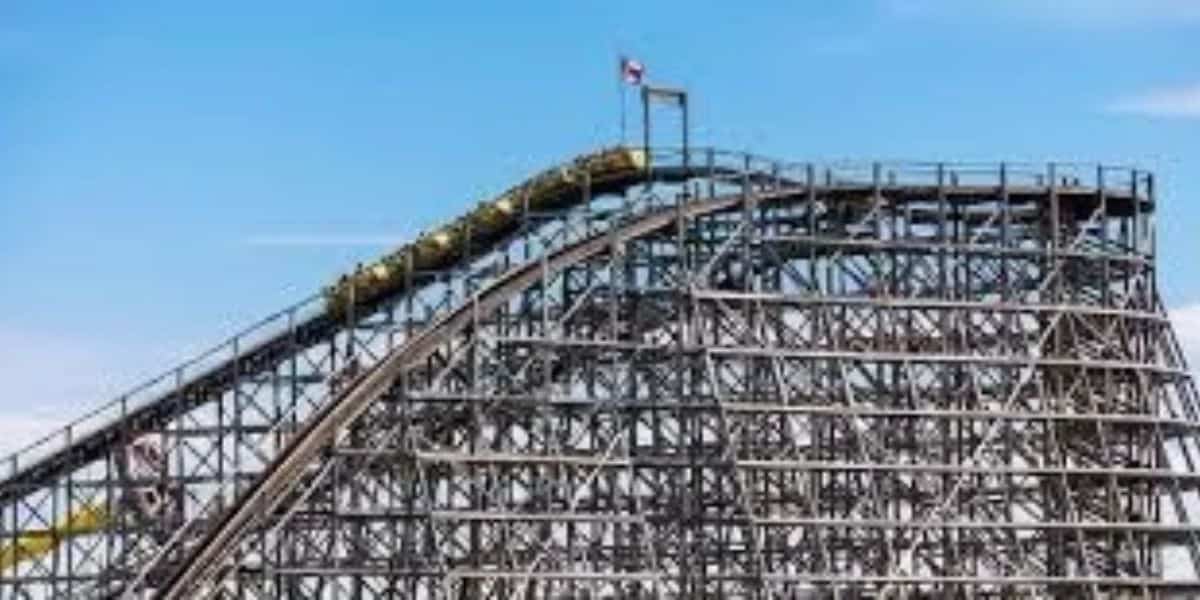
Debuting on the park’s grand opening day in May 1981, the Minebuster was custom-built as an intentional tribute to the golden age of Canadian amusement parks. Its layout was inspired by the iconic Flyer coaster at Toronto’s long-lost Sunnyside Amusement Park, serving for more than four decades as a staple of Canadian thrill-ride history. Towering over the park’s Royal Fountain and flanking the Splash Works water park, the wooden giant has carried multiple generations of Canadian families.
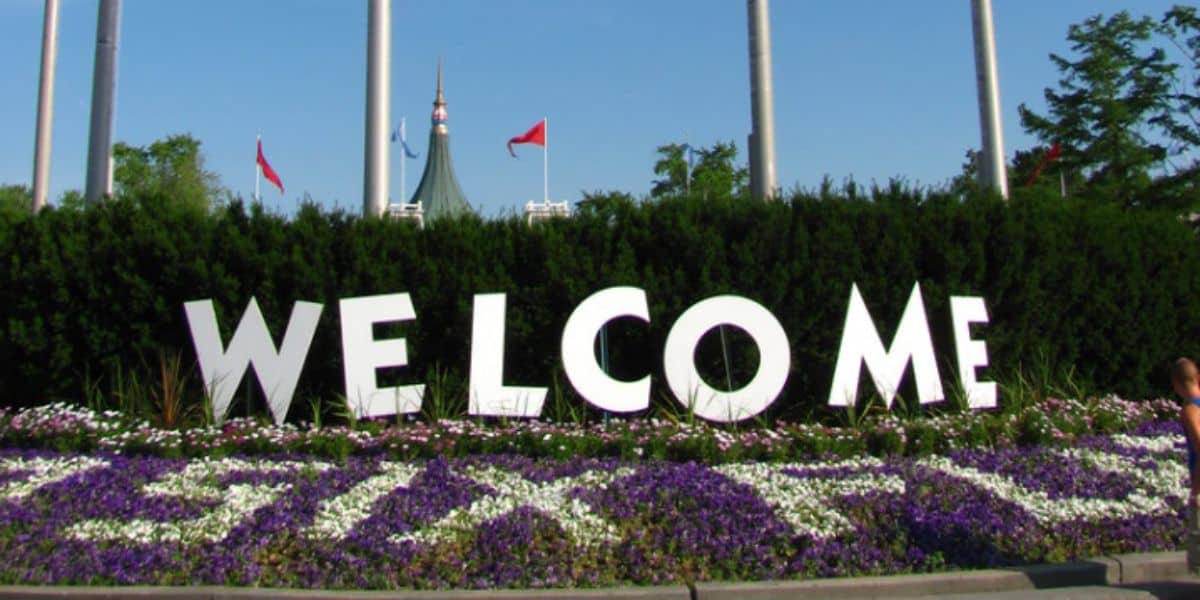
Trump’s demand that riders should be “saluting our beautiful American Flag on the lift hill” while riding a fixture of Ontario tourism immediately sparked laughter and confusion across the coaster community. The idea of flying the Stars and Stripes over a wooden coaster located on Canadian soil—in a park featuring a giant Canadian flag flowerbed at its entrance—highlighted a stark geographic disconnect in the former president’s complaint.
How Six Flags Came to Own a Canadian Treasure
Trump’s premise—that the ride should be American because Six Flags is an American corporation—stems from major corporate consolidation within the amusement park industry.
For nearly two decades, Canada’s Wonderland was operated by Cedar Fair Entertainment Company, the Ohio-based powerhouse behind Cedar Point and Kings Island. However, following the completion of an $8 billion mega-merger between Cedar Fair and the former Six Flags company, the two chains officially combined their assets.
Under the terms of the merger, the newly unified entity adopted the corporate name Six Flags Entertainment Corporation, with operational headquarters based in Charlotte, North Carolina. Because legacy Cedar Fair properties were folded under the Six Flags corporate umbrella, Canada’s Wonderland technically became a Six Flags park. Trump seized upon this corporate ownership structure, arguing that an American-headquartered parent company should not operate an attraction celebrating Canadian identity.
The Evolution of Trump’s Theme Park Playbook
Trump’s attack on Six Flags mirrors the rhetorical playbook he previously honed against Disney. During the high-profile clashes involving the Reedy Creek Improvement District and former Florida legislators, Trump routinely weighed in on Disney’s executive decisions. He attacked the entertainment giant’s creative direction, claimed its theme parks had lost their charm, and frequently cited drops in Disney’s share price as proof of mismanagement.

With Six Flags, Trump has adopted an identical strategy: blending populist nationalism with financial criticism. His remark, aiming at the “Crashing Stock that Six Flags is known for,” directly targets the company’s post-merger market scrutiny. Wall Street analysts have closely monitored Six Flags’ heavy debt load, operational integration costs, and attendance trends following the merger. By referencing the company’s equity performance, Trump attempted to turn market volatility to his advantage in his remands for a rebrand.
Bizarre Economic Claims Spark Industry Bewilderment
Beyond the call for a patriotic name change, Trump’s post raised eyebrows for its outsized economic assertions. He claimed that renaming the coaster the “Mighty American Minebuster” would somehow cause “Home Values and Incomes near the park” to climb.
Residents and real estate analysts in Ontario found the assertion perplexing. Vaughan is already one of the wealthiest and fastest-growing cities in the Greater Toronto Area, with housing values driven by regional subway expansions, corporate office parks, and major healthcare developments—market forces wholly independent of the name on a 45-year-old wooden roller coaster.
Neither Six Flags Entertainment Corporation nor officials at Canada’s Wonderland have issued a formal response to the Truth Social post. The coaster remains open under its original name, continuing to send trains down its double-down drop into the Ontario sky. For now, despite calls from south of the border, the “Mighty Canadian” identity appears firmly intact.