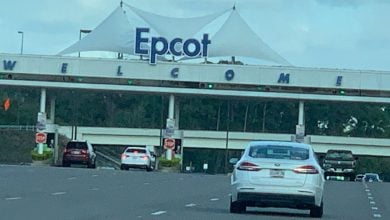
Walt Disney World is the undisputed economic engine of Central Florida, drawing millions of tourists and generating billions in regional revenue. But behind the theme park magic, a fierce legal battle has been quietly unfolding in the courts—one that pits the entertainment conglomerate against the very community that surrounds it.

In a significant legal victory, Disney has successfully sued to lower the assessed property value of its Art of Animation Resort. While this marks a massive corporate win for Disney’s accountants, it carries a devastating consequence for the local community. Because Florida’s public education system relies heavily on local property taxes, Disney’s aggressive litigation directly threatens to drain millions of dollars from Orange County Public Schools (OCPS).
Now, local educators are pleading with the mega-corporation to stop. Armed with over 5,000 petitions, teachers, resort workers, and community members are begging Disney to drop its remaining property tax lawsuits, arguing that the company’s quest for a lower tax bill is coming at the direct expense of Central Florida’s children.
The Legal Battle: The Art of Animation Ruling
To understand how a theme park lawsuit impacts a local kindergarten classroom, you have to look at the complex world of commercial property valuation. For years, The Walt Disney Company has been locked in a bitter dispute with the Orange County Property Appraiser over the assessed value of its numerous hotels, theme parks, and administrative buildings.

The core of the dispute comes down to how a Disney property is valued:
- The County’s Argument: The Property Appraiser has historically argued that the value of a Disney resort includes the massive income it generates—income intrinsically tied to the Disney brand, immersive theming, and premium guest amenities.
- Disney’s Argument: Disney’s lawyers have successfully argued that property taxes should be based strictly on the physical real estate—the “bricks and mortar”—and that the county illegally inflated assessments by factoring in the value of Disney’s intangible business assets, like trademarked branding and retail sales.
Recent court rulings have heavily favored Disney’s interpretation. In the latest blow to the county, a judge ruled that the property appraiser’s assessment of Disney’s Art of Animation Resort was invalid. The massive “value” resort, heavily themed with characters from Finding Nemo and Cars, had its assessed value drastically reduced.

For Disney, this means a significantly lower property tax bill. More importantly, because these lawsuits challenge assessments from previous years, the ruling means Orange County is legally obligated to issue massive, retroactive tax refunds to the company.
The $119 Million Drain on Public Schools
While a corporate tax refund may seem like a standard business victory, the mechanics of Florida’s tax system make it a dire situation for residents. Florida has no state income tax, relying heavily on local property taxes to fund essential public services. The single largest beneficiary of property tax revenue in Orange County is the public school system.

When the county appraises a high value on a Disney hotel, a large percentage of that tax revenue is immediately budgeted and spent by OCPS. It pays for teacher salaries, new textbooks, school maintenance, and vital classroom resources.
Because Disney has sued the county over its property tax assessments every year since 2015, the school district has been forced to prepare for the worst. According to district officials, OCPS has currently set aside $119 million just to cover potential legal settlements should Disney continue to win these retroactive refunds.
If Disney’s property tax settlements end up costing less than the $119 million held in reserve, the school district’s goal is to put the remaining dollars directly back toward teacher salaries.
Orlando Weekly

Every dollar sitting in that litigation reserve is a dollar not being spent in a classroom. For an already cash-strapped school district, this creates a brutal financial shortfall.
Teachers Fight Back: The 5,000 Petitions
The optics of a multi-billion-dollar entertainment conglomerate fighting to claw back millions from a local public school system have sparked outrage across Central Florida. Teachers, parents, and local union advocates—including Unite Here Local 737 and Local 362—have knocked on tens of thousands of doors to raise awareness about what they call “the cost of magic.”

Recently, organizers delivered over 5,000 signed petitions directly to The Walt Disney Company, calling on it to drop its remaining property tax lawsuits. The petition is a desperate plea to Disney’s executives, asking them to act as responsible community partners rather than corporate adversaries.
The reality on the ground for Orange County educators is bleak. The school district is currently facing a financial crisis fueled by declining student enrollment, the expansion of state voucher programs, and rising operational costs. The district was recently forced to make the devastating decision to close seven schools for the upcoming school year.

Meanwhile, teachers are struggling to survive in a region where the cost of living has skyrocketed.
| The Local Educator Crisis |
|---|
| Many Orange County teachers are forced to work two to three jobs—including bagging groceries or taking shifts at Disney World itself—just to afford rent. |
| Union leaders report that seasoned, veteran educators are leaving the profession because their salaries have failed to keep pace with inflation. |
| Teachers frequently spend hundreds of their own dollars to supply classrooms with necessities like paper and cleaning supplies. |
For these educators, watching Disney report massive theme park revenues while simultaneously suing to defund the local school system is a bitter pill to swallow.
Corporate Rights vs. Community Impact
From a strictly legal and fiduciary standpoint, Disney’s lawyers are doing their jobs. They are successfully protecting the company’s bottom line from what the courts have agreed were artificially inflated assessments by the county. Disney frequently points out that it remains the largest taxpayer in Central Florida, contributing hundreds of millions of dollars annually to the local economy and government infrastructure. The company has a legal right to ensure it is not being overtaxed.

However, the 5,000 petitioners argue that this is no longer just a legal issue; it is a moral one.
Just because a mega-corporation can use its vast legal resources to fight for a tax refund does not mean it should—especially when the direct consequence is poorer educational outcomes for local students. With Disney poised to potentially win millions more in retroactive refunds in the coming months, the tension between the “Most Magical Place on Earth” and the stark reality of public school funding will only intensify.