The Walt Disney Company is orchestrating a profound recalibration of its corporate priorities. Across its storied Glendale creative campus and executive offices in Burbank, the entertainment titan is navigating a stark contrast in its workforce strategy: executing targeted layoffs inside its premier theme park design unit, Walt Disney Imagineering, while simultaneously committing hundreds of millions of dollars to build an elite, enterprise-wide artificial intelligence division.
The scale of Disney’s technological push came to light through U.S. bankruptcy filings and financial disclosures first reported by Bloomberg and Yahoo Finance. Under a newly approved arrangement, Disney has stepped forward to absorb the core engineering and research roster of conversational tech startup Character.AI, securing dozens of machine learning specialists in a multi-year talent acquisition valued at approximately $180 million.
The substantial investment unfolds as Disney actively realigns its legacy physical divisions, highlighting a dual-track strategy to keep the 100-year-old studio agile in an increasingly interactive, software-driven consumer landscape.
Yesterday’s Reductions: Layoffs Hit Walt Disney Imagineering
The technological expansion comes in the wake of job reductions across Disney’s creative and experiential workforce. On Wednesday, October 28, 2026, Disney initiated a round of layoffs impacting between 100 and 200 staff members across its Disney Experiences division—the corporate arm overseeing domestic and international parks, resorts, consumer products, and Disney Cruise Line.
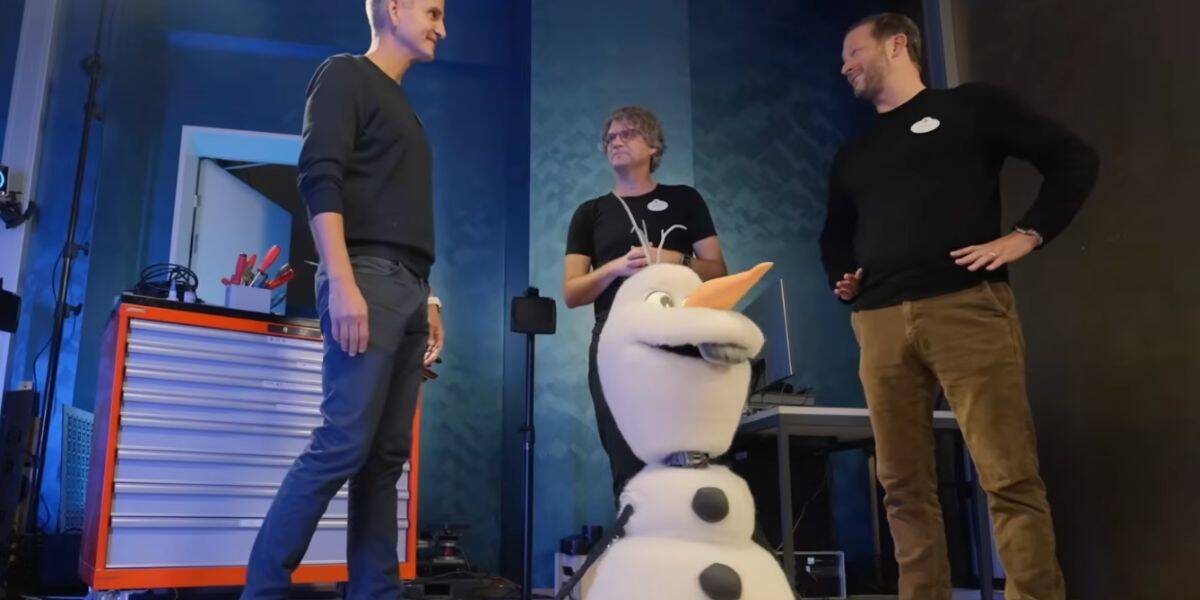
The cuts fell notably on Walt Disney Imagineering (WDI)—the legendary design branch founded by Walt Disney himself to turn cinematic dreams into physical attractions—as well as Disney Live Entertainment. The departures were concentrated primarily at Imagineering’s headquarters in Glendale, California, as well as in roles based in Orlando, Florida.
A person familiar with the decision told the Los Angeles Times that the cuts resulted from a scheduled operational review aimed at aligning headcounts with planned capital spending, construction horizons, and project pipelines. Internal reports noted that several impacted positions were tied to international park portfolios, including development tracks for Shanghai Disney Resort, while other affected roles were tied to domestic park concept groups.

Despite the workforce reductions, Disney Experiences remains an economic powerhouse, having generated over $36 billion in revenue during fiscal 2025. With massive capital commitments on the horizon—including Anaheim’s multi-decade DisneylandForward development, major land overhauls across Walt Disney World, and four new cruise ships under construction—the corporate restructuring reflects an ongoing mandate from upper management to control fixed operational overhead as project life cycles shift.
The $180M Bet: Assembling an In-House AI Powerhouse
While project-based creative divisions were trimmed to fit near-term development schedules, Disney moved aggressively to capture an entire pre-built engineering unit in the artificial intelligence sector.

The opportunity emerged from the Chapter 11 bankruptcy of Character.AI, a startup once valued at nearly $5 billion for its pioneering consumer chatbots that enabled users to engage in realistic, expressive conversations with fictional personas. Following severe server infrastructure costs, tightening regulatory scrutiny, and shifting legal landscapes, the startup turned to court-supervised restructuring.
Rather than watching the startup’s research brain trust scatter, Disney stepped in to acquire the technical core:
- Absorption of Key Technical Staff: Disney extended formal employment offers to at least 66 critical engineers and data researchers, bringing over the vast majority of the company’s active engineering division.
- $180 Million Three-Year Package: Filings reveal that Disney has budgeted approximately $60 million annually in total compensation to onboard and retain the new technical staff over the next three years.
- $30 Million Retention Pool: To insulate incoming engineers from aggressive recruitment by Silicon Valley tech giants, Disney established a $30 million retention bonus program structured around 12- and 24-month service milestones.
- $20 Million Software Stalking-Horse Bid: In parallel with personnel hiring, Disney made a $20 million baseline offer to secure perpetual, non-exclusive licenses for specific proprietary modeling tools and software infrastructure.
Leadership Architecture: Karandeep Anand’s Role
Disney’s swift recruitment of the engineering group follows a high-level executive reorganization initiated weeks earlier.

In late September, Disney created an overarching corporate role by appointing former Character.AI Chief Executive Officer Karandeep Anand as enterprise-wide Chief Technology Officer and Senior Executive Vice President. Reporting directly to Disney leadership, Anand was tasked with unifying product architecture, software infrastructure, and AI strategy across Disney Entertainment, ESPN, and Disney Experiences.
Bringing Anand into the executive suite established an immediate runway for his technical staff to transition smoothly into the company. According to court filings, Character.AI faced falling internal morale and a looming talent exodus that threatened to erase its remaining value. Disney’s comprehensive compensation framework provided stability for researchers while handing the entertainment powerhouse rare expertise in persona modeling—the niche branch of AI focused on making synthetic characters emote, joke, and maintain strict narrative lore over long conversations.
Parallel Realities: Disciplined Trimming Meets Focused Expansion
The contrasting headlines of design staff cuts and high-dollar engineering acquisitions illustrate how legacy media companies are reshaping their corporate structures:

- Trimming Cyclical Overhead: Theme park development is notoriously cyclical. As concept phases wrap up and capital-intensive construction pipelines adjust, design headcounts are periodically trimmed to protect operating margins.
- Investing in Scalable Technology: Unlike physical attractions that cost hundreds of millions per location, software and AI algorithms can be deployed instantly across millions of streaming screens, theme park animatronics, and interactive video games with minimal marginal cost.
Rather than viewing the moves as a direct replacement of physical craft by artificial intelligence, the simultaneous moves reflect an enterprise-wide reallocation of resources—keeping fixed physical design costs lean while seizing rare opportunities to secure top-tier engineering minds in a tight labor market.
The Road Ahead for Disney’s Next Generation
With dozens of specialized conversational-AI researchers joining Anand’s division, Disney is laying the groundwork for interactive character experiences that extend across every arm of its empire:

- Conversational Theme Park Figures: Enabling autonomous animatronics, interactive queue elements, and digital character meet-and-greets to converse freely and naturally with park guests.
- The Epic Games Metaverse: Populating Disney’s upcoming persistent digital world inside Fortnite with dynamic non-player characters (NPCs) that act and speak with true canonical authenticity.
- Streaming Companions: Powering tailored interactive storytelling and personalized media discovery within Disney+ and its short-form “Verts” interface.
While the theme park community absorbs the loss of seasoned creative talent at Imagineering, Disney’s aggressive push into artificial intelligence signals an undeniable truth: the company is determined to ensure its next century of storytelling is just as dominant in digital code as it was on physical soil.