

Disney Imagineering Tensions Emerge Over Bob Iger’s Theme Park Strategy


Franchises Become the Blueprint at Disney Parks
During Iger’s leadership, Disney’s theme parks entered a period of unprecedented growth. Attendance surged, capital investment ballooned, and the parks became a core driver of the company’s revenue strategy. In 2018 alone, Walt Disney World Resort welcomed a record-breaking 58 million visitors.
That growth coincided with a sweeping transformation of park design. Entire lands began revolving around single intellectual properties, mirroring the studio model dominating Disney’s film slate. The mandate, as described by The Wall Street Journal, was simple: apply the same logic to parks as movies.
Iger’s instruction was explicit. “Focus on franchises, whether from the company’s vaults or his acquisitions of Pixar, Marvel and Lucasfilm,” the publication reported, framing theme parks as extensions of cinematic universes rather than standalone creative spaces.

The results are unmistakable across the globe. Star Wars: Galaxy’s Edge, Avengers Campus, Pandora – The World of Avatar, and Cars Land each immerse guests in meticulously realized versions of familiar worlds.
Internationally, that strategy has continued with lands like Zootopia at Shanghai Disneyland and multiple iterations of World of Frozen – the newest of which opens at Disneyland Paris in March – reinforcing a model built on instant recognition and cross-platform storytelling.
What distinguishes these lands from earlier park design is their singularity. Each exists to serve one narrative universe, unlike broader concepts such as Adventureland or DinoLand U.S.A., which blended multiple stories into a cohesive thematic space.

Industry observers often trace this shift to the success of The Wizarding World of Harry Potter at Universal Orlando Resort, which proved that deeply immersive, IP-specific lands could transform attendance and guest engagement.
Inside Imagineering’s Creative Reckoning
For some Imagineers, that success came at a creative cost. The Wall Street Journal notes that the division’s “rich history of creating original stories” has largely been sidelined since the 2010s, replaced by a model that leaves little room for untested ideas.
That tension surfaced repeatedly within the department. “At every all-hands meeting, I would be asked if we’d get to create new Imagineering original stories again,” Barbara Bouza, president of Walt Disney Imagineering from 2020 to 2024, told The Wall Street Journal.

Her comment captures a broader unease rooted less in opposition to IP and more in a desire for balance. Imagineers have seemingly not rejected franchises outright, but many appear eager to work on projects that prioritize atmosphere and invention over strict canon.
Ironically, the project generating the most internal excitement still draws heavily from Disney’s intellectual property. According to Imagineers who spoke with The Wall Street Journal, the long-gestating Villains Land has become a rare source of creative enthusiasm because it’s closer to a more conceptual land than more recent projects.
Planned for the Magic Kingdom, Villains Land remains in early stages, with no confirmed opening date. Despite its reliance on antagonists from Snow White and the Seven Dwarfs, Sleeping Beauty, Peter Pan, The Emperor’s New Groove, and more, it represents something different.
Disney itself has described the land as “a place where poison apples are aplenty and magic potions can ruin your whole day,” signaling a tonal departure from the company’s traditionally optimistic park environments.
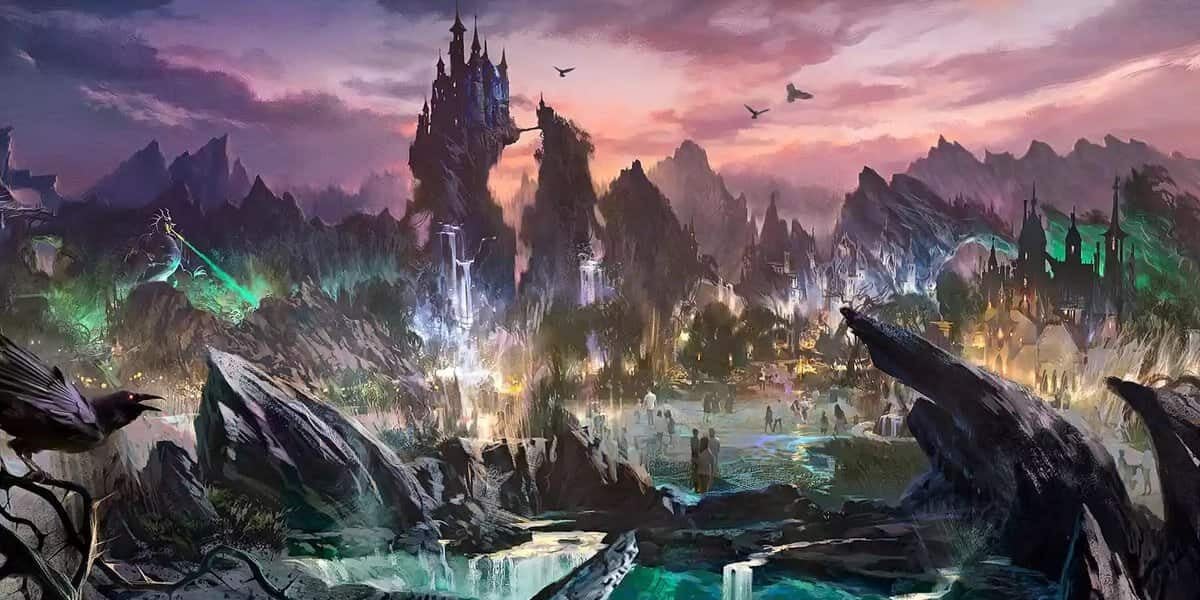
“Be prepared, you poor unfortunate souls,” Disney Experiences Chairman Josh D’Amaro said at D23: The Ultimate Disney Fan Event. “It’s going to be a fearless new vision for what a Disney experience can be.”
Concept art hints at a land shaped more by mood than narrative, featuring looming architecture, at least two major attractions, and a possible roller coaster anchoring the experience. Retail and dining are expected to lean into darker, more theatrical designs.
For Imagineers, Villains Land appears to represent a compromise — an IP-driven project that still allows for creative experimentation. It may not mark a full return to original storytelling, but it suggests that the pendulum could be inching back toward imagination-led design.
Are you excited for Disney’s Villains Land?



No, at the current time, I’m not excited about Disney. Doing anything, I think that Bob iger has messed up a lot at Disney and he gets paid way too much money to do it. And I’m glad he’s leaving. And I can’t wait till he leaves. Things that I look forward to as a 61-year-old kid taking my grandkids. What I did over the last fifteen years was, and still is it’s a small world, Peter PAN. The country bears the hall of presidents and splash mountain. Which I know has been gone for the last few years now. And what they put in there is terrible. And I don’t think splash mountain was racist at all. I mean, it was just done the song of the south which was nothing but from uncle remiss books.
But you know, we haven’t deal with all the new stuff. Now, anyway, alphabet people, the rainbow people, the socialist, the communists, the progressiveism and the American Jews.