Disney and FieldAI are exploring robotic parking assistants, but Imagineering sees another possibility: smarter character robots capable of navigating changing environments.
Imagine pulling into a Disney parking lot and seeing a cartoon-faced car directing traffic with glowing light wands. It’s an idea straight out of Pixar’s Cars, but the technology behind Disney’s latest robotics experiment could have implications far beyond parking.
On November 3, 2026, The Walt Disney Company showcased a collaboration with robotics company FieldAI during Disney Accelerator Demo Day at the Walt Disney Studios lot. According to Disney’s official announcement, the companies are exploring robots that could assist with parking operations while helping Imagineering investigate more advanced robotic character experiences.
The project remains experimental. Disney has not announced when, or whether, these robots will begin directing drivers at its theme parks.

Disney’s Robotic Parking Assistants Could Bring a Familiar Idea to Life
Cars parking cars. It’s a simple concept with a surprisingly complicated technological challenge.
Disney’s collaboration with FieldAI involves Disney Experiences Technology and Walt Disney Imagineering Research & Development. Together, the teams are investigating how robotic systems could support parking operations across environments with uneven terrain and unpredictable weather.
The goal, Disney explains, is to improve working conditions while creating a more consistent arrival experience for guests.
For theme park visitors, that could eventually mean another tool to help coordinate vehicles entering parking areas. However, Disney hasn’t announced whether such technology would supplement existing parking attendants, operate independently, or undergo further testing at a particular resort.
The distinction matters because an experimental demonstration doesn’t establish that the technology is ready for daily guest operations.
The Cars-inspired presentation also offers a playful way to introduce a serious challenge: creating robots capable of responding to the physical world rather than simply following predetermined movements.
Disney has already demonstrated its interest in mobile robotic characters through projects such as the BDX droids introduced at Star Wars: Galaxy’s Edge.
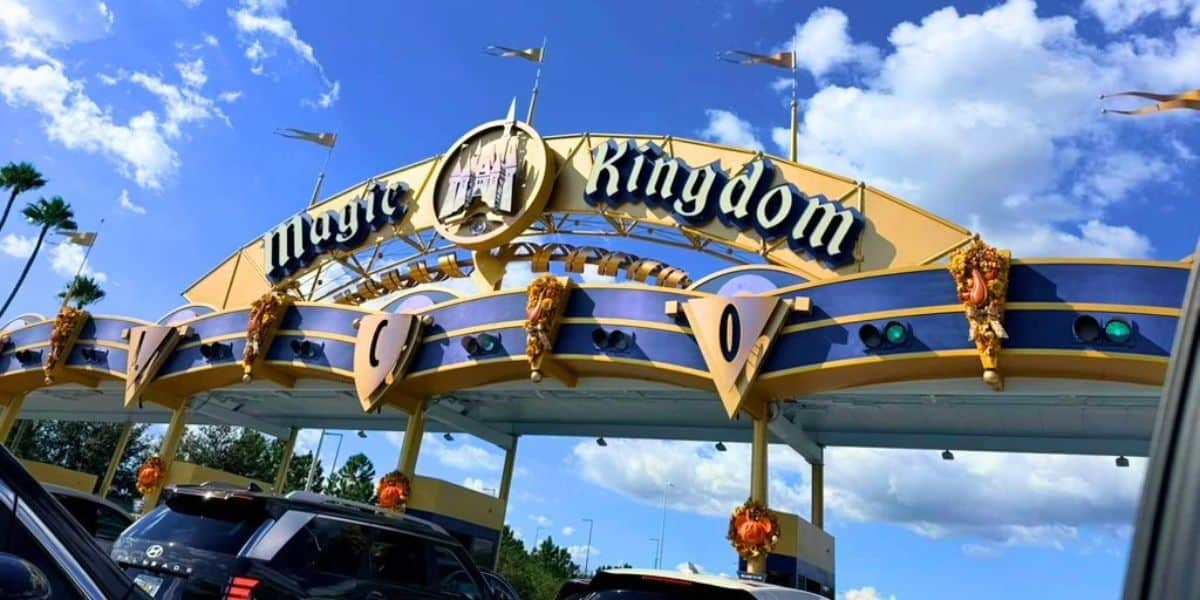
Why Parking Lots Present a Major Challenge for Disney’s Robots
A parking lot might appear easier to navigate than a crowded theme park. In practice, both environments can change unexpectedly.
Vehicles move, pedestrians cross paths, weather conditions shift, and objects appear where they weren’t previously located.
These are precisely the kinds of uncertainties FieldAI’s technology is designed to address.
According to the company’s robotics technology overview, its Field Foundation Models combine artificial intelligence with physics-based reasoning and uncertainty awareness.
The company says its systems can operate without relying on pre-existing maps or predetermined routes. When a robot encounters uncertainty, the technology is designed to evaluate the situation and adjust its behavior.
That capability could be useful in environments where no two operating days look exactly alike.
For Disney, the practical question is whether such technology can help robots move reliably while supporting existing operations and maintaining appropriate safety standards.
The company hasn’t published performance results, accident-prevention figures, or comparative efficiency data from its Disney parking collaboration.
That’s an important limitation. The research establishes what Disney wants to investigate, not how successfully the proposed system would perform during normal theme park operations.
Imagineering Sees a Bigger Opportunity Beyond Parking
The most interesting part of Disney’s announcement may have little to do with cars.
Walt Disney Imagineering R&D is separately investigating whether FieldAI’s navigation and situational awareness capabilities could inform future character-based robotic experiences inside Disney parks.
Consider what that means for a character that needs to move through an unpredictable environment.
Unlike an Audio-Animatronic figure performing along a fixed sequence, a mobile robot may need to respond to people entering its path, changing surroundings, or unexpected obstacles.
Those challenges become even more interesting when the robot must remain convincing as a fictional character.
Imagineering has already explored that territory through its new generation of living robotic characters, including projects involving Olaf and the Star Wars BDX droids.
The FieldAI partnership introduces another possible area of research: helping robots understand and navigate the environments surrounding them.
Disney hasn’t announced that FieldAI’s technology will power any particular character, attraction, or entertainment offering.
Still, the connection suggests why Imagineering would be interested in technology initially demonstrated through a parking application.
A robot that can respond to changing physical conditions could eventually contribute to more flexible character experiences, provided Disney can meet the additional requirements of public interaction and storytelling.
Disney’s Existing Robot Characters Show Why This Research Matters
Disney’s robotics efforts aren’t starting from scratch.
In 2025, the company explained how its BDX droids use reinforcement learning to develop expressive movements, balancing technological capability with character personality.
Those droids have already appeared in guest-facing settings, including experiences covered during their Walt Disney World appearances.
Another significant development involved the robotic Olaf character created for Disney’s Frozen franchise.
As Inside the Magic previously reported on the robotic Olaf project, Imagineering has been working toward more lifelike physical characters capable of interacting with their surroundings.
Disney’s official explanation of its robotic character technology also emphasizes the importance of expressive movement and character-driven design.
FieldAI’s research is not necessarily the same technology used in those projects. Instead, it represents another possible contribution to Disney’s broader robotics work.
The distinction between making a character move believably and helping it navigate uncertain surroundings is especially important. Successful mobile entertainment requires both capabilities to work together.
Disney’s Latest Technology Showcase Goes Beyond Robots
The parking project was one of five collaborations presented during Disney Accelerator Demo Day.
Disney also showcased work with Physical Intelligence, which is exploring robots capable of handling and arranging 3D glasses for cleaning between shows.
Other participants included Promise, OpenArt, and Simile, with projects involving filmmaking, creative workflows, and guest planning.
The companies spent four months working with Disney teams before the November 3 presentation.
For Imagineering, these collaborations illustrate the range of possible applications for emerging technology, from repetitive operational tasks to more expressive entertainment experiences.
That work also fits into a wider pattern of technological experimentation. Inside the Magic has previously examined Disney’s developing robotics research and how new machines might influence future attractions.
But Disney’s parking assistant project remains an early exploration rather than an announced addition to the guest experience.
For visitors wondering whether a friendly robotic car might direct them toward their next parking space, the answer is still uncertain.
The development to watch is whether Disney moves beyond the demonstration stage, identifies a park testing location, or announces how FieldAI’s technology might contribute to a future robotic character.