Sometimes, even the most ambitious theme park dreams end not with a grand spectacle, but with a trowel, a wheelbarrow, and a fresh pour of quick-dry cement. For nearly three years, visitors navigating the heart of EPCOT’s World Celebration Gardens walked across what was supposed to be the glowing pinnacle of the park’s multi-year overhaul. Instead, they were greeted by flickering LED strips, warped plastic panels, yellow caution ropes, and an ever-shifting maze of rolling shrubbery.
Now, after years of embarrassing patch jobs, bizarre temporary fixes, and mounting guest safety concerns, Disney has officially pulled the plug. The controversial in-ground lighting system in World Celebration is being permanently ripped out and paved over, closing the book on one of the most visible infrastructure missteps in Walt Disney World’s recent history.
The High-Tech Vision That Never Quite Worked
When World Celebration Gardens debuted to parkgoers in December 2023, it was designed to serve as the beating emotional and technological heart of EPCOT’s massive reimagining. Anchored by the charming “Walt the Dreamer” statue and framed by lush planters, the central courtyard was intended to offer a modern tribute to the park’s retro-futuristic roots.

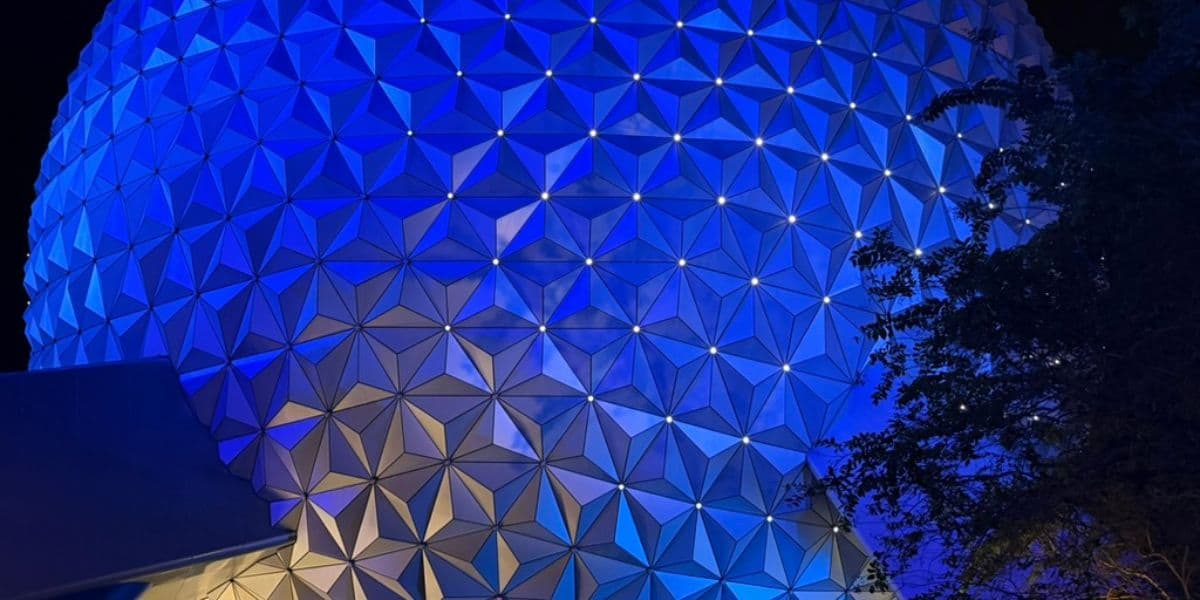
At the center of that promise were sweeping arcs of ground-level lighting embedded directly into the pedestrian walkways. Drawing clear inspiration from the beloved fiber-optic sidewalks that enchanted generations of visitors in the former Future World, these new programmable fixtures were engineered for the 21st century. Arranged in sweeping circular patterns that formed the iconic EPCOT ring logo in aerial views, the light channels were designed to pulse, transition through vibrant color spectra, and dynamically synchronize with the Beacon of Magic light shows illuminating Spaceship Earth overhead.
On paper, the feature promised to transform ordinary pedestrian circulation into pure magic. In practice, however, engineering delicate, flush electronics into high-traffic outdoor pathways in Central Florida proved to be an operational disaster from day one.
From Light Show to Tripping Hazard
The system’s descent began almost immediately after opening. Within weeks of the ribbon-cutting, individual lighting segments started flickering or going dark altogether. Synchronization issues quickly followed, with rogue lighting strips broadcasting mismatched hues that clashed with the choreographed shows above.
Yet aesthetic malfunctions were only the beginning of the problem. As Central Florida’s brutal combination of torrential rain, oppressive humidity, and baking sun took its toll, the physical materials buckled under the strain. The translucent plastic covers shielding the light strips began to warp, expand, and pull away from their concrete trenches.
Within months, what was meant to be a smooth, futuristic pathway had become an uneven, tripping hazard. Guests navigating the bustling central courtyard—particularly parents pushing strollers and individuals using wheelchairs or mobility scooters—found themselves jolting over lifted edges.
The situation escalated from a minor design flaw to an embarrassing maintenance saga. In an attempt to buy time without shutting down the courtyard, maintenance crews resorted to bewildering stopgap measures. Workers were seen driving random metal screws directly through the translucent covers into the concrete beneath, attempting to pin down the buckling edges. Paint and caulk were slapped over seams. When that failed to stop the plastic from lifting, Disney moved in stanchions and rope barriers, eventually deploying walls of rolling hedges to hide the worst of the deterioration from public view.
Paving Over the Problem
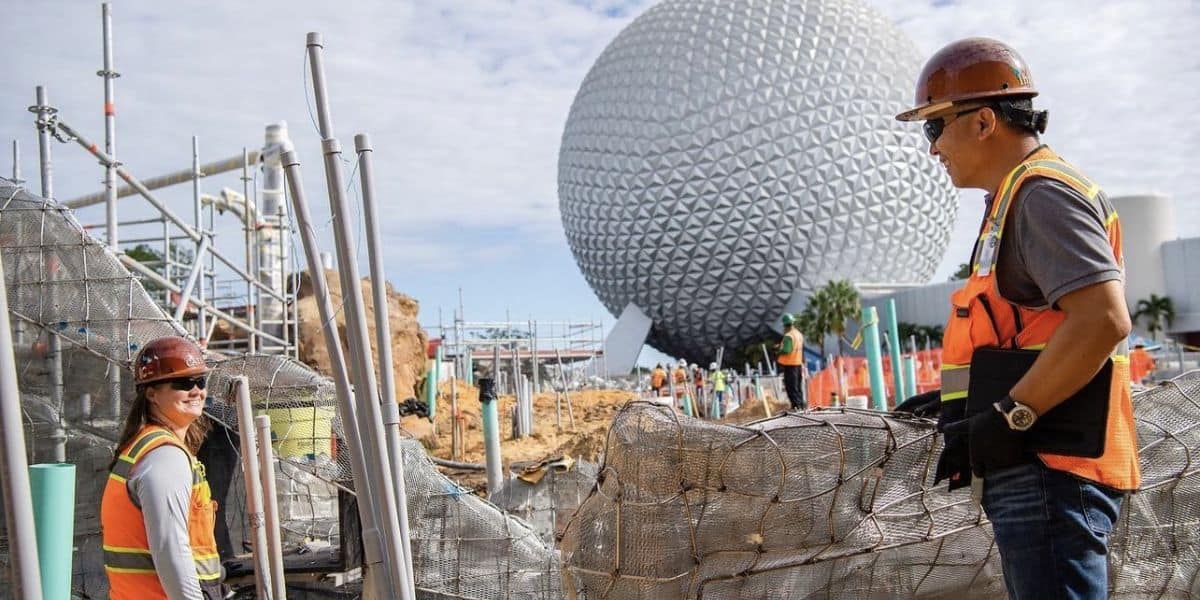
By late summer 2026, the company finally abandoned hope of salvaging the installation. Rather than engineering an expensive, weather-sealed redesign or replacing the faulty components, construction crews initiated a full-scale teardown.

Beginning in August, teams began prying up the warping fixtures, exposing the bare structural troughs running around the central planter. The ultimate solution turned out to be low-tech, permanent, and decisive: plain concrete.
Workers have systematically poured matching light-colored concrete into the excavated lighting channels, bringing the walkways back to a unified, level plane. To retain a faint hint of the original artistic intent, the replacement concrete is embedded with subtle, sparkly flecks that catch the sunlight. The physical geometry of the classic EPCOT logo remains carved into the plaza floor, but the pulsing, dynamic light displays are officially history.
By October, roughly two-thirds of the lights—primarily along the courtyard’s western perimeter—had been extracted and filled. The intrusive rolling planters have finally been rolled away, allowing uninhibited guest flow through the center of the park for the first time in months. While the final third of the lighting in the southeast quadrant awaits removal, the outcome is unmistakable: Disney is wiping the slate clean.
A Practical Fix, A Bittersweet Reality
For guests visiting Walt Disney World today, the removal of the lights represents an immediate and welcome quality-of-life improvement. Navigating EPCOT’s central spine without dodging hedge walls, taped-off walkways, or uneven pavement makes for a far more relaxed theme park experience. World Celebration Gardens finally functions as an open, accessible gathering space rather than a perpetual construction zone.

Yet for longtime fans who watched EPCOT undergo years of extensive construction walls, the quiet demise of the lighting package leaves a bittersweet aftertaste. The interactive glowing pavement was one of the central selling points of the park’s newly reimagined core—a promise that modern Disney technology could bring genuine wonder back to simple pathways.
In the end, practicality won out over ambition. Disney’s decision to pave over its troubled walkways demonstrates that when high-concept Imagineering clashes with the brutal realities of theme park operations, concrete will always have the final say.