Universal Plans More Government-Mandated Measures for Theme Park After Noise Complaints
Councilman Provides Updates

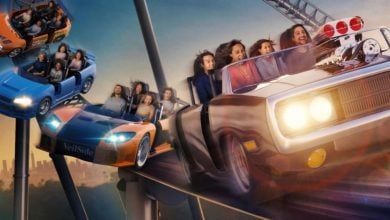
Universal Studios Hollywood is not finished modifying the area around Fast & Furious: Hollywood Drift.
Los Angeles City Councilmember Adrin Nazarian’s office announced Tuesday that Universal will install two additional sound barriers around its new roller coaster in response to community noise concerns. According to the community notice posted by Nazarian’s office, construction is expected to be completed in early September.
That is a meaningful addition for an attraction already designed with noise mitigation in mind. It is not, however, evidence that Universal violated a California noise or privacy law, and the notice does not say that the coaster’s speed, layout, or ride experience will be changed.
Instead, the new construction shows that Hollywood Drift’s technical rehearsals are still doing what rehearsals are intended to do: revealing how a complicated attraction behaves under real operating conditions—including conditions that cannot be fully reproduced with empty trains.

Universal’s Hollywood Drift Sound Barriers Address Rider Screams
Noise has followed Hollywood Drift through much of its testing period, but the coaster’s machinery does not appear to be the principal complaint.
Nearby Toluca Lake residents told CBS Los Angeles in July that they could repeatedly hear riders screaming during tests. CBS reported that Universal had already installed approximately 900 feet of sound walls, placed pea gravel inside portions of the track to suppress mechanical noise, and designed the rotating vehicles so riders would not continuously face the same direction.
Inside the Magic previously examined the first sound-shield panels installed around Hollywood Drift months before guests began riding.
Those measures apparently did not close the matter. Nazarian’s new notice says the councilmember’s office heard community concerns and that Universal will now add two more barriers. The notice does not provide their dimensions, precise locations, or anticipated cost.
Universal has maintained that it is monitoring the attraction’s sound. In a statement published by ABC7 Los Angeles, the company said technical rehearsals are intended to evaluate the ride under different operating conditions and that it is reviewing sound levels to ensure compliance.
That wording matters. Universal has said it is working to ensure compliance; neither the company nor Nazarian’s office has publicly stated that regulators found Hollywood Drift in violation.

Another Construction Deadline, but Still No Opening Date
The early-September completion target introduces an awkward piece of timing.
Universal’s official Hollywood Drift webpage still describes the coaster as “Coming Summer 2026.” It lists the attraction on the Upper Lot, establishes a 51-inch minimum height, and promotes individual vehicles that rotate 360 degrees at speeds reaching 72 mph. It does not currently provide an official grand-opening date.
The attraction began carrying guests during technical rehearsals in late July. Those rehearsals are not regular operation: the coaster can open late, stop operating, or remain unavailable without advance notice. Inside the Magic highlighted that distinction after a train rolled backward and required several swings to continue.
Universal also previously removed a June 26 opening date that appeared briefly on its website, explaining that the date had been posted incorrectly. That withdrawn Hollywood Drift date should not be treated as a delayed official opening because Universal never adopted it as one.
For now, there is no confirmed evidence that the two new barriers will suspend technical rehearsals or determine the grand-opening date. The completion target could overlap with continued testing, but Nazarian’s notice does not explain the construction sequence.

What Universal Studios Hollywood Guests May Notice
Guests should not expect Hollywood Drift to become slower or less intense because of this announcement. No publicly available statement says Universal will alter the ride profile, rotating vehicles, launches, or 72-mph maximum speed.
The visible difference will be physical: two more noise-control structures added somewhere along the coaster’s route. Depending on their location and design, they may change sightlines from portions of the park or briefly create another active work area. Those effects remain possibilities, not confirmed operational consequences.
Hollywood Drift already brings several practical changes for riders. Inside the Magic previously reported on its double-sided lockers and metal-detector screening, while separately explaining why technical rehearsals should not be treated as a guaranteed part of a paid park day.
The attraction’s uncertain status also matters as Halloween Horror Nights approaches. Universal’s ticket language limits Hollywood Drift access for some event products, an issue complicated by recent Express-ticket changes.
The additional barriers do not settle the larger neighborhood dispute, but they establish Universal’s next step. By early September, the company expects to have added another layer of protection between a coaster built to produce screams and the homes close enough to hear them.