A massive technological paradigm shift is unfolding behind the scenes of the world’s most famous theme parks. On Friday, June 26, 2026, a groundbreaking exclusive report from Bloomberg revealed that Walt Disney Imagineering is quietly developing a mind-boggling array of next-generation robotic technologies. The newly unveiled lineup includes autonomous aquatic robots capable of transforming world-class lagoons, free-roaming, hovering Star Wars food truck droids engineered to deliver drinks directly to guests, and shape-shifting animatronics.
While these innovations sound like distant science fiction, Disney gave the public an unexpected first taste of this master plan today. Utilizing a brief refurbishment at Disneyland’s classic Pirates of the Caribbean attraction, Imagineers officially deployed the foundational real-time software and hardware design that will power this new automated empire. By stripping away traditional mechanical limits, Disney is fundamentally changing how physical characters and environments interact.
Destination Abu Dhabi: The World’s Most Advanced Park
While domestic park-goers in California and Florida are getting the first look at these individual components, the Bloomberg feature dropped a major bombshell regarding where this technology is ultimately flying. The majority of this boundary-pushing automation is being custom-built for an entirely new international destination: Disneyland Abu Dhabi.

The upcoming Middle Eastern expansion is officially slated to become “Disney’s most technologically sophisticated park.” Building a theme park from scratch in the late 2020s allows Imagineering to bypass the physical constraints of legacy properties completely. To realize these ambitious goals, the company is playing a long strategic game, using existing theme parks as real-world testing grounds.
“We’re working backwards through our other experiences to test and learn so that we can deliver on that promise and that all of our parks will benefit from the innovations between now and then,” explained Kyle Laughlin, senior vice president for technology and R&D at Walt Disney Imagineering. “I think in the time frame in which we’ve talked about Abu Dhabi, you will see more free roaming robots, integrated XR experiences and all kinds of new ways to engage people as both devices and expectations change.”
The Death of Silicone: The 3D-Printed Animatronic Face
The most immediate display of this “working backwards” strategy debuted inside Disneyland’s newly reopened Pirates of the Caribbean. During a multi-week shutdown, a classic, static skeleton prop resting on a massive pile of cursed gold coins was replaced with an advanced, hybrid Audio-Animatronics figure.

To the human eye, the pirate appears to be a living human whose face seamlessly melts into a decaying skeleton and back again, entirely in real-time, without any screen barriers or camera cuts. The secret to this illusion lies in an elegant marriage of old-school mechanics and futuristic 3D fabrication.
Traditional expressive animatronics rely on flexible silicone skins stretched over a complex network of cables, high-pressure hydraulics, and miniature electric actuators housed inside a robotic skull. Over time, constant movement causes the rubber to tear and hydraulics to leak, leading to extensive maintenance downtime.
To solve this, Imagineers designed a rigid, meticulously engineered, 3D-printed facial shell with absolutely zero moving parts. Instead of relying on mechanical components to move a plastic jaw or twitch a rubber cheek, the pirate’s expressions, blinking eyes, and ultimate skeletal decay are achieved via a high-fidelity spatial projection mapping system. By driving the projections using a real-time game engine, the digital assets align perfectly with the face’s physical geometry.
As Laughlin noted on the expanding horizon of theme park tech: “Now we have to cover all types of form factors from bipedal robots, to quadrupeds, to things that fly and that you’ll see in the water. All of that is necessary because when we can’t have a costumed character, we need to figure out other ways to bring those things to life.”
Defying Gravity: Free-Roaming Star Wars Flying Carts
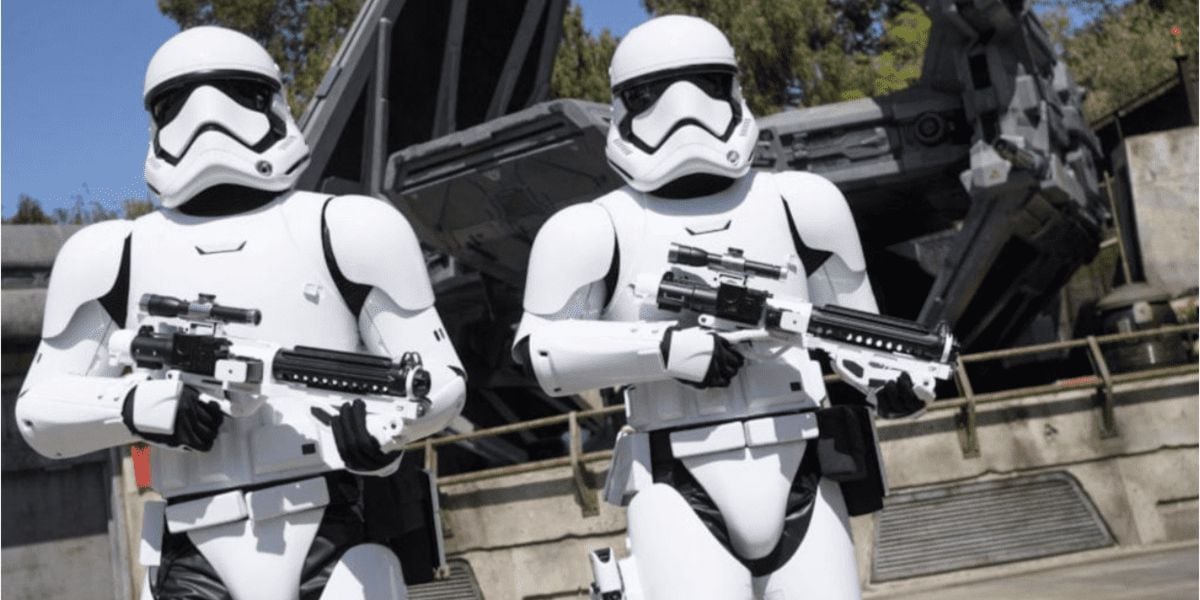
Beyond the confines of dark rides, Disney is taking its character technology out into the open air. Imagineering’s Research & Development division has successfully developed free-roaming, hovering Star Wars droids designed to serve as mobile refreshment hubs.
Inspired by a food truck featured in The Mandalorian and Grogu, these floating carts navigate complex park environments completely untethered, put on a show depending on what a guest orders, and react dynamically to their surroundings. Unlike previous atmospheric droids—such as the bipedal BDX “duckling droids”—this new class of robot relies on highly advanced stabilization and low-altitude propulsion technology to hover seamlessly above the pavement.
To build the cart, Imagineering collaborated directly with director Jon Favreau, with plans to showcase the tech at an upcoming fan event before a potential Disneyland debut by the end of the year. The utility of these mobile units stretches far beyond simply passing out refreshments. It acts as an entirely new retail and character medium.

“I think that what we’re going to learn is how to show and sell products, and if it works, we’ll continue to look at new ways,” said Laughlin. “It doesn’t even have to be a drink. You could have a little Elsa doll or something like that.”
Breaking the Tracks: Hydrofoil Aquatic Performers
Disney is also entirely reimagining how it utilizes its water features, turning open water into an interactive stage. Imagineering has successfully built a fleet of autonomous aquatic robots that will permanently replace traditional, track-bound water show infrastructure.
- The Gramma Tala Manta Ray: A massive, six-foot-long robotic manta ray heavily inspired by the ocean-spirit form from Moana. Utilizing cutting-edge hydrofoil technology, this mechanical ray propels itself through the water with unmatched grace, executing lifelike leaps and dives.
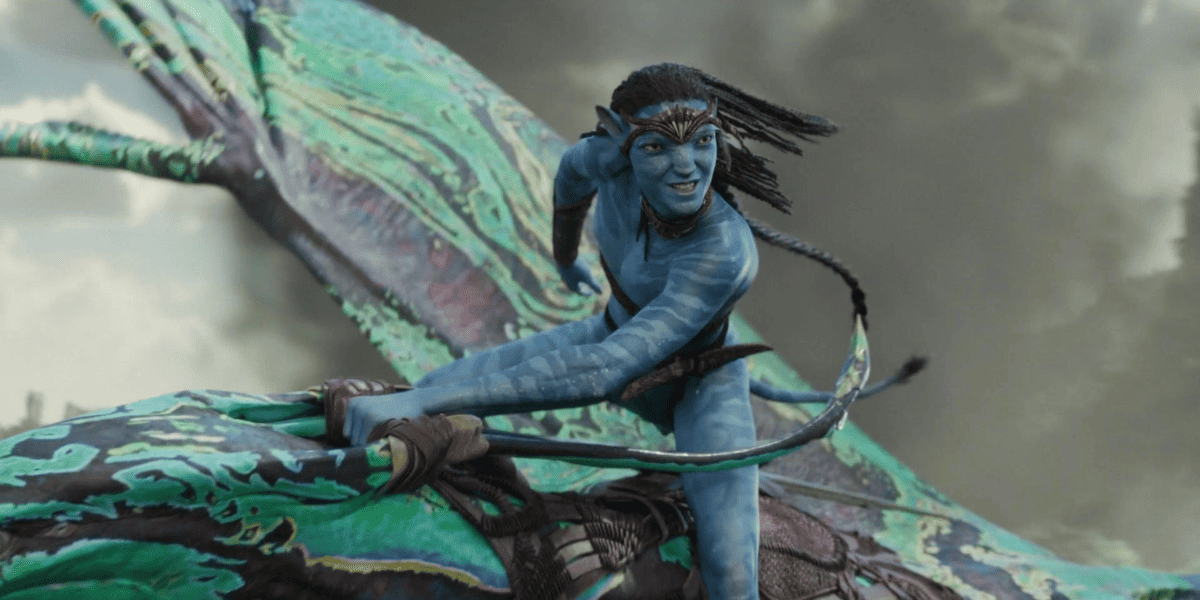
- Mechanical Dolphins: A fleet of sub-surface robots heavily inspired by the fictional “Ilu” creatures featured in Avatar: The Way of Water. These robots use jet-pump propulsion and biomimetic articulation to balance themselves, alongside GPStechnology for navigation, to interact with each other and tell a story.
Historically, massive nighttime spectacles have relied on static fountains and heavy piping networks anchored to a lagoon floor, which are incredibly expensive to maintain. For Imagineering, open water represents a massive, untapped resource during normal park hours.

“We look at this as a canvas where we could really bring new entertainment to life in a way that could be super powerful for our guests,” Laughlin explained, highlighting how Moana and Avatar are serving as primary creative inspirations. “It’s this great mix of water IP and underutilized spaces, so we are exploring what autonomous aquatic performers can do.”
Story Over Hardware
The true breakthrough that ties all these separate projects together is the transition from mechanical hardware dependence to real-time software orchestration. By relying on advanced game engines to control visual projections, pathfinding algorithms, and aquatic choreography, Disney has effectively removed the physical limitations of traditional theme park design.
This software-first approach eliminates mechanical wear and tear on the most fragile components of a show. Furthermore, it allows the team to mix state-of-the-art engineering with time-tested theatrical techniques.
“We can be on the bleeding edge from a robotics perspective, but we can also look for novel ways to use old technologies too, like marionettes and puppets in brand new ways as well,” Laughlin stated. “The goal is to be comprehensive in terms of both the franchises and the types of formats that we work with.”
As these automated platforms prepare for their ultimate showcase at Disneyland Abu Dhabi, Imagineering remains steadfast in the belief that the core motivation behind these milestones is emotional connection, not engineering vanity. “The goal is not to do innovation or technology for technology’s sake, but always in service of the story,” Laughlin added. The boundary between digital animation and the physical world has officially dissolved.