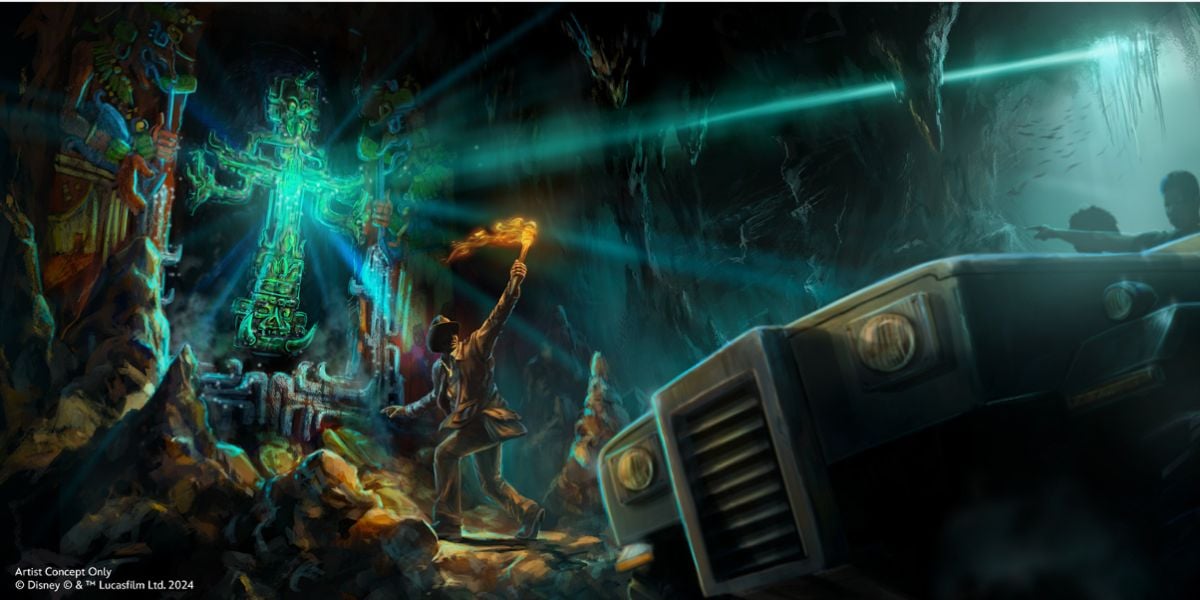
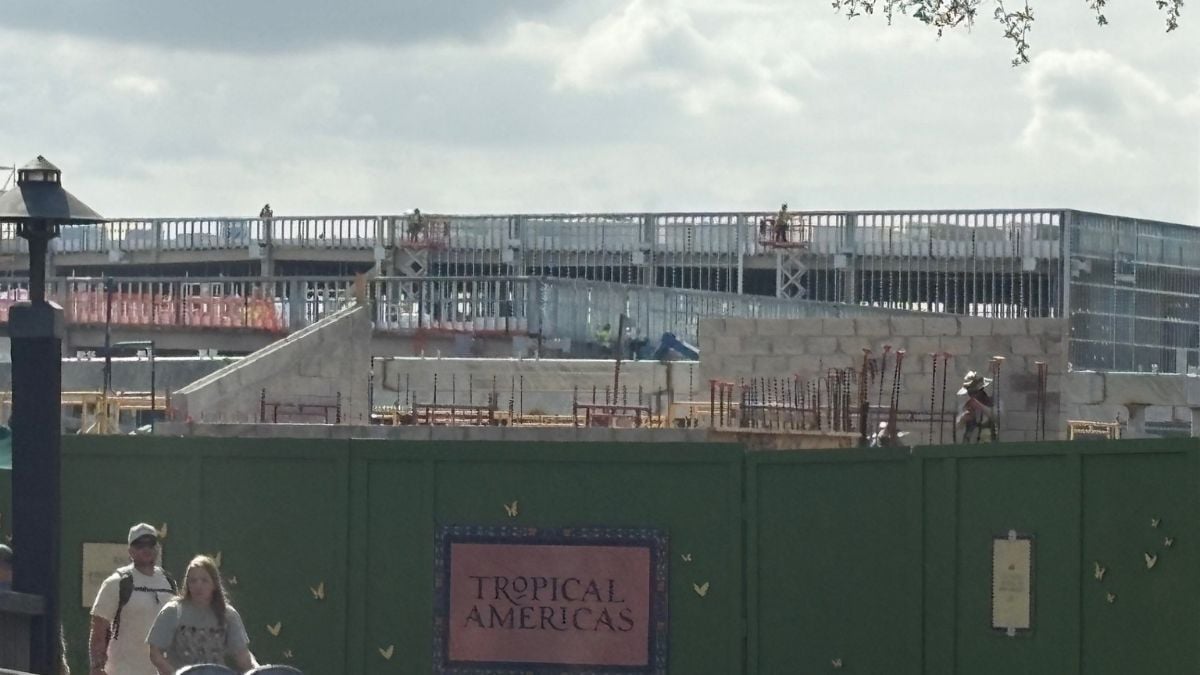
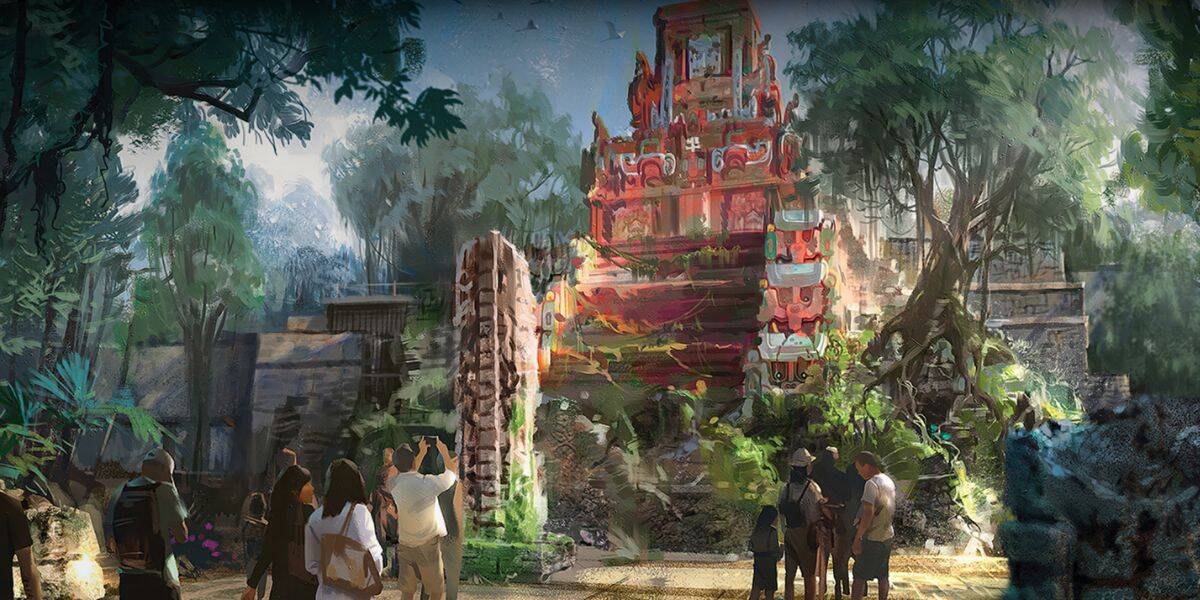
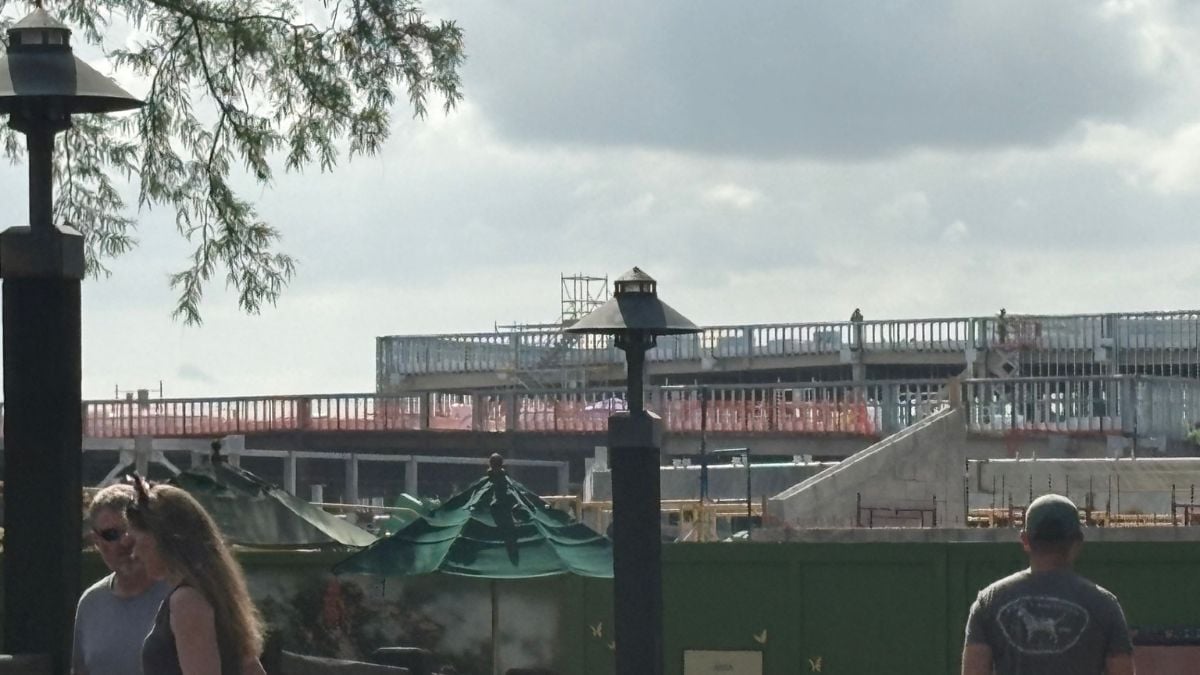
The transformation of Walt Disney World is moving at a blistering pace in 2026. As construction crews in Disney’s Animal Kingdom actively clear out the remnants of DinoLand U.S.A. to clear a path for the brand-new Tropical Americas land—officially named Pueblo Esperanza—theme park enthusiasts are closely watching for any clues about the land’s highly anticipated anchor attraction. While it is common knowledge that the upcoming Indiana Jones ride will utilize the rugged Enhanced Motion Vehicle (EMV) track layout left behind by the former DINOSAUR attraction, Disney has promised a completely original, narrative-driven expedition through a mysterious, unmined Maya temple.

The technical secrets of how Disney Imagineers plan to terrify audiences inside this ancient temple have started to spill out into the open. On June 4, 2026, a massive new patent assigned to Disney Enterprises, Inc. was officially published, showcasing a never-before-seen special effect. The document outlines a “3-D extendable projection surface” capable of appearing from thin air, dynamically distorting in mid-air, and completely retracting from view. This breakthrough directly addresses a decades-old theme park limitation and signals a historic leap forward for Disney’s practical illusion design.
The Problem With Classic Theme Park Illusions
In the field of themed entertainment, creating terrifying environmental hazards—such as a sudden tornado, a localized flash flood, or a shifting supernatural entity—is an immense operational challenge. Traditionally, theme parks have relied on large, static physical props that permanently inhabit a ride showroom.
The issue with this legacy approach is simple: guests can see the prop sitting idly in the dark long before the effect triggers, and they can keep looking back at it after their vehicle passes. This early exposure completely spoils the surprise, reveals the room’s structural mechanics, and shatters the rider’s immersion. While moving heavy, rigid set pieces mechanically in and out of a scene is an option, it is often a slow, loud process that is easily spotted by riders.
Disney’s newly unveiled patent solves this dilemma by creating a highly dynamic physical structure that only exists when the show scene demands it, instantly vanishing the moment the ride vehicle leaves the area.
How the 3-D Extendable Projection Surface Works
At its technical core, this newly patented system acts as a shape-shifting architectural canvas. The mechanism consists of a highly flexible, deformable textured skin—such as a specialized theatrical fabric like Dacron—stretched tightly over a sequence of internal structural elements.

The internal framework resembles a series of concentric rings or hoops that progressively shrink in size. When the ride’s control computer triggers the scene, a system of specialized winches and linear actuators dynamically pulls on internal rigging cables. This action extends the fabric structure outward from a hidden ceiling or floor cavity, instantly guiding the material into a fully realized three-dimensional shape, such as a cone, funnel, or pyramid.
Once fully deployed, external media projectors apply high-resolution projection mapping directly onto the outside of the fabric. Simultaneously, internal lighting components, such as multi-colored strobe lights, illuminate the structure from the inside out. To make the illusion even more unsettling, the patent describes an internal, movable “sock-like” element that can travel up and down the interior of the hoop structure. This internal component casts a shifting shadow through the translucent exterior fabric, creating the distinct, eerie impression that something alive is trapped and actively moving inside the effect.
When the encounter concludes, the actuators reverse, nesting the structural hoops flat inside one another and pulling the entire fabric apparatus cleanly out of the guests’ sightlines.
The Imagineer Connection: The Smoking Gun
While Disney frequently files speculative patents that never see the light of day, the specific names attached to this filing make it an incredibly safe bet for the upcoming Indiana Jones attraction.
The patent officially credits two primary inventors: Charles Jacob Sedor and Brianna Lee Pfost. Both are prominent, active field Imagineers who are currently assigned to the Indiana Jones ride project for Pueblo Esperanza.
Furthermore, during past public presentations detailing the creative vision for the Tropical Americas expansion, Pfost specifically used a theoretical example of a ride hazard, describing the unique psychological terror of coming face-to-face with a destructive, spinning tornado. With the publication of this patent, that exact tornado concept has transitioned from a creative pitch into a concrete engineering blueprint.
Theoretical Applications Within the Maya Temple
Because the cable-and-hoop design allows for extreme structural flexibility, the patent outlines several distinct ways this temporary physical canvas can deform and manipulate its shape in real-time:
- A Descending Tornado: Multiple internal actuators can independently shift, wobble, and twist the structural rings against each other. This produces an organic, fluid twisting motion that perfectly replicates a cyclonic funnel cloud dropping from the ceiling right in front of the ride vehicle.
- A Reaching Monster Arm: The mechanism can be engineered to project horizontally out of a wall cavity. By expanding the internal hoops sequentially, the fabric can lengthen outward to simulate a giant tree root rapidly growing toward riders or a mythical temple creature reaching for the vehicle.
- An Erupting Geyser or Mountain: Reversing the vertical orientation allows the entire system to shoot upward from beneath the floor scenery, simulating a violent burst of water or an ancient altar rapidly materializing out of the ground before collapsing back into the abyss.
Interactive Magic and Environmental Adaptation
Beyond its mechanical complexity, this system is fully integrated with Disney’s modern guest-tracking systems. The patent highlights that the mechanism includes an automated sensor array featuring RFID readers, tracking cameras, and directional microphones.

This means the effect doesn’t just run on a repetitive timer; it can actively listen and adapt to the riders. The system can detect exactly where the EMV ride vehicle is positioned, track the physical gestures of the guests on board, or register the volume of their screams. It can then instantly adjust the speed of its twisting motion, alter the intensity of its internal strobe flashes, or redirect its shifting shadow element in real time. The illusion could even theoretically ping a guest’s MagicBand+, customizing the temple’s supernatural wrath to the specific people inside the vehicle.
While Disney has not officially confirmed when installation for this specific system will begin, the alignment of the project’s timeline and the assigned Imagineers indicates that Animal Kingdom is about to receive an absolute game-changer in physical storytelling. When Pueblo Esperanza opens its gates in 2027, Indiana Jones’s latest expedition will likely deliver one of the most immersive, technologically advanced practical illusions ever engineered for a theme park.