

Luke Skywalker vs. The Silent Majority: Why ‘The Mandalorian & Grogu’ is Facing a Massive Red State Revolt

In the world of Star Wars, the balance of the Force is usually a struggle between light and dark. But in May 2026, the struggle is between the box office and the ballot box.

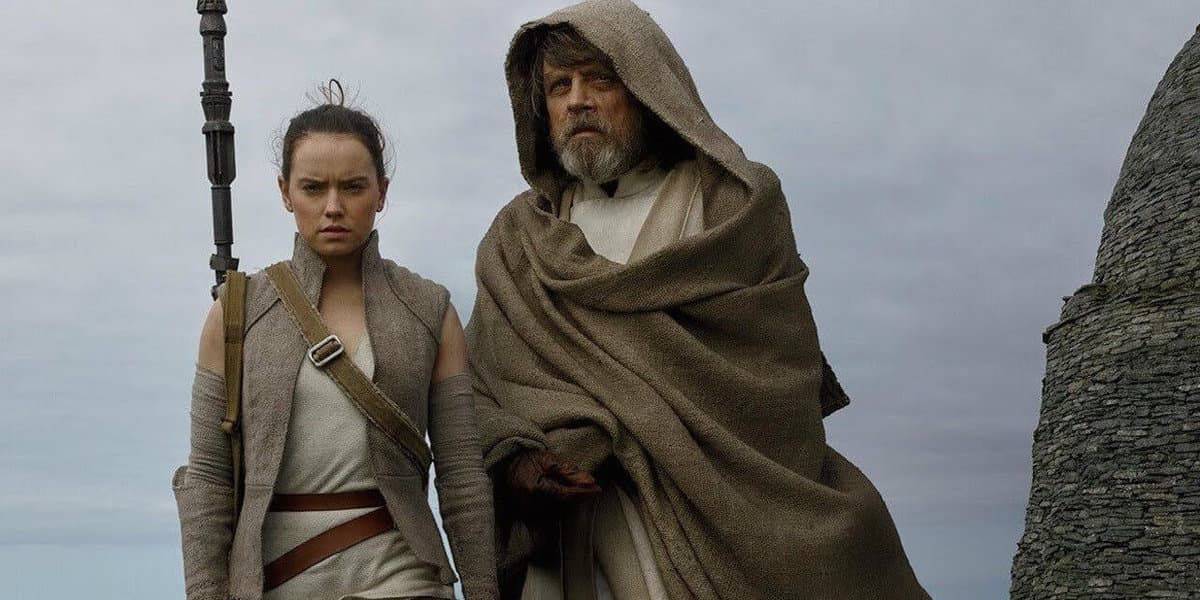
With only weeks to go before the global premiere of “The Mandalorian & Grogu,” Disney is staring down a “Death Star-sized” PR disaster. The cause isn’t a bad script or a CGI glitch; it’s a single social media post from Mark Hamill. The man who brought Luke Skywalker to life has long been a lightning rod for political discourse, but his latest commentary regarding President Donald Trump has pushed a massive segment of the fandom to say, “I have a bad feeling about this.”
The resulting #BoycottTheMandalorian movement is no longer just a Twitter trend—it’s a full-blown financial threat to Disney’s $250 million gamble.
The Tweet That Broke the Fandom
The controversy began late last week when Mark Hamill shared a post that many viewed as the final straw. According to reports from Newsweek, the tweet made a pointed and, according to critics, “distasteful” reference to President Trump’s future grave site. While Hamill has never been shy about his disdain for the 47th President, this specific post struck a nerve because of its timing and perceived “ghoulishness.”
For a large portion of the American public, the joke wasn’t just political—it was personal. Within hours, conservative pundits and GOP lawmakers began calling for a total blackout of Disney’s upcoming theatrical slate, starting with the Mando-verse’s big-screen debut.
“There is a line between political satire and wishing ill upon the leader of our country,” one viral GOP response stated. “Mark Hamill crossed it, and Disney’s silence tells us exactly where they stand. If they don’t need our values, they don’t need our ticket sales.”
A $250 Million Problem for Josh D’Amaro
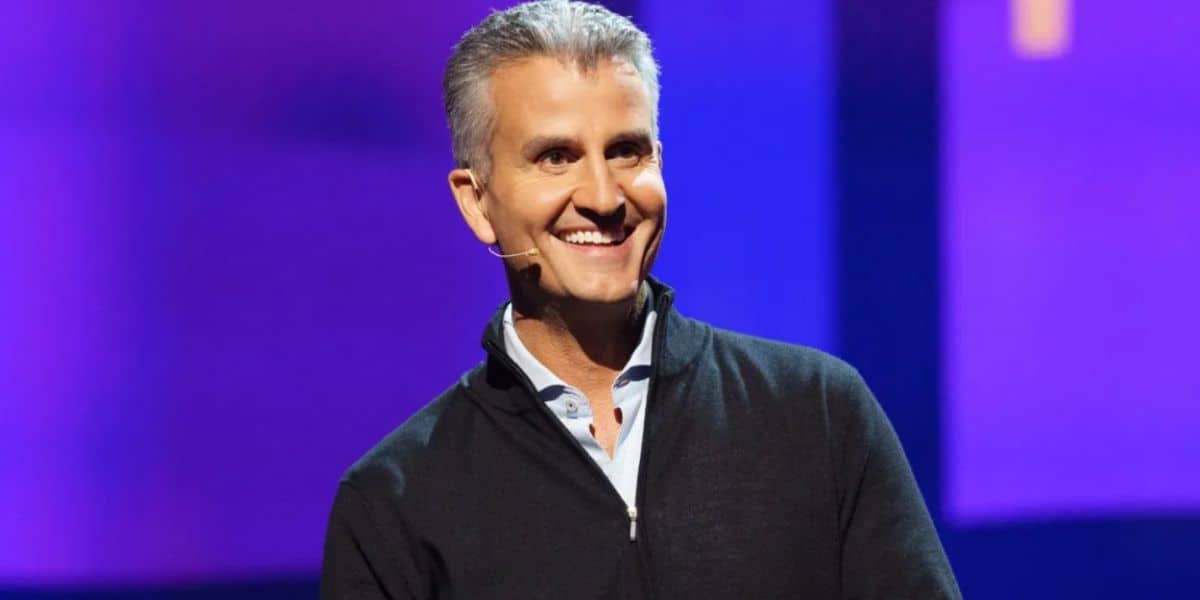
For new Disney CEO Josh D’Amaro, this is exactly the kind of “Star Wars Civil War” he hoped to avoid. Since taking the helm, D’Amaro has been on a mission to depoliticize the Disney brand and return the focus to “storytelling excellence.”
The Mandalorian & Grogu were supposed to be the “Great Unifier.” It features the two characters that even the most jaded Star Wars fans actually like: Din Djarin and the adorable Grogu. But Hamill’s comments have shifted the conversation from “How did Grogu get that lightsaber?” to “Why is Disney still employing people who alienate half their audience?”
The Shadow of Gina Carano
The boycott’s power isn’t just in the tweet itself; it’s in a sense of perceived hypocrisy. Conservative fans are quickly pointing back to the 2021 firing of Gina Carano, who played Cara Dune in The Mandalorian.
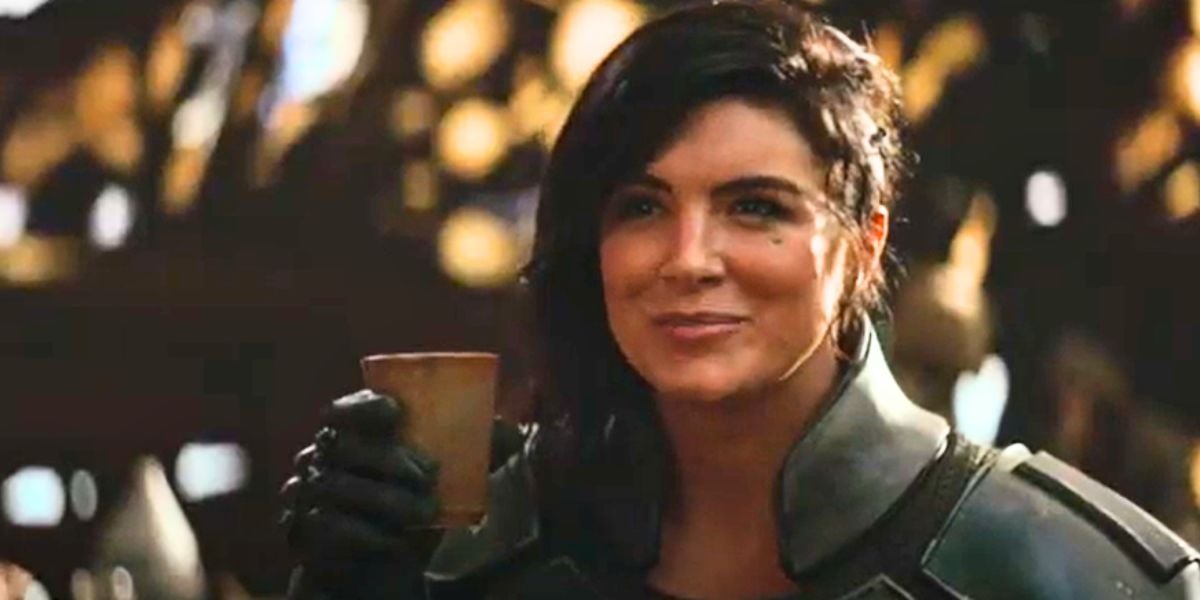
Carano was famously let go after social media posts that Disney deemed “abhorrent and unacceptable.” Now, those same fans are asking why Hamill—whose recent comments they find equally, if not more, offensive—is given the protection of the “Disney Legend” title.
- The Double Standard: Critics argue that Disney enforces a “left-leaning” moral code for its stars.
- The Fandom Fracture: This perceived bias is driving the “Silent Majority” to stay home, specifically in “Red State” markets where Star Wars has historically thrived.
Box Office Under Siege
For anyone tracking “The Mandalorian 2026 box office” or “Disney Star Wars boycott news,” the numbers are starting to tell a story.
Early tracking from “Flyover Country” markets—including the Ohio River Valley and the Deep South—shows a 12% to 18% dip in pre-sale ticket velocity compared to internal Disney projections. While the film is expected to dominate in New York and Los Angeles, the lack of “Middle America” support could mean the difference between a $1 billion global smash and a “break-even” disappointment.
Can Grogu Outrun the Politics?
Disney’s marketing team is currently in “overdrive,” attempting to pivot the conversation back to the characters. They are doubling down on “Grogu-centric” advertising, hoping the character’s sheer cuteness can override the political noise.

“The strategy is simple: More Baby Yoda, less Mark Hamill,” says one industry insider. “They are hoping that the 10-year-olds who want a Grogu popcorn bucket will drag their Republican parents to the theater anyway. But in 2026, the ‘culture war’ is a powerful force, and ‘Baby Yoda’ might not have enough midichlorians to stop a nationwide boycott.”
The “Star Wars” Roadmap at Risk
The stakes couldn’t be higher for new Lucasfilm President Dave Filoni. This film is the “test pilot” for a new era of Star Wars movies. If it fails to capture the general audience because of a political firestorm, it puts the entire upcoming slate—including the Rey Skywalker film and the Dave Filoni “Mando-Verse” finale—under a microscope.
Why this boycott is different:
- The Lead-up to 2027: With a major election cycle looming, tensions are at an all-time high.
- Streaming Fatigue: Fans are already frustrated with the volume of Disney+ content; any excuse to skip a theatrical release is being taken.
Conclusion: A Choice for the Fans
As of May 10, 2026, Mark Hamill has not deleted the tweet, and Disney has not issued an apology. The “Galactic Boycott” is gaining steam as the opening weekend approaches.

Ultimately, fans are being forced to make a choice: Do you support a franchise you love, even if the faces of that franchise mock your deeply held beliefs? Or do you walk away from the Jedi Order for good? As the “Mandalorian & Grogu” prepare for their biggest mission yet, the most dangerous enemy they face isn’t Moff Gideon—it’s the power of the consumer’s wallet.
Are you sitting this one out, or can you separate the art from the artist? Let us know in the comments if you’ll be heading to the theater this May.




Not sure why you picked that “x” to represent your post, since it clearly misrepresents what Mark Hammil wrote, but aside from that, I feel like Disney is doing a fine job of organizing boycotts of Star Wars on their own by ruining the franchise with crappy movies.
Being a Vietnam Veteran that despises “Hanoi Jane” Fonda and her ilk, this is just one more attack on everything that is good about America. It is a reference to the number of Leftists that are pulling out of the 250th Anniversary of America over politics. I am sorry, we DON’T NEED YOU HERE. IF you place your personal politics above your country, you don’t belong here.
I was asked to read a statement (honor) to a veteran from President Obama on Novewmber 11th one year. In my Dress Blue Marine Corps Uniform, I was asked by a black woman if I would do it. My response was ABSOLUTELY. Why she asked? Because “I am an American fighting man. I serve in the forces that guard my country and our way of life. I am prepared to give my life in their defense.” I told her I honor the OFFICE OF THE PRESIDENCY, not necessarily the person that holds that office. I was in my 60’s at that time, long after I had ceased being on active duty. AMERICA is more than one person and one ideology. It is the last best hope of mankind. It is a light on a hill that shines for LIBERTY AND FREEDOM FOR ALL. It always has been and will be tomorrow with God’s help. SEMPER FI
Mike. .