
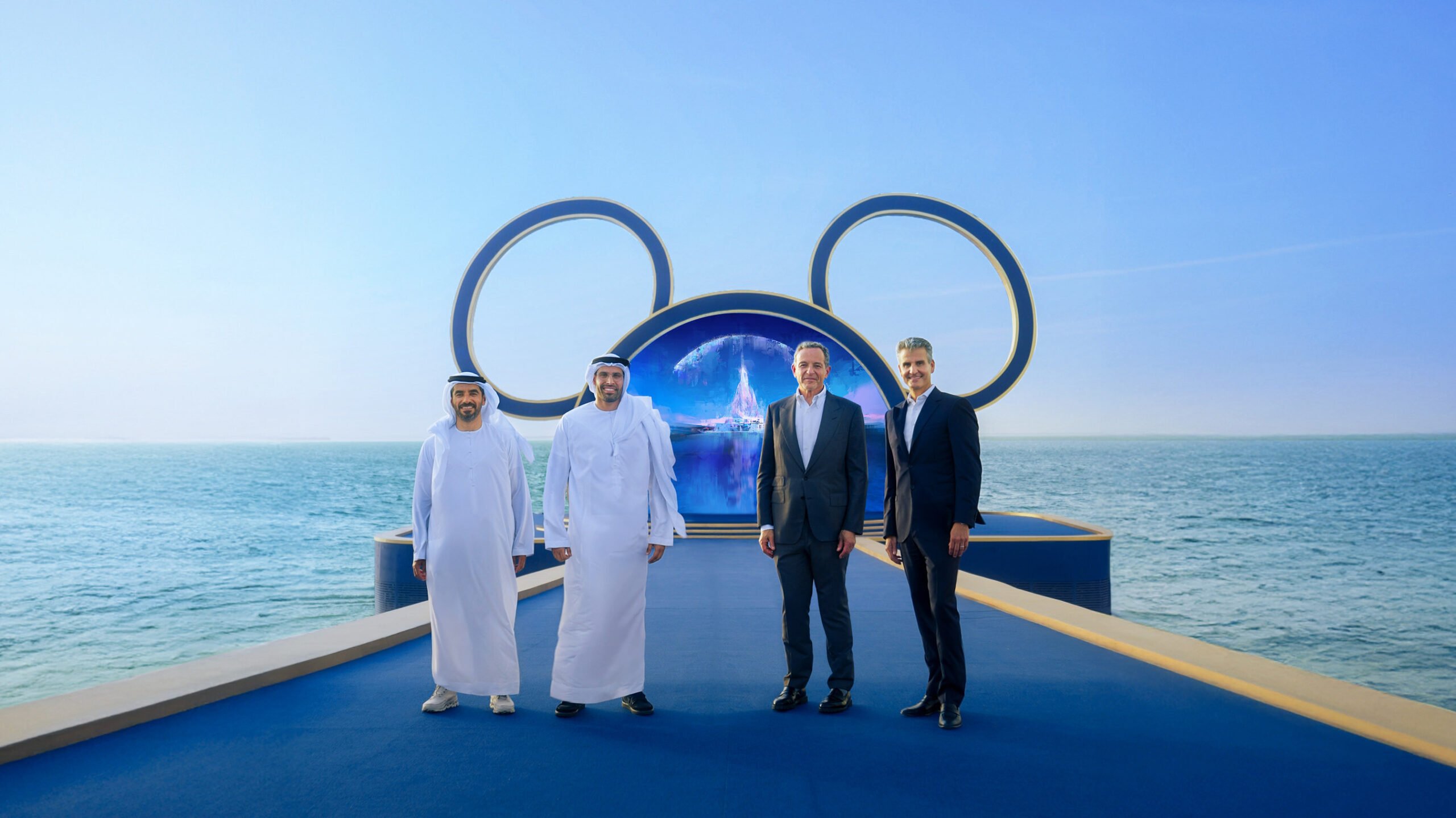
In early 2025, The Walt Disney Company sent shockwaves through the tourism world by confirming its most ambitious international expansion in decades: a massive, multi-gate resort on Abu Dhabi’s Yas Island. Promising to be the “Middle Eastern Orlando,” the project—recently teased under the grander title of Disney World Abu Dhabi—represented a $10 billion bet on the region’s growing influence.
But by April 2026, the fairy tale had run into a wall of geopolitical fire. Since the outbreak of the “Iran War” in February 2026, the Middle East has faced unprecedented instability. Now, the project is caught in a tug-of-war between corporate optimism and the cold, hard reality of global conflict. With conflicting reports emerging from industry titans, fans are left wondering: Will Disney World Abu Dhabi ever actually open, or are we witnessing the first multi-billion-dollar casualty of 2026?
The Forbes Report: Disney “Hails” Progress Despite the Chaos
On April 19, 2026, Caroline Reid published a Forbes report that seemed designed to calm anxious investors. In the article, titled “Disney Hails Enjoyable ‘Exchange Of Ideas’ About Abu Dhabi theme park,” Reid detailed a recent series of high-level meetings between Disney leadership and their regional partners, the Miral Group.

According to Reid’s reporting, Disney has described the ongoing planning phases as an “enjoyable exchange of ideas.” In the sanitized language of corporate press releases, this signals that the creative blueprints are still being drawn. Furthermore, Disney has leaned into the scale of the project, with reports suggesting that the resort has grown from a single “Disneyland” park into a full-scale “Disney World” resort, complete with multiple themed lands and luxury hotels.
Adding fuel to the fire of optimism, Disney recently registered several high-profile domain names, including DisneyWorldAbuDhabi.com. For the “optimist” camp, this is proof of life. They argue that a company doesn’t rebrand and register domains if it plans to shelve a project due to a “temporary” regional conflict.
The Jim Shull Dissent: “Conflicting Reports” and a Reality Check
However, not everyone is buying the corporate narrative. Jim Shull, a 33-year veteran of Walt Disney Imagineering and one of the most respected voices in the industry, recently threw a bucket of cold water on the “everything is fine” sentiment.
In a tweet that went viral across the Disney community in late April 2026, Shull pointedly noted the “conflicting reports” currently swirling around the project. Shull, who spent decades turning “lines on paper” into physical steel and stone in parks like Shanghai and Paris, highlighted a fundamental truth: You cannot build a $10 billion resort in a combat zone.
Shull’s skepticism is rooted in the logistics of “boots on the ground.” While Disney and Miral may be having an “enjoyable exchange of ideas” in air-conditioned boardrooms in California or Abu Dhabi, the physical reality of Yas Island is different. Construction requires a stable supply chain, thousands of international specialists, and, most importantly, the safety of the workforce. With regional tensions impacting air travel and shipping lanes in the Gulf, Shull’s warning suggests that any current “progress” is likely theoretical rather than physical.
The “Iran War” Factor: Can Tourism Survive 2026?
The primary engine of delay is the ongoing conflict involving Iran, which has cast a shadow over the entire UAE. Since February, the region has seen sporadic disruptions that make the “2029/2030” opening window look increasingly delusional.

Industry analysts note several “Conflict Constraints” that are currently working against the project:
- Labor Instability: A project of this magnitude relies on a massive influx of expatriate labor. High-intensity conflict in neighboring countries makes recruitment and retention a nightmare.
- The “Visitor Mix” Problem: As noted by geopolitical analysts, Disney parks require a massive “international” audience to turn a profit. As long as the “Iran War” dominates the headlines, the demographic of travelers willing to fly into the heart of the Middle East for a vacation will remain dangerously low.
- Insurance and Risk: TIT Insuring a $10 billion asset in a high-risk zone can be prohibitively expensive. Disney is a publicly traded company; if the risk-to-reward ratio tips too far, the board may be forced to hit the “pause” button, regardless of how much they enjoy the “exchange of ideas.”
The Rebranding Play: A Tactical Pivot?
Interestingly, the shift from “Disneyland Abu Dhabi” to “Disney World Abu Dhabi”—as indicated by recent domain registrations—might be a tactical move. Some insiders believe that by expanding the scope of the project, Disney and Miral are intentionally pushing back the timeline.

By rebranding the project as a multi-year, multi-gate “World,” they can justify a longer construction period without officially using the word “delay.” This allows them to wait out the current geopolitical storm while keeping the hype machine running for a 2032 or 2033 debut.
Conclusion: Creative Magic vs. Geopolitical Gravity
So, is Disneyland Abu Dhabi delayed? The answer depends on who you ask.
If you ask Caroline Reid and Forbes, the project is a vibrant, evolving collaboration that is currently in the “creative peak” of its development. If you ask Jim Shull and the realists, the project is facing a logistical wall that no amount of Pixie Dust can fix until the regional conflict is resolved.
As of April 25, 2026, the “exchange of ideas” continues. But as Jim Shull rightly suggests, until we see vertical steel rising on Yas Island amidst a stable peace, the project remains a beautiful, expensive “line on paper.” For Disney fans, the dream of a Middle Eastern Magic Kingdom isn’t dead, but it is certainly in a state of high-stakes “hibernation.”
What do you think? Is Abu Dhabi too risky for Disney, or will the “exchange of ideas” win out? Let us know in the comments!