

If you’ve visited a Disney park in the United States lately, you’ve likely noticed that the “Great Big Beautiful Tomorrow” involves a lot of editing. From the removal of the “Wench Auction” to the complete extinction of Br’er Rabbit, Walt Disney World and Disneyland Resort have spent the last five years in a state of rapid cultural evolution.

But for those who crave the “original” versions of these classic stories, there is a sanctuary—and it requires a passport. As of February 2026, Tokyo Disneyland has become a fascinating, and at times controversial, “time capsule.” While Disney’s American leadership has scrubbed scenes deemed sexist or racist from the domestic parks, the Oriental Land Company (OLC)—which owns and operates the Tokyo resort—has essentially said, “No, thanks.”
Here is a look at the “forbidden” versions of your favorite rides that still exist in Japan, and the intriguing reasons why they aren’t going anywhere.
Splash Mountain: The Briar Patch’s Last Stand
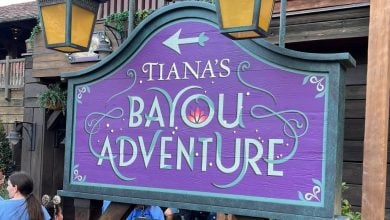
The biggest headline in the Disney world over the last two years was the opening of Tiana’s Bayou Adventure in 2024, which replaced the iconic Splash Mountain in both Florida and California. The move was a response to the problematic roots of the ride’s source material, the 1946 film Song of the South.

However, if you head to Critter Country in Tokyo Disneyland today, you won’t find a single reference to New Orleans or Princess Tiana. Instead, you are greeted by the 1992 original.
The Japanese Perspective
In the U.S., Splash Mountain was viewed as a monument to a romanticized, stereotypical version of the post-Civil War South. In Japan, that historical context simply doesn’t exist. To the Japanese public, Br’er Rabbit is just a clever “trickster” animal from an American folktale.
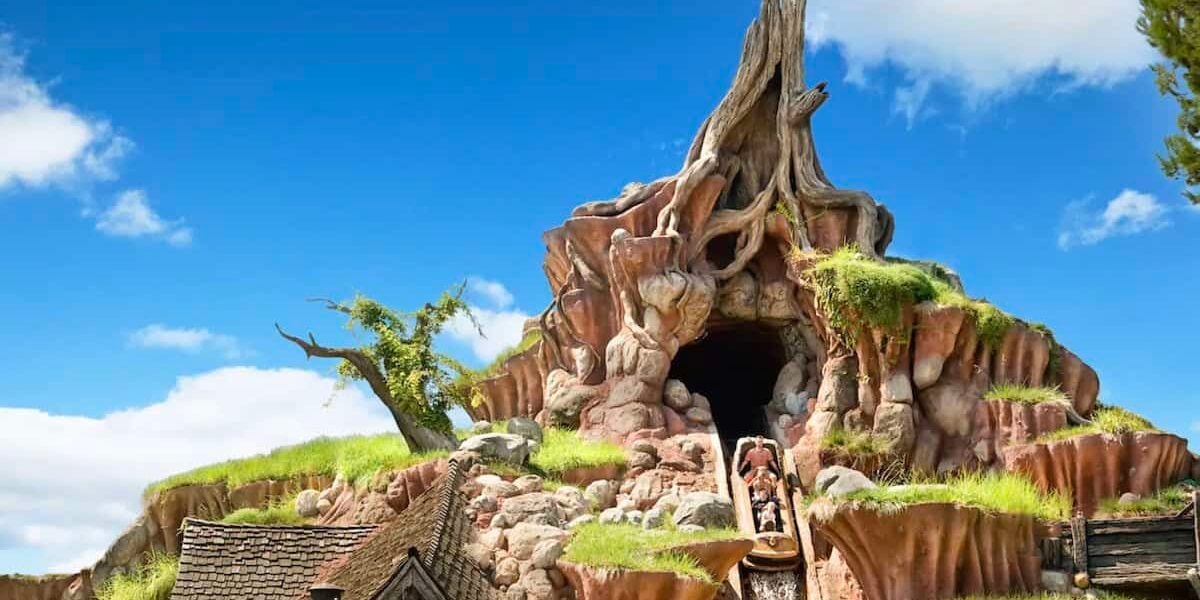
The OLC Stance: The Oriental Land Company prioritizes guest satisfaction and ride popularity. Splash Mountain remains one of the highest-rated attractions in the park, and because the racial sensitivities surrounding the film do not translate to Japanese culture, they have opted to preserve the masterpiece of Imagineering rather than spend millions on a retheme.
Neverland Frozen in Time: The “Tiger Lily” Problem
In late 2024, Peter Pan’s Flight in the American parks received a significant update. The “Neverland” section of the ride was altered to remove caricatured depictions of Native Americans. The scene formerly featuring the “Indian Camp” was replaced with a more culturally respectful depiction of Tiger Lily and her tribe performing a traditional dance.

In Tokyo? It’s still 1983.
The Tokyo version of Peter Pan’s Flight still features the original depictions that have been labeled as “stereotypical” and “offensive” by Western critics. This includes the “Pickaninny” characterizations and the tribal camp. For the American visitor, it’s a jarring experience—a glimpse into a version of Disney that has been “cancelled” back home. For the local guest, it’s simply a scene from a 1953 animated movie that hasn’t changed since the park opened.
Trader Sam: The “Head” Salesman is Still in Business
In 2021, the Jungle Cruise underwent a massive sensitivity “clean-up” in the U.S. One of the most significant losses was Trader Sam, the legendary “head” salesman of the jungle who offered a “two-of-his-heads-for-one-of-yours” deal. He was removed and replaced by a “Lost and Found” gift shop.
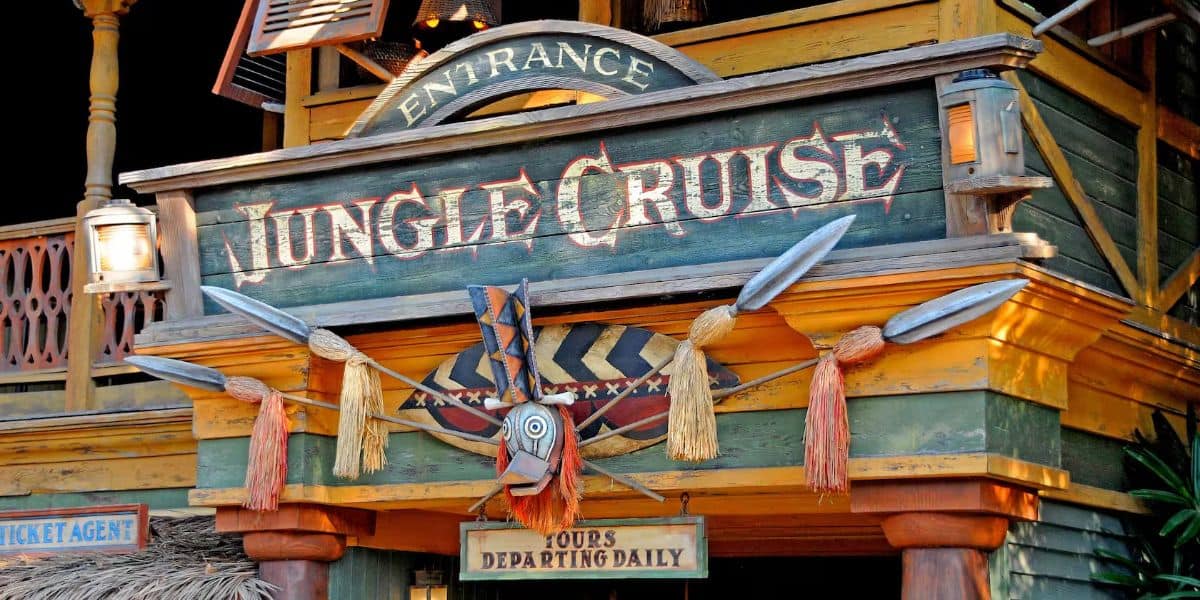
If you sail the waters of the Jungle Cruise: Wildlife Expeditions in Tokyo, however, you will find that the indigenous residents of the jungle are much more visible. While Tokyo did a massive tech upgrade to the ride in 2014, they kept the spirit of the 1955 original. The depictions of “headhunters” and “savages” deemed too problematic for modern American audiences remain a core part of the adventure in Japan.
The Redhead and the Auction: A Delayed Evolution
Perhaps the most famous change in Disney history was the “Redhead” in Pirates of the Caribbean. In 2018, the “Wench Auction” was changed to a “Rum Auction,” and the captive redhead was turned into “Redd,” a pistol-toting pirate.
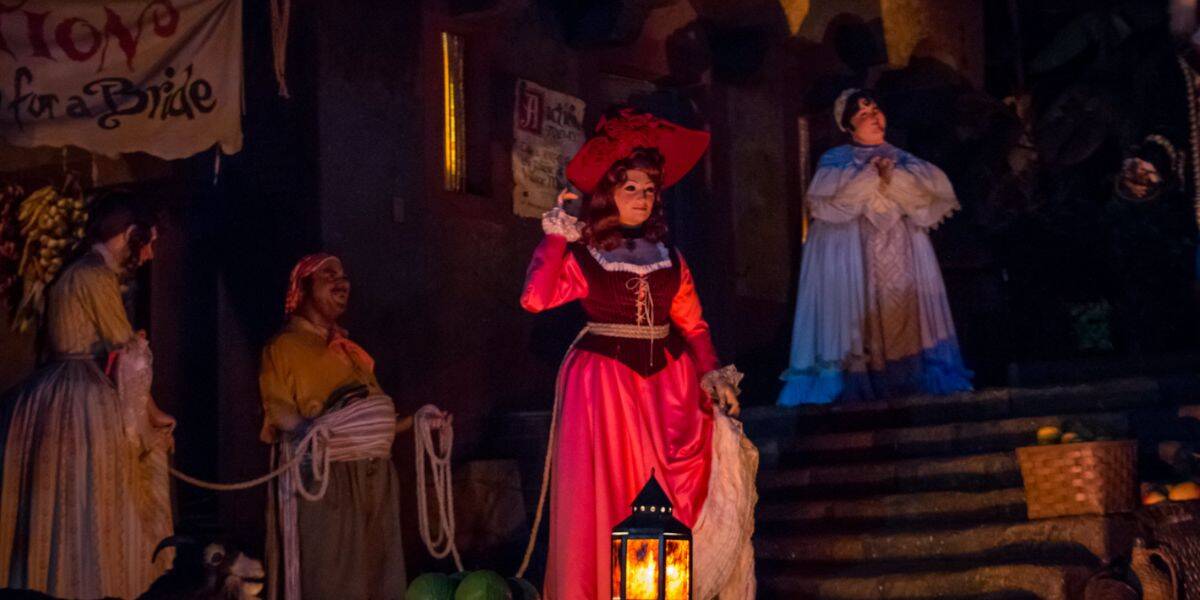
While Tokyo eventually adopted the “Redd” character change to align with the global franchise, the ride’s vibe remains significantly different. Tokyo’s Pirates is still darker and grittier, and it lacks many of the Jack Sparrow “clutter” additions that fans argue ruined the pacing of the American versions. It is widely considered by enthusiasts to be the “best” version of the ride left on the planet.
The Secret of Tokyo’s Traditionalism: The OLC Factor
Why is there such a massive schism between the American and Japanese parks? It all comes down to ownership.
Unlike the parks in Paris or Hong Kong, The Walt Disney Company does not own Tokyo Disney Resort. It is owned by the Oriental Land Company, which pays Disney a licensing fee to use the characters and Imagineering designs. This gives OLC a unique level of autonomy:
- Cultural Context: OLC is not subject to the same American social and political pressures that drive changes at Walt Disney World.
- The “Authenticity” Cult: Japanese Disney fans value “perfection” and “authenticity” above all else. To them, the original 1950s/60s Imagineering designs are “sacred.”
- If It Ain’t Broke: OLC is notoriously conservative with its spending. If a ride like Splash Mountain is still pulling 90-minute waits, they see no reason to “fix” it to appease a social discourse that is happening 5,000 miles away.
Conclusion: Two Disneys, One Choice
The result is a fascinating divide. The American parks have become “Living Documents”—spaces that evolve and change to reflect the changing values of their culture. Tokyo Disneyland has become a “Living Museum”—a place where the creative triumphs of the past are preserved in amber.
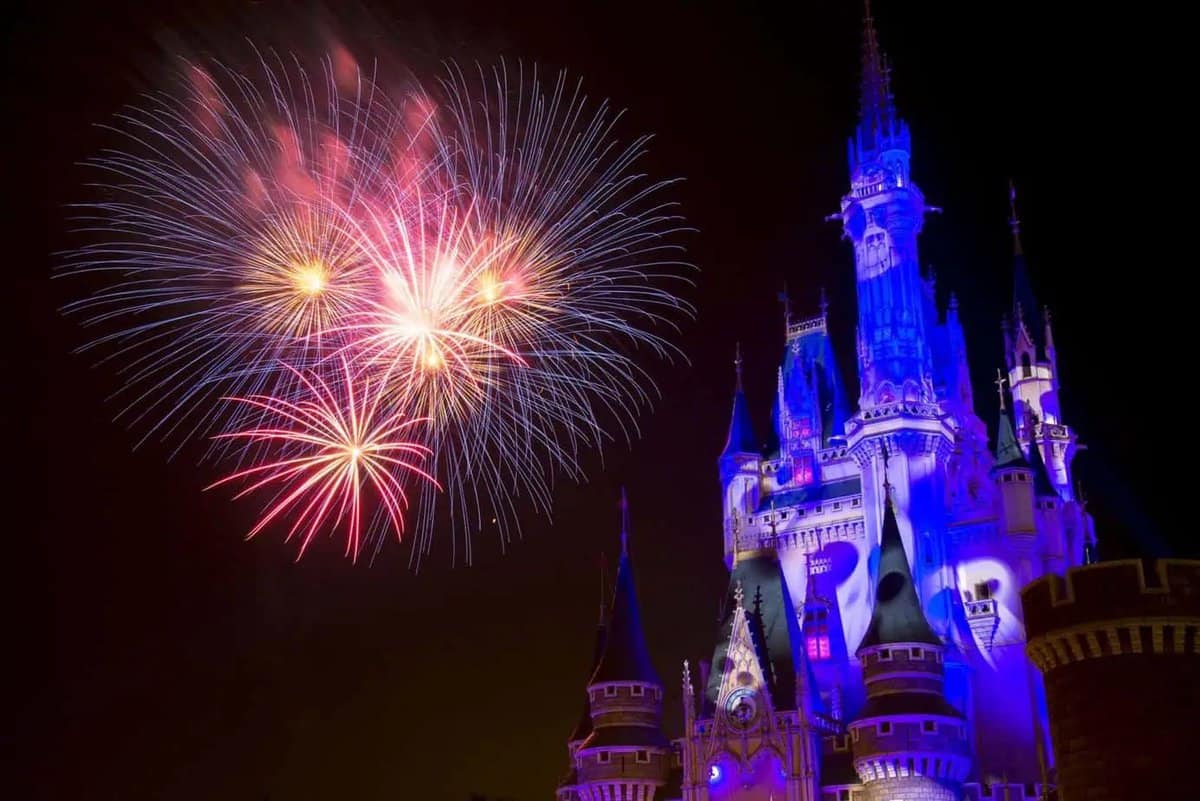
For many fans, the existence of these “forbidden” scenes in Tokyo is a welcome alternative to the sanitization of the domestic parks. For others, it’s a reminder that the world still has a long way to go in terms of global representation. One thing is sure: if you want to see the Disney that your parents grew up with, you’d better start booking a flight to Tokyo.
Are you a “preservationist” who wants the original scenes to stay, or are you glad the American parks have moved toward a more inclusive future?



japanese disneyland is fantastic!