For more than two decades, it stood as one of the most visually striking corners of Universal Orlando Resort.
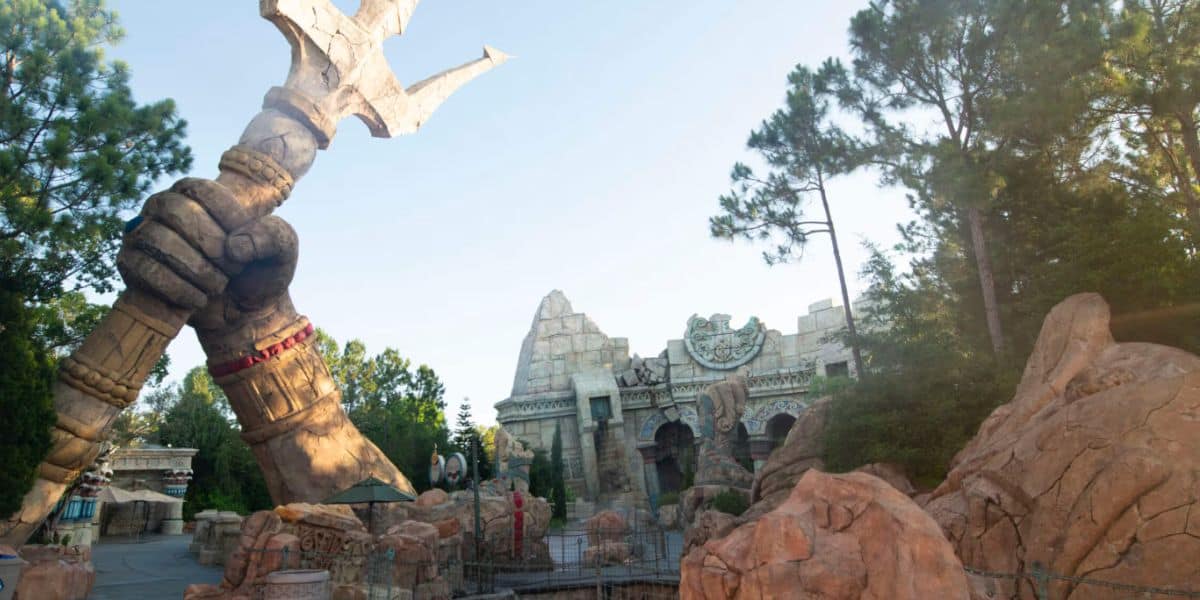
Towering stonework. Ancient mythology. Hidden pathways. The unmistakable silhouette of a giant trident reaching into the Florida sky.
For countless guests who walked through Islands of Adventure after its grand opening in 1999, The Lost Continent felt different. It wasn’t based on a movie franchise. It wasn’t built around characters fans already knew. Instead, it invited visitors into a mysterious world inspired by legends, exploration, and imagination.
Now, that world is fading away faster than many fans expected.
What started as the closure of a beloved attraction has quietly evolved into something much bigger—and much more emotional for longtime Universal guests.
Fans Are Watching an Original Islands of Adventure Land Slowly Disappear
Over the last several years, Universal Orlando has steadily transformed Islands of Adventure.
New intellectual properties have arrived. Major expansions have reshaped guest expectations. Entire sections of the resort have evolved to meet the demands of a modern theme park audience.
Yet The Lost Continent remained one of the last visible reminders of the park’s original 1999 vision.
That reality is changing.
On June 16, crews removed one of the land’s most recognizable icons: the massive trident that stood at the entrance of Poseidon’s Fury. For years, the towering structure served as a visual landmark for guests entering the attraction’s ancient temple complex.
Its removal immediately caught the attention of theme park fans who have spent months tracking construction activity throughout the area.
For many, it felt like more than simple demolition.
It felt symbolic.
The Landmarks That Defined a Generation of Guests Are Vanishing
The trident isn’t the only familiar sight that has disappeared.
Another major visual element, the iconic Sindbad archway, has also been removed as demolition efforts continue throughout the land.
These structures weren’t just decorative pieces.
They helped define the atmosphere that made The Lost Continent feel unlike anything else in Orlando.
Guests didn’t simply walk through this area. They wandered through it. They explored hidden corners. They discovered ancient ruins. They imagined stories unfolding beyond every pathway and stone facade.
That’s what makes the current transformation so emotional.
Every removed archway, statue, sign, and structure represents another piece of a land that helped establish Islands of Adventure’s identity from day one.
Another Original Location Has Now Closed for Good
As demolition progresses, another original Lost Continent offering has quietly reached the end of its run.
Delicious Kebabs has officially closed permanently.
Another send off over at The Lost Continent as Delicious Kebabs time is now up as it has closed its doors today. – @Uni_Speaking on X
Another send off over at The Lost Continent as Delicious Kebabs time is now up as it has closed its doors today.
🌍🗣️ pic.twitter.com/pY3t9cic25
— Universally Speaking 🌎🗣️ (@Uni_Speaking) June 15, 2026
While it may not have carried the same profile as Poseidon’s Fury, the quick-service location was another surviving piece of the land’s original identity.
For longtime visitors, these smaller closures often hit differently.
Major attractions generate headlines. Restaurants, shops, and walk-through spaces create memories.
Families grabbed meals there between attractions. Annual Passholders stopped in during casual visits. Returning guests came to recognize it as part of the familiar rhythm of a day at Islands of Adventure.
Now, that chapter has officially ended.
Universal Appears Focused on a Much Bigger Future
The reality facing fans is that Universal isn’t removing these elements without a plan.
The company has made significant investments across its parks in recent years, embracing highly recognizable franchises and immersive storytelling environments.
That strategy has consistently proven successful.
The Wizarding World transformed attendance patterns across the industry. New lands have increasingly centered around major intellectual properties that drive repeat visitation and merchandise sales.
From a business perspective, the future replacement for The Lost Continent could become one of Universal’s most ambitious projects yet.
The challenge is that every exciting new addition comes with a tradeoff.
Something older has to disappear first.
What Fans May Not Realize About This Transformation
The loss of The Lost Continent represents more than the removal of aging infrastructure.
It marks the continued evolution of theme park design itself.
When Islands of Adventure opened in 1999, original lands built around broad concepts were common. Guests were invited to create their own stories within these environments.
Today’s theme parks increasingly focus on recognizable franchises, established characters, and worlds audiences already know.
Neither approach is inherently wrong.
But they create very different experiences.
For longtime fans, watching The Lost Continent disappear feels like watching the end of a specific era of themed entertainment—one where mystery itself was the attraction.
That nostalgia is becoming increasingly powerful as more original opening-day elements vanish.
The Final Chapter May Only Be Beginning
At this point, Universal has not officially confirmed what will ultimately replace the remaining sections of The Lost Continent.
Speculation continues across the theme park community, and construction activity suggests much larger changes could still be ahead.
What is clear, however, is that the land many guests remember from Islands of Adventure’s opening year is rapidly becoming a memory.
The trident is gone. The Sindbad archway is gone. Delicious Kebabs is gone. And demolition appears far from finished.
For some guests, that’s an exciting sign that something extraordinary is coming next.
For others, it’s a bittersweet reminder that even the most iconic theme park experiences aren’t permanent.
As Universal prepares for its next era of growth, fans are finding themselves caught between anticipation and nostalgia—celebrating the future while saying goodbye to one of the last surviving pieces of Islands of Adventure’s original 1999 soul.