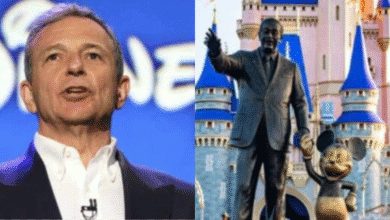
The Walt Disney World Resort has long been considered the premier “vacation kingdom” of the world, drawing millions of families from across the globe to the swampy heart of Central Florida. However, as 2025 draws to a close, a shadow of uncertainty looms over the resort’s international visitor base. The Trump Administration has recently announced and begun implementing two sweeping policies slated to impact travel to the United States throughout 2026, further battering an already reeling tourism industry.

International travel to the United States has experienced a concerning decline this year, with a drop of approximately three percent compared to the same period last year. While that percentage may seem small on paper, the problem has worsened significantly as the year has progressed, with monthly air traffic to major hubs like Orlando dropping nearly 4% in the summer peak alone. As a result of this decline, the travel industry is expected to lose between $12 billion and $19 billion this year.
For the Walt Disney World Resort, which relies on high-spending international guests to bolster its bottom line, these new federal hurdles couldn’t come at a worse time.
The “Visa Integrity Fee”: A Tax on the Family Vacation
The first major hit to the travel industry stems from President Trump’s “One Big Beautiful Bill” (OBBB), which was signed into law on July 4, 2025. While the administration touts the bill as a means to strengthen border security and modernize infrastructure, a specific provision has sent shockwaves through the global tourism market.

The bill introduces a mandatory, $250 non-refundable “visa integrity fee” for all international visitors entering the country on a non-immigrant visa. This fee is paid at the time of visa issuance and is in addition to the existing application fees, which range from $185 to $205.
For a family of four from a non-visa-waiver country—such as Brazil, which has recently seen a massive resurgence in Disney tour groups—the math is staggering. Before even booking a flight or a room at Disney’s Grand Floridian, that family must now pay over $1,700 in government fees just to secure the right to enter the country. Industry experts warn that for middle-class families in South America and parts of Asia, this “junk fee” (as described by the U.S. Travel Association) may be the breaking point that sends them to Disneyland Paris or Tokyo Disney Resort instead.
The Digital Border: Social Media and Privacy Concerns
If the “Visa Integrity Fee” targets the wallet, the second policy targets the traveler’s privacy. Under a newly proposed rule from U.S. Customs and Border Protection (CBP), travelers would be required to list all social media sites and handles they have used in the past five years.

Crucially, this policy isn’t just for those requiring a traditional visa; it includes tourists from visa-waiver countries under the Electronic System for Travel Authorization (ESTA). This means families from the United Kingdom, Germany, France, and Japan—Disney World’s most loyal international demographics—will be subjected to extensive vetting of their digital lives, including:
- Five years of social media history.
- Ten years of email history.
- Five years of phone number records.
- Family member details and biometric data (including DNA and iris scans, in some cases).
The U.S. Travel Association has warned that this policy could have a “chilling effect” on tourism. “If we get this policy wrong, millions of travelers could take their business and the billions of dollars they spend elsewhere, only making America weaker,” the group stated in a recent press release.
The Impact on the “Orlando Economy”
International tourists account for approximately 10 percent of Orlando’s 75 million annual visitors. However, their economic impact is disproportionately large. According to Casandra Matej, CEO of Visit Orlando, international travelers tend to stay longer (often 10–14 days) and spend significantly more per capita than domestic visitors who may only visit for a long weekend.

The downturn is already visible. In the second quarter of 2025, travel from Canada—Orlando’s #1 international market—was down a staggering 20 percent. This decline is primarily attributed to ongoing trade tensions, tariffs, and rhetoric regarding the “51st state” that has soured the “welcome” experience for many Canadians. Tourism Economics now forecasts that international visitation to Orlando could decline by another five percent in 2026 if these new policies are fully implemented.
Congressman Darren Soto, who represents Kissimmee and the surrounding Disney World area, told the Tampa Bay Times that these policies won’t make America safer. Instead, they “could cost thousands of Central Florida jobs at a time when local families are already struggling.”
High Stakes for Disney’s 2026 Expansion
The timing of these travel barriers is particularly painful for The Walt Disney Company. 2026 is slated to be one of the most transformative years for the Florida parks in decades. Disney is currently pouring billions into the resort to compete with Universal’s upcoming Epic Universe, and international guests are a key part of that ROI.

Key 2026 milestones that risk lower international attendance include:
- The 250th Anniversary of the United States: Disney plans a massive “Soarin’ Across America” celebration at EPCOT and Magic Kingdom, specifically designed to draw global crowds.
- The Muppets Takeover: A significant reimagining of Rock ‘n’ Roller Coaster Starring The Muppets is set to debut in Summer 2026.
- Tropical Americas Construction: With DinoLand U.S.A. permanently closing on February 2, 2026, the resort will be in a state of flux, making every single international guest even more vital to maintaining gate attendance during construction.
- New Deals: Disney has already announced “Free Dining for Kids” in 2026 to lure families back, but the latest $250-per-person visa fee could completely wipe out these savings.

Furthermore, Disney has just announced that for the first time, a single-day ticket to the Magic Kingdom will surpass $200, hitting $209 on select dates in late 2026. When you combine record-high ticket prices with new federal “entry taxes,” the “Most Magical Place on Earth” is becoming the most expensive.
A “Self-Imposed Tariff” on Tourists
As we look toward 2026, the question remains: will the allure of Mickey Mouse be enough to overcome the financial and logistical hurdles posed by the new administration’s policies?

For many international fans, Disney is more than a vacation; it is a pilgrimage. But as the U.S. Travel Association notes, raising fees on visitors is essentially a “self-imposed tariff” on one of America’s largest exports. If the “welcome mat” continues to feel like a “keep out” sign, Central Florida’s economy—and Disney’s 2026 ambitions—may be in for a very rocky ride.
What do you think of these proposed measures for international travelers coming to Central Florida? Will the $250 fee or social media vetting change your travel plans? Let us know in the comments.