Disney fans need to understand what’s happening at Animal Kingdom starting tomorrow and why it could represent either brilliant strategy or an operational nightmare in the making.

Rafiki’s Planet Watch, the remote area accessible only via Wildlife Express Train, closes entirely on February 23 and won’t reopen until summer 2026 when it debuts a brand new Bluey experience featuring character meet-and-greets, interactive games, dancing activities, and Australian animal exhibits.
On paper, this sounds incredible. Bluey ranks among the biggest children’s shows globally, and unlike most programming aimed at young audiences, Bluey has achieved genuine cross-generational appeal. Parents genuinely enjoy the show alongside their children. Kids are obsessed with the characters.
The program delivers wholesome entertainment, humor, and legitimate life lessons through adorable characters that have built passionate fanbases. Disney securing theme park rights to Bluey represents a significant coup, and placing it at Animal Kingdom creates thematic coherence given the show’s Brisbane, Australia setting allows integration with Australian wildlife and conservation themes fitting the park’s core mission.

However, the execution raises substantial questions.
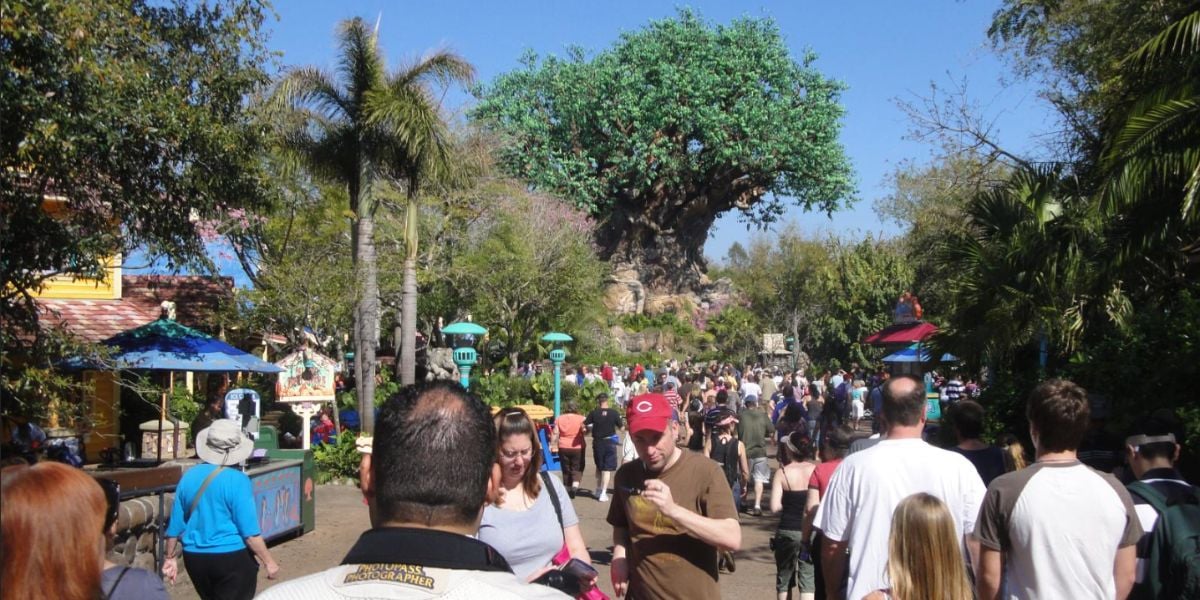
Animal Kingdom already struggles with capacity constraints following DinoLand U.S.A.’s permanent closure for Tropical Americas construction extending through 2027. Now the park simultaneously loses Rafiki’s Planet Watch for months, removing two entire areas from guest access. More critically, Disney is installing one of the resort’s most anticipated character experiences in the single location requiring train transportation with no alternative access, creating bottleneck conditions that could generate significant operational challenges once demand materializes.
Animal Kingdom maintains fewer attractions capable of absorbing crowds compared to Magic Kingdom or EPCOT.
The park’s core lineup consists of Flight of Passage (consistently posting extended wait times), Na’vi River Journey, Kilimanjaro Safaris, Expedition Everest, and Kali River Rapids, supplemented by theatrical shows and walking trails. When attendance peaks, the limited attraction roster struggles to distribute guests effectively. Closing additional areas while adding extraordinarily popular characters to a difficult-to-reach location could create serious crowd management issues.
Final Access Opportunity Ends Today

Guests wanting to experience Wildlife Express Train or visit Rafiki’s Planet Watch in its current configuration have today (February 22) as their final opportunity. Tomorrow morning initiates the closure extending through summer 2026.
The closure eliminates:
- Wildlife Express Train transportation
- Affection Section petting zoo (already closed with animals relocated)
- Conservation Station animal viewing areas
- Animation Experience (relocating to Disney’s Hollywood Studios)
The multi-month closure timeline indicates substantial infrastructure work, theming installations, and operational modifications rather than superficial additions. Disney clearly anticipates significant crowds requiring extensive preparation.
The Affection Section petting zoo may not return despite Disney’s official “temporary closure” designation. Industry speculation suggests permanent elimination, with space repurposed for Bluey-focused experiences. Families whose children enjoyed animal interactions should recognize this amenity likely won’t survive the transformation.
Confirmed Bluey Experience Elements
Disney has announced the transformed Rafiki’s Planet Watch will incorporate:
Character Meet-and-Greets: Bluey and Bingo will offer photo opportunities and character interactions. Given the franchise’s popularity, this will likely become one of Walt Disney World’s most demanded character experiences for families with young children.
Interactive Games: Beyond static photo opportunities, Disney is developing participatory activities and games themed to the show’s content, allowing children to engage with Bluey concepts through play.
Dancing Activities: Reflecting the show’s emphasis on imaginative play and physical activity, dancing elements will encourage movement and participation rather than passive viewing.
Australian Animal Exhibits: Native Australian wildlife displays connect to Bluey’s Brisbane setting while maintaining Animal Kingdom’s conservation focus, differentiating this from standard character meet-and-greets.
These elements sound appropriate for Animal Kingdom’s themes. Australian wildlife integration supports conservation messaging. Family-friendly content aligns with audience demographics. Educational components maintain the park’s mission. Popular intellectual property drives attendance. However, location selection creates concerning operational implications.
Location Creates Significant Operational Challenges
Rafiki’s Planet Watch’s isolated position accessible exclusively via Wildlife Express Train presents fundamental crowd management problems.
Current operations demonstrate the challenge. Without any major attraction at Planet Watch, the Wildlife Express Train already experiences 20-minute waits during busy periods. Social media documentation from recent holiday weeks shows extensive queues just for train boarding when the destination offered minimal guest draw beyond animal care facility viewing.
Adding Bluey to this infrastructure creates predictable complications:
Multi-Stage Access Process: Guests must queue for Wildlife Express Train boarding (potentially 30-plus minutes during peak attendance), ride the train to Planet Watch (several minutes transit time), disembark and queue again for Bluey character experiences (potentially 60 to 90-plus minutes for popular characters), complete their visit, then queue for return trains to main park areas (another 30-plus minutes potentially).
Total Time Commitment: The cumulative process could easily consume two-plus hours during busy periods for a single character experience in a park already challenged by limited attraction capacity and extended wait times throughout.
Limited Flexibility: The isolated location prevents easy alternatives. Once guests board trains to Planet Watch and discover excessive Bluey wait times, options reduce to either enduring the queue regardless of duration or immediately boarding return trains without experiencing their intended destination. No opportunity exists for “visiting other attractions and returning later” because Planet Watch lacks alternative experiences and return requires repeating the entire train process.
Physical Space Constraints: Rafiki’s Planet Watch was designed for the modest crowds it previously attracted as an optional educational venue. Despite improvements during the closure period, fundamental limitations remain: isolated location, limited physical footprint, single access point via train. These factors create inherent congestion and crowding risks when thousands of Bluey enthusiasts visit daily.
Animal Kingdom’s Reduced Capacity Context
The Rafiki’s Planet Watch closure compounds challenges from DinoLand U.S.A.’s permanent closure earlier in 2026. That elimination removed:
- TriceraTop Spin
- Primeval Whirl (previously closed)
- Boneyard playground
- Fossil Fun Games
- Chester and Hester’s entire area
An entire themed land now consists of construction walls through 2027.
For families with young children, these simultaneous closures significantly reduce appropriate offerings. DinoLand provided carnival-style attractions and playground experiences suitable for toddlers and elementary-age guests. Rafiki’s Planet Watch offered gentle petting zoo interactions. Losing both simultaneously removes substantial young-child capacity.
Remaining attractions skew toward older demographics:
- Flight of Passage requires 44-inch height minimums
- Expedition Everest requires 44-inch minimums and delivers intense thrills
- Kali River Rapids requires 38-inch minimums and soaks passengers
- Na’vi River Journey references Avatar franchise content potentially unfamiliar to young children
Festival of the Lion King and Finding Nemo: The Big Blue and Beyond provide age-appropriate entertainment but operate on fixed schedules rather than continuous access, limiting crowd absorption capacity compared to traditional attractions with ongoing queue availability.
Animal Kingdom has effectively become adult-focused until summer Bluey opening. Families visiting with young children between now and summer face significantly reduced age-appropriate options compared to Magic Kingdom, EPCOT, or Hollywood Studios.
Disney Vacation Planning Implications
For Visits Before Summer 2026:
Guests should recognize Animal Kingdom currently offers diminished capacity, particularly affecting families with young children. Consider treating the park as a half-day destination, experiencing highlights like Kilimanjaro Safaris and theatrical shows during morning hours, then utilizing Park Hopper options to transition to parks offering more extensive attraction rosters.
Don’t allocate full-day schedules to Animal Kingdom during this reduced-capacity period unless your travel party specifically prioritizes the available experiences and doesn’t require young-child-focused content.
For Visits After Bluey Opening (Summer 2026):
Prepare for substantial waits and potential operational complications. The Bluey experience will attract massive demand potentially exceeding even peak-period character encounters elsewhere on property. Plan two-plus hours for the complete experience including train transportation and character queues.
Consider arriving early or accepting the possibility that excessive waits may make the experience impractical relative to other vacation priorities. Have alternative plans if queue times exceed your tolerance or schedule flexibility.
Evaluate whether the time investment justifies the experience when alternative attractions at other parks might deliver more value for your limited vacation hours.
Future Capacity Restoration
The 2027 opening of Tropical Americas land will eventually restore and expand capacity through new Encanto and Indiana Jones attractions, dining locations, and shopping venues. However, guests visiting throughout 2026 must account for current reduced offerings affecting Animal Kingdom’s competitive positioning within Walt Disney World’s four-park portfolio.
Realistic Assessment
Disney is placing one of the world’s most popular children’s entertainment properties in arguably the worst possible location from an operational standpoint. Rafiki’s Planet Watch’s isolation, train-exclusive access, and original design for modest crowds present fundamental challenges for accommodating the massive demand Bluey will generate.
Success requires Disney to have implemented substantial infrastructure upgrades during the closure period beyond what’s publicly visible. Potential solutions include dramatically enhanced train capacity, virtual queue or reservation systems managing demand, or significant physical expansion of Planet Watch’s footprint. Without such measures, the experience risks becoming defined by excessive wait times, frustrated families, and operational chaos rather than the magical character encounters Disney intends to deliver.
The closure also highlights Animal Kingdom’s challenging 2026 positioning. Losing DinoLand permanently and Rafiki’s Planet Watch temporarily means the park operates with significantly reduced capacity during active construction periods creating additional crowding and compromised sightlines.
For parents with young children planning Disney trips this year, carefully evaluate whether Animal Kingdom currently offers sufficient value for your specific family composition and interests. Consider delaying Animal Kingdom visits until summer when Bluey opens, but prepare for the possibility that the experience may not justify the substantial time investment if operational challenges materialize as anticipated.
Disney deserves credit for securing Bluey rights and recognizing the character’s appeal. The Australian animal integration demonstrates thoughtful thematic development. However, location selection raises legitimate questions about whether operational logistics received adequate consideration during planning. Families investing thousands in Disney vacations deserve experiences designed for success rather than implementations that may struggle under predictable demand pressures.
The coming summer will reveal whether Disney’s confidence in this location choice was justified or whether Rafiki’s Planet Watch proves unable to accommodate the crowds Bluey will inevitably attract.