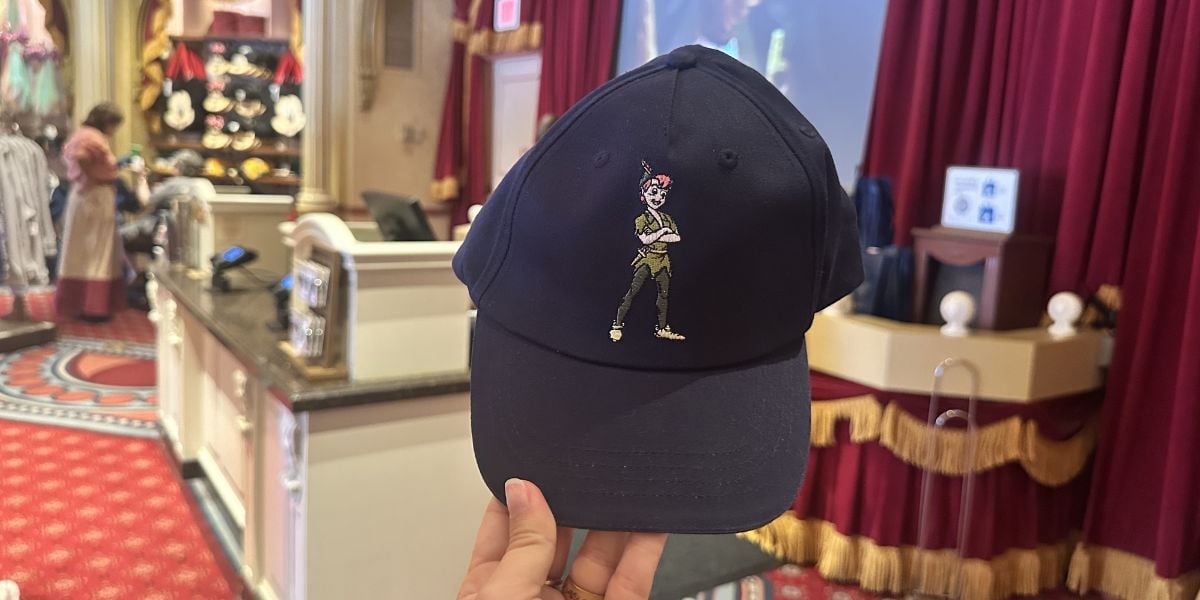
A Peter Pan hat discovered at Magic Kingdom’s Main Street Cinema features “EPCOT United Kingdom” branding on the back, raising questions about Disney’s merchandise distribution between its Orlando theme parks.
The Merchandise Discovery
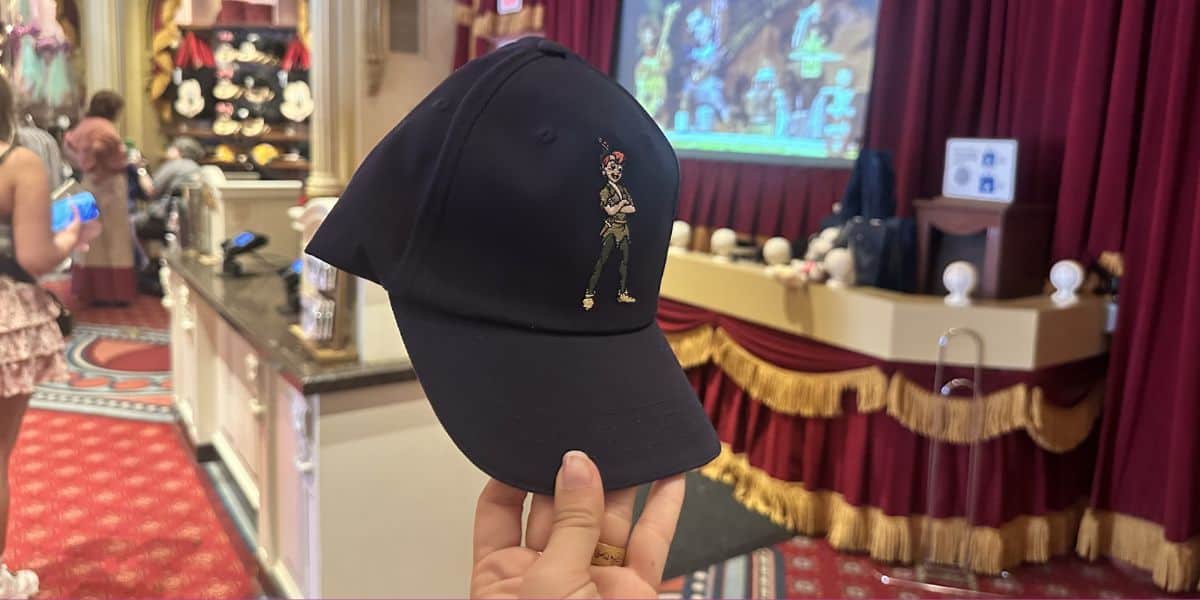
The hat appears normal from the front with simple Peter Pan theming that’s cute and park-appropriate. But turning it around reveals “EPCOT United Kingdom” text instead of Magic Kingdom branding or Peter Pan-related imagery like Tinkerbell or Neverland.
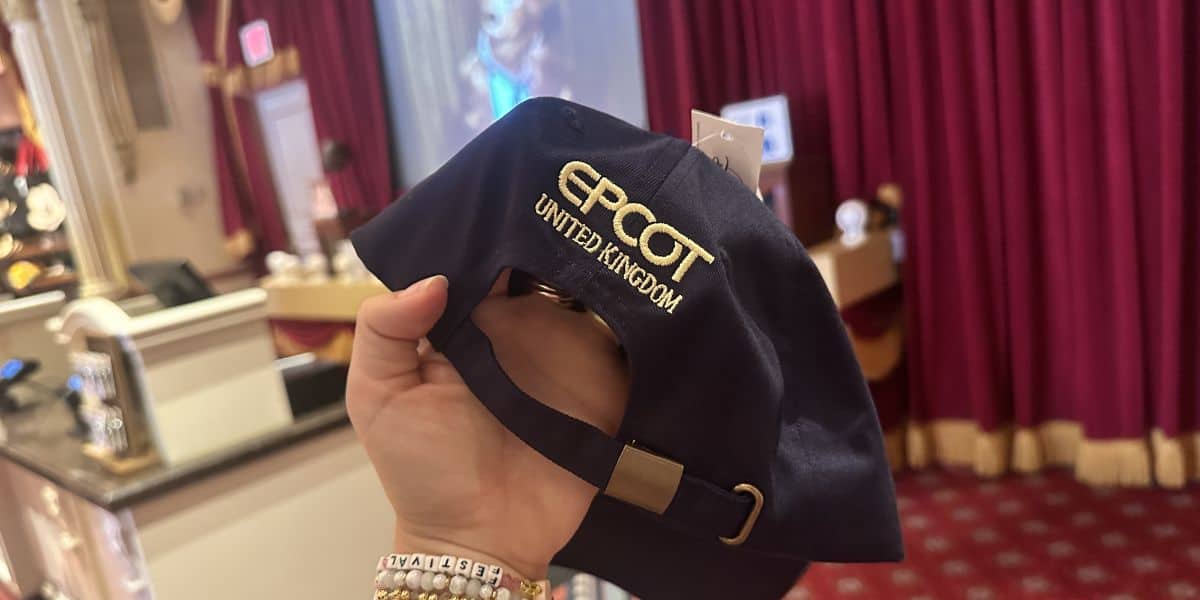
The EPCOT-specific branding indicates the hat was manufactured for sale at EPCOT’s World Showcase United Kingdom pavilion, not Magic Kingdom, creating confusion about how it ended up at Main Street Cinema.
Where It Should Be
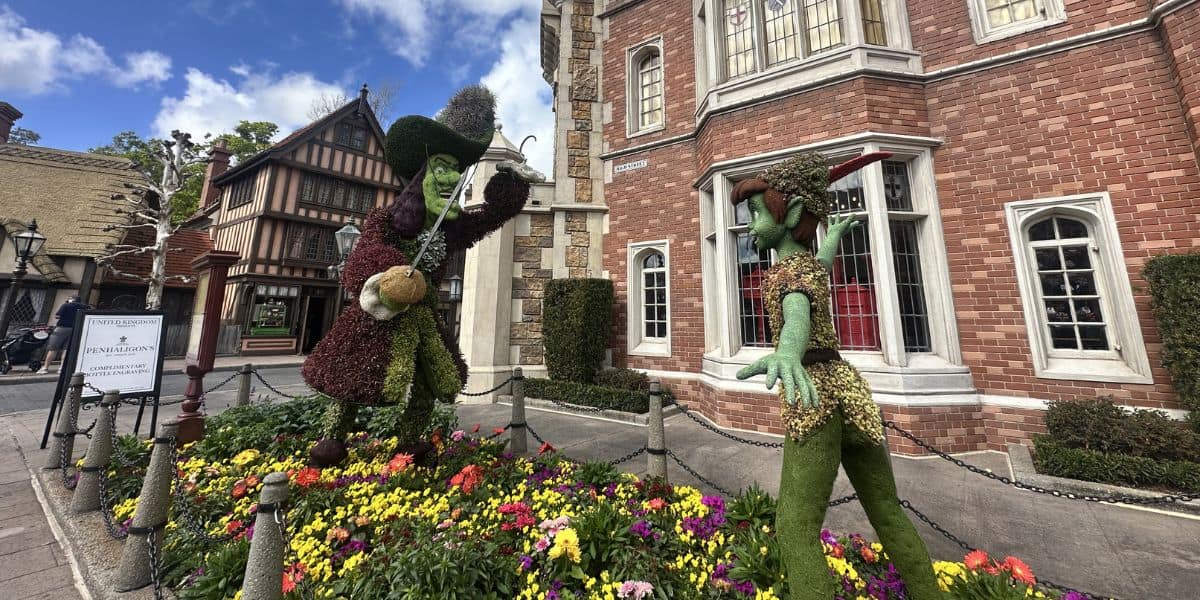
At EPCOT’s World Showcase, the United Kingdom pavilion features shops carrying merchandise including:
- Swords and dragons
- The Beatles and other band merchandise
- Large Winnie the Pooh and Mary Poppins collection
- Limited Peter Pan items
Peter Pan merchandise has a smaller presence at the UK pavilion compared to Winnie the Pooh and Mary Poppins, both of which dominate British character representation in the shops.
Where It Makes Sense
Peter Pan has strong connections to Magic Kingdom’s Fantasyland, where guests can:
- Meet Peter Pan
- Ride Peter Pan’s Flight, the classic dark ride operating since 1971
Given this presence, finding Peter Pan items at Magic Kingdom makes complete thematic sense. What’s odd is the EPCOT United Kingdom branding on a hat sold at Magic Kingdom.

Possible Explanations
Several scenarios could explain the mix-up:
Intentional redistribution: The hats may have been moved from EPCOT to Magic Kingdom because Peter Pan merchandise underperformed at the UK pavilion compared to Winnie the Pooh and Mary Poppins. Magic Kingdom likely has stronger demand due to the presence of the character attractions.
Delivery error: Disney’s merchandise distribution involves complex logistics coordinating deliveries across four theme parks, two water parks, Disney Springs, and numerous resorts. Occasional delivery mistakes could send products to the wrong locations.
Surplus inventory: The hats may not have sold well at EPCOT, prompting Disney to move surplus inventory to the Magic Kingdom, where Peter Pan merchandise traditionally performs better.
The Merchandise Branding Question
Why didn’t Disney manufacture hats without EPCOT branding that could be sold at any park? The “EPCOT United Kingdom” text suggests these were made as part of a World Showcase pavilion-specific collection, distinguishing them from generic Peter Pan merchandise.
However, pavilion-specific branding creates problems when merchandise moves between parks. Guests purchasing what appears to be EPCOT merchandise at Magic Kingdom may feel confused about the product’s intended association.
Guest Reactions
Different guests may react differently to this situation:
Indifferent shoppers: Some may not notice or care about the EPCOT branding, focusing only on the Peter Pan character design.
Disappointed collectors: Others specifically wanting Magic Kingdom merchandise may feel let down discovering EPCOT branding after purchase.
Amused observers: Some may find the unusual combination interesting as a merchandise quirk or evidence of inventory redistribution.
Merchandise Quality Control Questions
This situation raises questions about whether Disney should restrict location-branded items to specific locations or allow for flexible inventory movement. Strict restrictions would maintain consistency between branding and locations, but they could lead to inventory inefficiencies if products do not sell well at the designated parks.
On the other hand, allowing flexible inventory movement would optimize distribution by relocating slow-selling items to stores with greater demand. However, this approach can create discrepancies where the branding does not align with the retail locations.
The Peter Pan hat exemplifies this trade-off, as Disney seems to prioritize inventory optimization over maintaining a strict separation between park-specific merchandise. Whether this represents a genuine mistake or a deliberate strategy, it is an unusual instance of Disney’s merchandise operations creating inconsistency between product branding and retail locations.