

The Walt Disney Company has released its fiscal 2025 results, offering the clearest picture yet of how its theme parks business is performing after years of sweeping operational changes. The findings land at a moment marked by cost-cutting, shifting guest benefits, and intense scrutiny over what a modern Disney vacation now includes.
Disney Experiences, the division responsible for the company’s global parks, cruises, and consumer offerings, has undergone a significant transformation since the pandemic. The adjustments have reshaped everything from how guests enter attractions to which perks are available on property. Many of these changes have been met with frustration, yet the financial report shows a different story.

Despite limited new ride openings and multiple closures across Walt Disney World Resort and Disneyland, Disney Experiences has delivered its strongest year on record. The results highlight a division that continues to grow as its offerings evolve and its business model shifts toward higher-margin experiences.
How Have Disney Parks Changed in Recent Years?
In the years since COVID-19, Disney’s parks have retired several legacy features that once defined the guest experience. Free FastPass is gone, replaced by Lightning Lanes, the paid system now standard at Walt Disney World and Disneyland. The shift marked one of the company’s most consequential operational pivots.
Other benefits have disappeared as well.

The once-reliable after-hours Extra Magic Hours were removed for all guests, with only early morning access remaining for those staying at Disney hotels. A limited selection of evening hours is still available, but only to guests staying at Disney Deluxe resorts.
Longstanding perks such as the Magical Express airport service have also ended. Guests no longer receive complimentary MagicBands, and even discounts are no longer offered. Each cut contributed to a leaner but more revenue-driven approach.
The cost-side adjustments extended behind the scenes. In October, Disney eliminated several salaried roles at Disneyland Resort. “With our business in a period of steady, sustained operation, we are recalibrating our organization to ensure we continue to deliver exceptional experiences for our guests,” the company stated.

Prices increased across the parks as well.
Ticket costs reached new highs, and food and merchandise saw multiple rounds of price increases, most recently in October. The trend continued even as online conversation shifted toward affordability and changing expectations for what a Disney trip includes.
Disney’s Q4 2025 Financial Results
According to The Walt Disney Company’s fourth quarter and full-year earnings report for fiscal 2025, Disney Experiences generated $10 billion in operating income — the highest total ever recorded for the division.
The figure represents an increase of $723 million over 2024. Disney reported a record fourth quarter as well, bringing in $1.9 billion, which is $219 million more than the same period last year. Much of that momentum came from overseas.

Its international parks — Disneyland Paris, Hong Kong Disneyland, and Shanghai Disneyland, with Tokyo Disney Resort operated separately by The Oriental Land Company — saw the strongest growth. Operating income rose 25% to $375 million, driven primarily by Disneyland Paris.
Domestic parks also posted significant gains. Operating income at Walt Disney World Resort and Disneyland Resort increased by 9% to reach $920 million. Magic Kingdom, still the world’s most-visited theme park, continues to anchor Disney’s domestic performance.
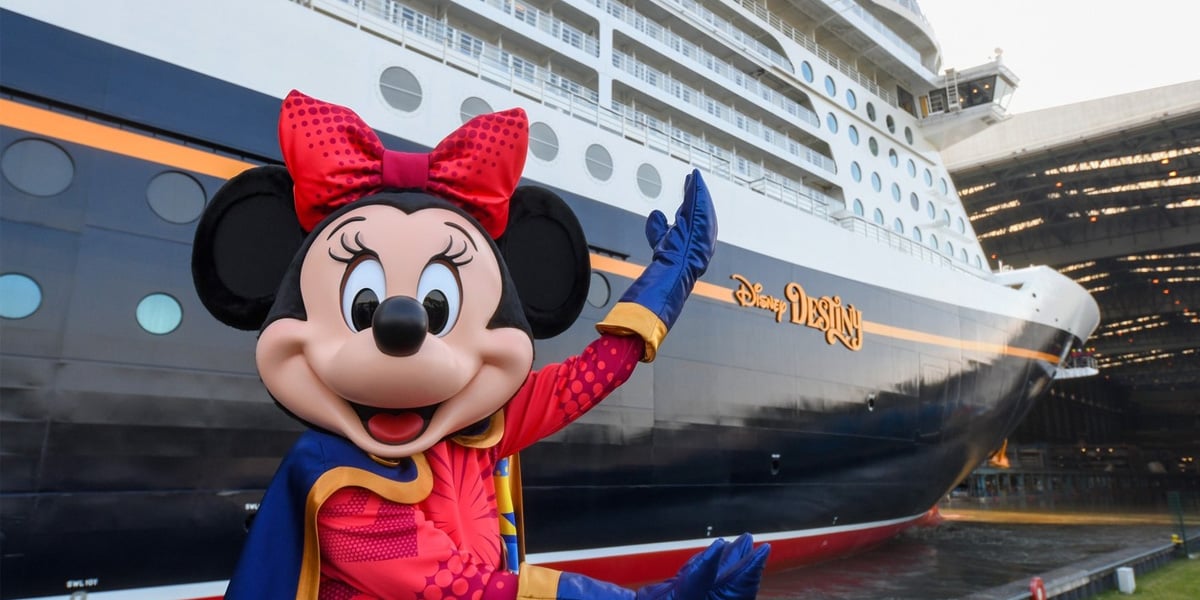
Disney Cruise Line played a substantial role, too. “Operating income at our domestic parks and experiences increased compared to the prior-year quarter due to growth at Disney Cruise Line attributable to an increase in passenger cruise days,” the company reported, noting that higher costs from the launch of the Disney Treasure partially offset the gains.
Changes at Disney in 2025
Development across the parks remained relatively modest this year. Walt Disney World introduced new entertainment such as the poorly-reviewed Zootopia: Better Zoogether! and Disney Starlight: Dream the Night Away. Disneyland marked its 70th anniversary with Walt Disney – A Magical Life. International resorts added nighttime shows and milestone celebrations.
Closures, however, defined much of the domestic conversation. In 2025, Disney World retired Muppet*Vision 3D, most of DinoLand U.S.A., and the entirety of Tom Sawyer Island and the Rivers of America, the latter of which has since been drained. These removals arrived ahead of large-scale projects planned for the coming years.

Among the expansions in various stages of development are a Monsters, Inc. land at Hollywood Studios, Cars Land and a Disney Villains land at Magic Kingdom, Tropical Americas at Disney’s Animal Kingdom, and new experiences tied to Coco, Avatar, and Avengers Campus at Disneyland Resort.
Disney’s record operating income confirms the scale of the division’s current momentum. Even as guest perks shrink and costs rise, the company’s theme parks remain among its most powerful engines — a trend likely to shape both future investments and how visitors experience Disney destinations in the years ahead.
Share your thoughts on Disney’s latest financial results.





I am not paying the high prices. I used to love going to Disney but it has just gotten too expensive and I do not like having to make a reservation to go to a theme park. They have forgotten Walt’s dream. Eventually there will be a breaking point for families.