Yesterday’s Future: Why a Massive $1 Billion Tomorrowland Revitalization Plan Was Scrapped for Higher ROI

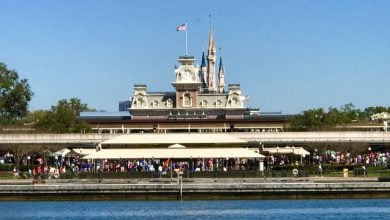
For over half a century, the concept of a “Tomorrow” has been the most elusive challenge for Disney’s “Imagineers.” How do you build a permanent tribute to the future when the real world moves faster than any theme park can iterate? For years, guests have gazed at the empty tracks and aging facades of one of the world’s most famous futuristic lands, asking the same question: When will the fix come?

As it turns out, the fix was already designed, pitched, and ready to go. However, according to recent reports from the Wall Street Journal (WSJ) and industry insiders, a massive $1 billion proposal to completely revitalize the area was discarded by former CEO Bob Chapek. The reason? A cold, data-driven calculation determined that more beautiful land simply wouldn’t generate enough money for the company.
The Billion-Dollar Pitch: Reclaiming the Vision of 1967
The project was arguably the most ambitious “non-IP” (Intellectual Property) proposal in the history of Walt Disney Imagineering (WDI). The goal was to solve the aesthetic and structural incoherence that has plagued the area since its last major update in the late 1990s.

Imagineers presented a plan that would have returned the land to its “Space-Age” roots—the sleek, white, optimistic curves of the mid-century modern era. The proposal included:
- A Structural Fix for the “Dead” Tracks: The stagnant tracks that once housed a popular people-moving transit system have sat empty for nearly 30 years. The plan would have either revitalized the ride system or removed the tracks entirely to open up the cramped walkways.
- Infrastructure Overhauls: Moving beyond a fresh coat of paint, the project aimed to replace the aging, 1967-era buildings with state-of-the-art facilities.
- A Unified Aesthetic: Erasing the “bronze and gold” steampunk layers of the 90s and replacing them with a cohesive “Future-Casters” vision.
Despite the team’s creative readiness, the project encountered a significant obstacle when it reached the executive level.
The “Chapek No”: Why Aesthetics Don’t Sell Tickets
During his tenure as Chairman of Disney Parks and later as CEO, Bob Chapek earned a reputation for “value engineering”—a corporate term for cutting costs to maximize profit margins. To Chapek, the Tomorrowland revitalization was a prime candidate for the chopping block.
According to the WSJ, Chapek focused intensely on getting Imagineers to stick to rigid budgets and schedules. His rejection of the Tomorrowland project was rooted in two specific financial fears:
1. The “Maintenance vs. Growth” Trap
Chapek reportedly believed that spending $1 billion to fix an existing land was an inefficient use of capital. In his view, a “better looking” land makes existing guests happier, but it doesn’t “move the needle” in terms of new attendance. His logic was that Tomorrowland already draws massive crowds due to “anchor” attractions like a certain legendary indoor roller coaster. Since people were already coming to the park, spending a billion dollars on a “facelift” offered a poor Return on Investment (ROI).
2. The IP Requirement
Under Chapek’s leadership, the mandate was clear: new investments must be driven by Intellectual Property. If a project didn’t feature characters from Frozen, Star Wars, or the Marvel Cinematic Universe, it was viewed as a “vanity project” for Imagineers. Because the proposed Tomorrowland overhaul focused on original themes of science and progress, it lacked the “synergy” required to secure a billion-dollar check.

The Financial Pivot: Cruises Over Coasters
To understand why Disney would leave a major land in a state of disrepair, one must examine where the money is actually being spent. Disney is currently in the middle of a massive $60 billion capital investment plan, but as the WSJ report highlights, the distribution of that money has shifted away from “fixing” legacy parks and toward the Disney Cruise Line (DCL).
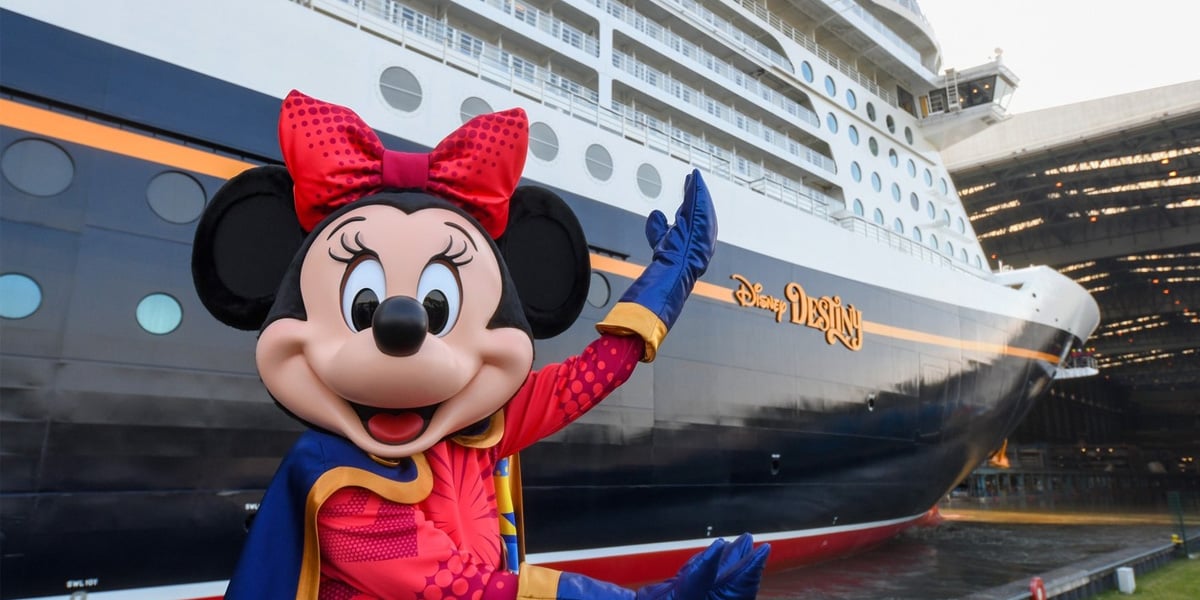
Theme park renovations are land-locked and subject to local market fluctuations. In contrast, a new cruise ship is a “floating theme park” that can be moved to wherever demand is highest. For an executive focused on high-margin, predictable revenue, a fleet of new mega-ships is a “safer” bet than a structural renovation of a 60-year-old land.
Chapek’s philosophy was simple: If you have a billion dollars, you don’t spend it on a new entrance for Tomorrowland; you spend it on half of a new cruise ship that will generate 100% new revenue from a different market.
The PeopleMover Casualty: A Permanent Eyesore
For the average guest, the most frustrating casualty of this “cost over creativity” mindset is the continued abandonment of the PeopleMover tracks. These tracks are the literal skeleton of the land, and their decay is visible from every corner.

By discarding the revitalization plan, Disney leadership effectively decided to let these “dead tracks” remain. Removing them or fixing them would cost hundreds of millions of dollars with no “new” ride to show for it—a “zero ROI” move that Chapek simply would disapprove. For now, the tracks remain a permanent blight, symbolizing a future that Disney is currently unwilling to invest in.
Conclusion: A Discarded Tomorrow in 2026
As we move through 2026, the “Magic” of Disney vacations is increasingly defined by the “Squeeze.” Between record-high ticket prices and the pursuit of luxury margins, the company’s refusal to invest in the basic infrastructure of its parks has led to a growing “Experience Gap.”
The blueprints for a breathtaking new Tomorrowland exist. The Imagineers are ready, and the fans are waiting. But until Disney leadership believes that “guest satisfaction” and “thematic integrity” are worth as much as a new cruise ship’s bottom line, the great, big, beautiful tomorrow will remain stuck in the past.
Do you think Bob Chapek was right to prioritize “new” growth over fixing “old” lands, or is the lack of investment in Tomorrowland starting to hurt the Disney brand?