By all traditional metrics of corporate success, the first week of February 2026 should have been a victory lap for The Walt Disney Company. In a single 72-hour window, the company silenced years of “Succession Drama” by naming Josh D’Amaro as the next CEO, reported record-breaking profits from its Parks division, and solidified its $60 billion expansion roadmap.

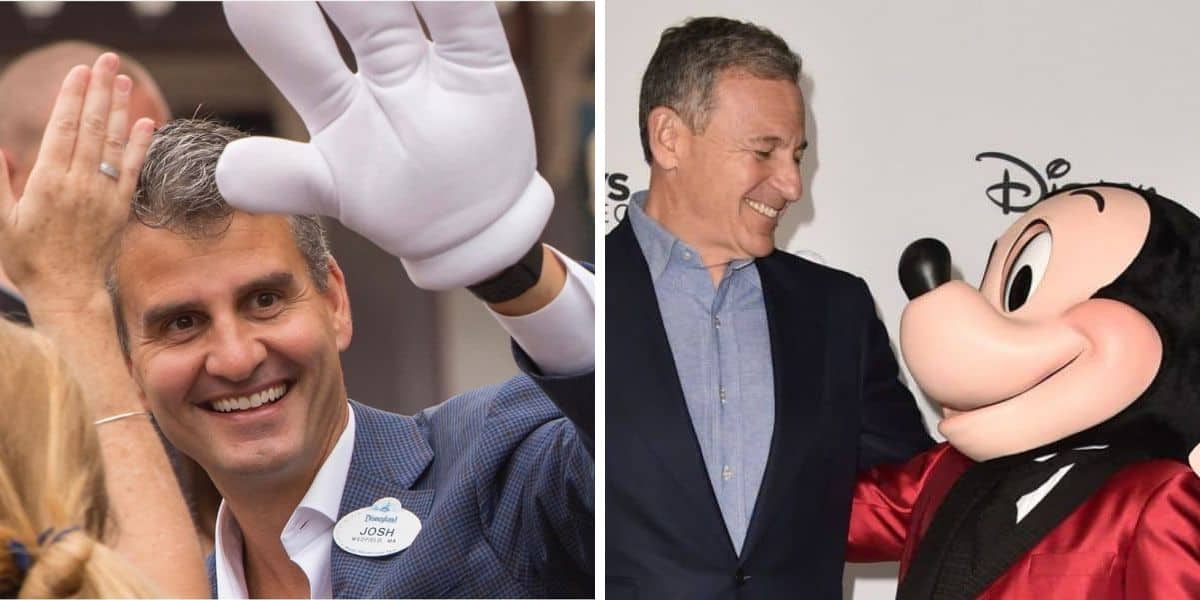
For the Disney faithful, it was the “Dream Scenario.” D’Amaro is arguably the most popular executive in the company’s history, a man whose “front-facing” leadership style and genuine passion for the parks made him the spiritual successor to Walt himself.
But Wall Street doesn’t trade on sentiment. As reported by Forbes, Disney stock didn’t just dip—it suffered a white-knuckle crash. Despite the positive headlines, Disney’s stock price plummeted 5% in a single week, erasing a staggering $15 billion in market capitalization. How does a company “win” the week and still lose $15 billion? The answer is a sobering reminder of the massive disconnect between the magic in the parks and the cold calculus of the stock market.
The “Selling the News” Phenomenon
In the world of investing, there is an old adage: “Buy the rumor, sell the news.” For most of late 2025 and early 2026, Disney’s stock price had a “Succession Premium” built into it. Investors had been bidding up the stock in anticipation of a clear resolution to the Bob Iger handoff. The market wanted certainty.

When the Board officially announced Josh D’Amaro as the successor on February 2, that “uncertainty” vanished. With the rumor now a reality, institutional investors did what they often do: they took their profits and ran. The 5% drop was partly a mechanical response to the achievement of a goal. However, the depth of the slide—that $15 billion wipeout—suggests that once the celebratory dust settled, investors began to look closely at the “D’Amaro Era” and didn’t necessarily like the immediate math.
Is the “Parks Guy” Too Focused on Shovels?
The primary concern echoing through the halls of Wall Street banks is D’Amaro’s background. While he is a brilliant operator of theme parks and cruises, he is the first Disney CEO in the modern era to come from a traditional “Content or Studio” background.

Investors are currently obsessed with margins and streaming profitability. They want to know how Disney will navigate the decline of linear television (ABC and Disney Channel) and how they will fend off Netflix in the streaming wars.
When D’Amaro took the stage during the earnings call, he spoke passionately about the $60 billion investment in physical theme parks—Villains Land, the Monsters, Inc. coaster, and the expansion of the Cruise Line. To a fan, this sounds like a golden age. To an investor, this sounds like “Capital Expenditure” (CapEx) hell. A $60 billion commitment to physical infrastructure is a “slow-burn” investment. It takes years to build a land and decades to see the return on investment. The $15 billion stock crash reflects a fear that Disney is pivoting too hard toward expensive, “bricks-and-mortar” growth at a time when the market is rewarding “lean and mean” digital expansion.
The $15 Billion “Earnings Disconnect”
The irony of the stock crash is that Disney’s actual earnings were phenomenal. The Experiences segment (Parks and Cruises) saw nearly double-digit growth. People are spending more money per capita in the parks than ever before.

However, Forbes points out that the “Forward-Looking Guidance” provided during the call was surprisingly cautious. Management warned of “moderating demand” in the domestic parks for the latter half of 2026. This honesty proved to be a tactical error in the short term. Wall Street is an “expectation machine.” If a company reports a record-breaking quarter but then issues a “we might slow down a bit” warning, investors often ignore the past and punish the future.
The $15 billion loss represents the market “de-risking” their portfolios in case the high-spending consumer finally hits a wall in late 2026.
The “Iger Shadow” and the Task Ahead
Another factor in the stock slide is the realization that Josh D’Amaro is inheriting a very different company than the one Bob Iger took over in 2005.

Iger’s tenure was defined by massive acquisitions (Pixar, Marvel, Lucasfilm) that gave Disney a “Content Moat.” D’Amaro’s tenure will be defined by execution and optimization. He has to figure out:
- The ESPN Pivot: Can he successfully launch the ESPN “flagship” streaming service without cannibalizing the remaining cable revenue?
- The Studio Slump: Can he restore the Pixar and Marvel brands to their former billion-dollar glory?
- The AI Integration: Can he use technology to lower costs in the parks without losing the “human touch” he is famous for?
The market’s 5% dip is essentially a “Wait and See” tax. Investors aren’t betting against Josh; they are simply refusing to bet on him until he proves he can handle the “Studio and Media” side of the house as well as he handles the “Mickey and Minnie” side.
Conclusion: A White-Knuckle Baptism by Fire
The $15 billion wipeout serves as a stark “Welcome to the CEO Suite” gift for Josh D’Amaro. It is a reminder that the “Rockstar” status he enjoys with fans does not grant him immunity from the volatility of the S&P 500.

For the D’Amaro era to be a success in the eyes of the market, he must bridge the gap between “Magic” and “Margins.” He needs to prove that his $60 billion investment plan will generate immediate cash flow, and he must show a ruthless efficiency in managing the declining linear TV business.
The stock market may have shrugged this week, but the real test begins on March 18, 2026, when D’Amaro officially takes the helm. If he can turn those $60 billion in shovels-in-the-ground into a new era of shareholder growth, that $15 billion will return as quickly as it vanished. But for now, the “white-knuckle ride” continues.
Do you think Wall Street is wrong to be skeptical of a “Parks-first” CEO, or is the $15 billion crash a fair warning?