

In January 2026, Disney CEO Bob Iger stood on the sun-drenched northern coast of Yas Island, sharing a photo of an empty stretch of sand that would become Disneyland Abu Dhabi. It was supposed to be the crown jewel of Disney’s international expansion—the seventh global resort and a bold entry into the Middle East. But just weeks later, the “Magic Kingdom” had been replaced by a war zone.
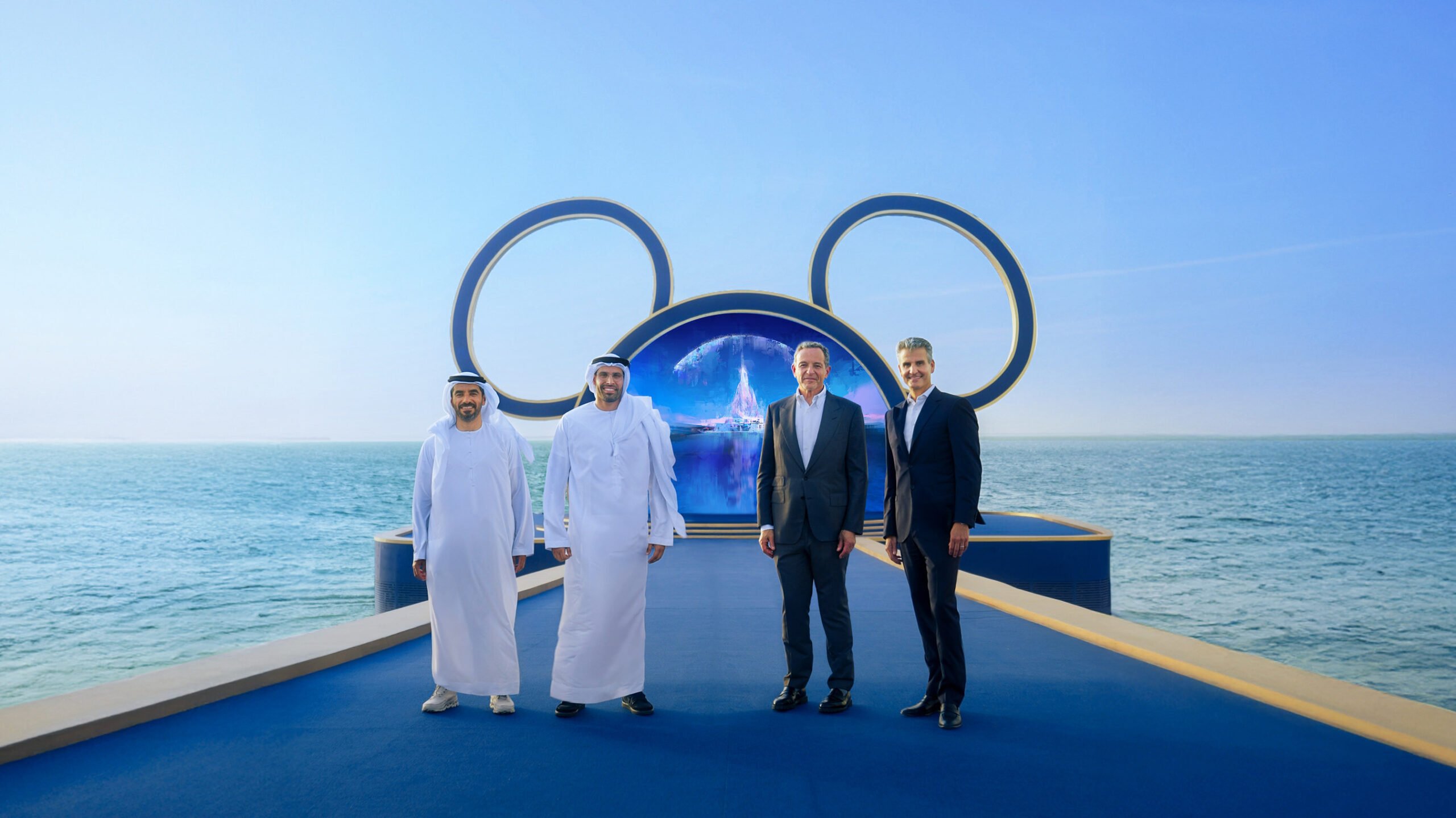
As of March 1, 2026, the dream of an Emirati Disney park is colliding with a brutal geopolitical reality. Following a massive joint military offensive by the United States and Israel against Iran—which resulted in the death of Supreme Leader Ayatollah Ali Khamenei—the Persian Gulf has ignited. With Iran launching waves of retaliatory strikes against Gulf states that host U.S. military assets, Disney’s multi-billion-dollar gamble is facing an existential crisis.
The 2026 Flashpoint: Abu Dhabi Under Fire
The primary issue facing the project is no longer “When will it open?” but “Can it even be built?” On February 28, 2026, Iran activated its regional retaliation playbook. Multiple ballistic missiles and drones were launched at the Al Dhafra Air Base in Abu Dhabi, a critical hub for the U.S. Air Force.

The strikes didn’t just hit military targets. Shrapnel and interceptions rained down across the capital, leading to at least one confirmed death in Abu Dhabi and reports of smoke rising near key infrastructure. For the Walt Disney Company, which planned to build its first “truly modern” castle just miles from these strategic military sites, the security risk has moved from theoretical to catastrophic.
The Ultimate “Soft Target”: Disney as a Proxy for America
Theme parks are built on a foundation of safety and “controlled” escapism. However, a Disney park in Abu Dhabi would represent the single most visible symbol of American cultural soft power in the region. In the current climate of February–March 2026, that makes it a high-profile “soft target.”

Iranian officials have declared that all U.S. assets in the region—military or otherwise—are legitimate targets for retaliation. While a direct hit on a theme park would be a global tragedy, the mere threat of one is enough to derail a project of this scale. Disney cannot market a “Happily Ever After” when guests are required to look at the sky for incoming drone swarms or listen for the sirens of an activated Iron Dome system.
Tourism Paralysis: Who Will Visit?
A Disney resort requires hundreds of thousands of international visitors to be financially viable. The current conflict has effectively severed the UAE’s connection to the rest of the world.

- Airspace Closures: As of today, the UAE, Qatar, and Kuwait have closed significant portions of their airspace.
- Aviation Collapse: Major carriers like Lufthansa, KLM, and Air Canada have suspended services to Abu Dhabi and Dubai.
- The “Stranded” Crisis: An estimated 90,000 transit passengers are currently stranded across Gulf hubs.
Disney’s partner in the project, the Miral Group, is funding the construction, but Disney provides the “Imagineering” and the brand. If the region is perceived as a perpetual conflict zone, the influx of high-spending Western and Asian tourists will evaporate, leaving the park as a multi-billion-dollar ghost town before the first brick is even laid.
The Irony of the “Woke” vs. “Imperialist” Label
There is a profound irony in Disney’s struggle. Back in the United States, Disney is frequently attacked by domestic critics for being “too woke” or “anti-American.” Yet, in the Middle East, the company faces the exact opposite blowback. To regional adversaries like Iran, Disney isn’t a “progressive” company; it is the ultimate symbol of American Imperialism.

Building a park in Abu Dhabi—a city that hosts the very airbase used to launch strikes against Tehran—creates a brand association that no amount of marketing can erase. Disney finds itself caught in a pincer: domestic culture wars on one side and a literal, kinetic war on the other.
Economic Blowback: The Rising “War Tax”
Even if the project continues, the costs are skyrocketing. The February 2026 conflict has introduced a “geopolitical risk premium” that is hitting the UAE’s economy hard:

- Insurance Premiums: “War risk” insurance for major construction projects in the Gulf has hit all-time highs.
- Logistics Costs: With the Strait of Hormuz threatened and shipping insurance through the roof, the cost of importing the specialized steel and technology required for Disney-level attractions is now astronomical.
- Fuel Surcharges: Petrol prices in the UAE rose in March 2026 as a direct result of the clashes, increasing the operational cost of the massive machinery required to terraform Yas Island.
Conclusion: A Kingdom on Hold
Disney is a master of “The Long Game,” but the events of March 1, 2026, may be too significant to ignore. While Bob Iger and Josh D’Amaro have envisioned Disneyland Abu Dhabi as a futuristic blend of Emirati culture and Disney magic, the reality of regional warfare makes that vision seem like a mirage.

As long as Abu Dhabi remains a primary host for U.S. military assets, and as long as those assets are being used in a “regime disruption” campaign against Iran, the Magic Kingdom will remain in the crosshairs. Disney may find that in 2026, the most magical thing they can do is wait for the smoke to clear.
Do you think Disney should pause the Abu Dhabi project until regional stability returns, or is the Middle East market worth the risk? Let us know in the comments!





Open Letter to Bob Iger from Ivy Supersonic Creator of Scrat posted on Scrat.com