When Walt Disney stood amid 160 acres of dusty Anaheim orange and walnut groves in 1954 to break ground on what would become his crowning achievement, the first structure he authorized wasn’t a castle, a carousel, or a ticket booth.
It was a full-scale industrial lumber mill.
Erected directly where the Main Street Opera House stands today, that rough-cut mill solved an immediate, high-stakes logistical challenge: transforming hand-drawn animation concepts into real, load-bearing structures required staggering volumes of lumber on an impossibly tight deadline. Walt’s construction crews needed thousands of board-feet of pine, fir, and hardwood to shape the gingerbread trims of Main Street, U.S.A., the stockades of Frontierland, and the exotic outposts of Adventureland before opening day in July 1955.
While that initial temporary sawmill was torn down decades ago, the park’s demand for specialty wood never ceased. For more than sixty years, the silent responsibility of supplying the Douglas fir, white oak, mahogany, and dense tropical hardwoods to maintain, renovate, and rebuild Disneyland has belonged to a single neighborhood supplier: Ganahl Lumber.
Located just down the road in Anaheim, this 142-year-old company is California’s oldest continuously operating lumberyard. For over half a century, it has served as an unsung creative partner to Walt Disney Imagineering and the resort’s engineering staff, shaping the foundational materials that bring the park’s stories to life.
An 1884 Foundation: “Disney Is a Visual Artist”
Ganahl Lumber was founded in 1884 and established its roots in Anaheim in 1904, predating the theme park by more than five decades. Today, the employee-owned business operates 14 facilities across Southern California, employing roughly 1,200 people. Its sprawling, 20-acre flagship hub in Anaheim houses an extensive inventory and specialized milling equipment tailored to industrial-scale architectural demands.
That multigenerational tenure has given Ganahl a rare understanding of how material selection directly informs theatrical storytelling.
“We can do things with wood that most people can’t do,” Ganahl Lumber Chairman Peter Ganahl explained regarding the firm’s long relationship with the park. “Disney is a visual artist and we help meet their needs.”
Park refurbishments rarely begin with standard catalog purchase orders. Instead, Disneyland’s engineering services division and Ganahl’s industrial sales team walk the midways and ride tracks side-by-side. Together, they inspect timber grain, measure mechanical wear, assess moisture exposure, and hand-select specific lumber species to ensure that replacement timbers match historic Imagineering specifications down to the millimeter.
Hidden in Plain Sight: A Woodworker’s Tour of the Berm
To the millions of visitors who stream through the turnstiles each year, the park is a seamless blend of fantasy, color, and music. But to Ganahl Industrial Sales Manager Kevin Johnson, a walk through the lands reveals an intricate map of specialty cuts, custom profiles, and hand-tooled timbers.
“I don’t think there’s any expense or detail overlooked at Disney,” Johnson noted. “We do everything that we can to fit that expectation.”
Ganahl’s fingerprint is visible throughout every corner of the resort:
Main Street, U.S.A.
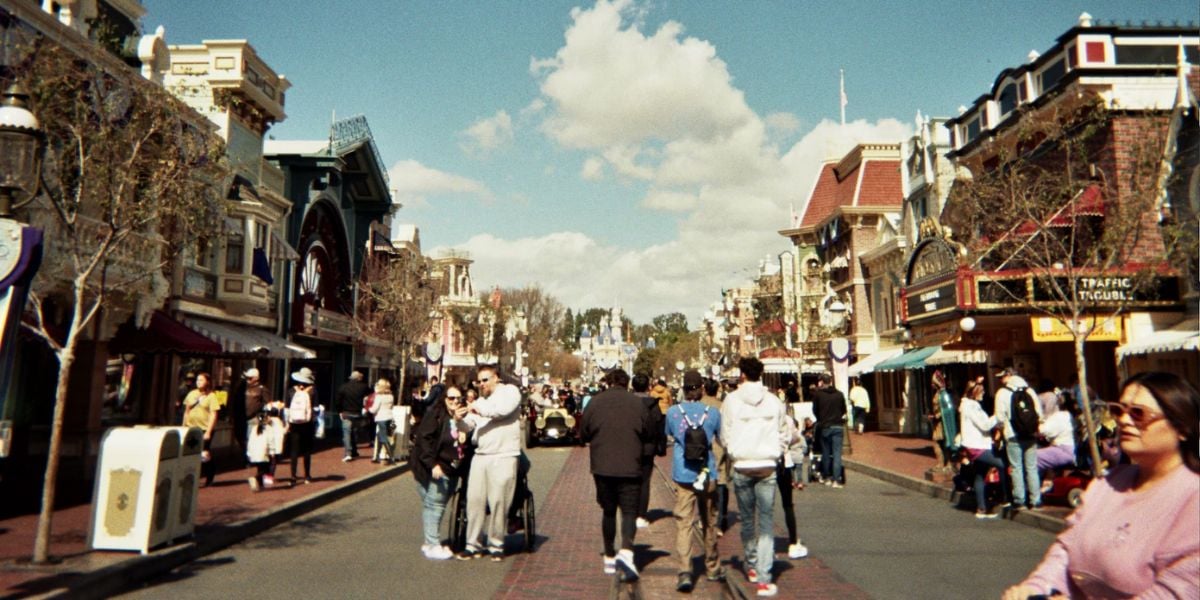
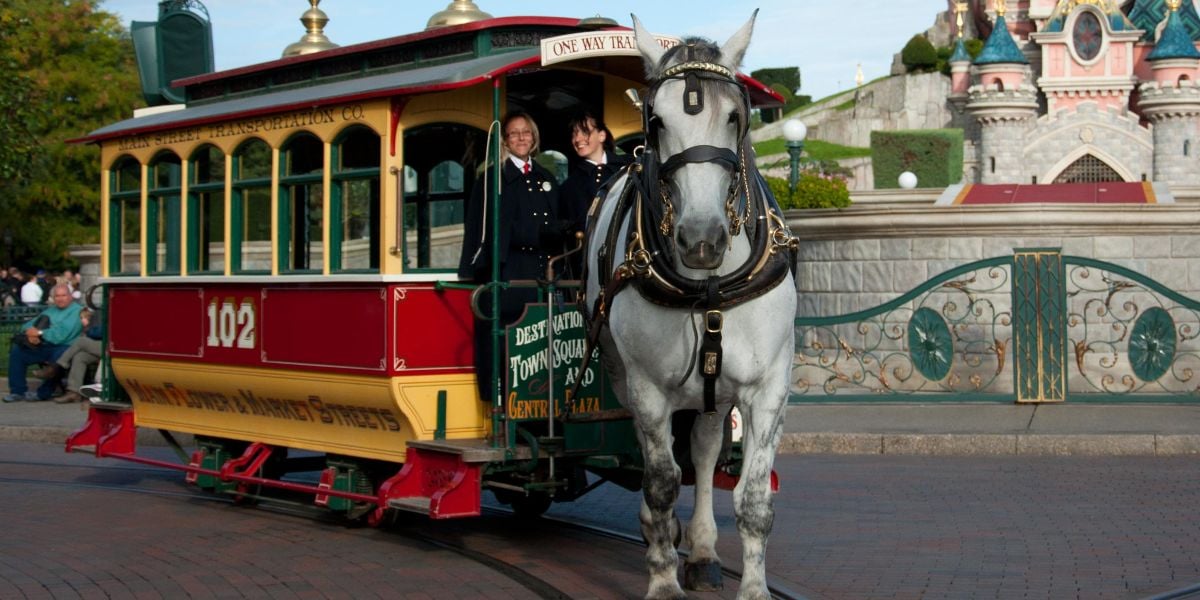
- Horse-Drawn Streetcars: The vintage streetcars that glide down the center track of Main Street endure constant mechanical friction and heavy daily foot traffic. To keep them operating safely, Ganahl provides dense white oak and straight-grain Douglas fir for the vehicles’ running boards, framing, and passenger bench seats.
- Historic Facades: Architectural cornerstones like Coke Corner and the Emporium rely on rich mahogany for structural support and ornamental exterior molding. When Disney unveiled the newly expanded Emporium balcony over the corner entrance, the entire structure was milled from solid mahogany.
- Tribute Windows: The hand-lettered gold-leaf windows that honor Disney legends on Main Street’s upper floors are set within custom mahogany sashes—including the tribute window installed above the Emporium honoring former Disney CEO Bob Iger.

Adventureland
- Jungle Cruise: Crafting a river expedition through tropical waterways requires materials that withstand constant exposure to chlorinated water and relentless heat. The Jungle Cruise boathouse is clad in authentic cedar siding. At the same time, the passenger loading docks are constructed with specialized vertical-grain Douglas fir planks designed to resist splintering under millions of scuffing shoes.
Frontierland
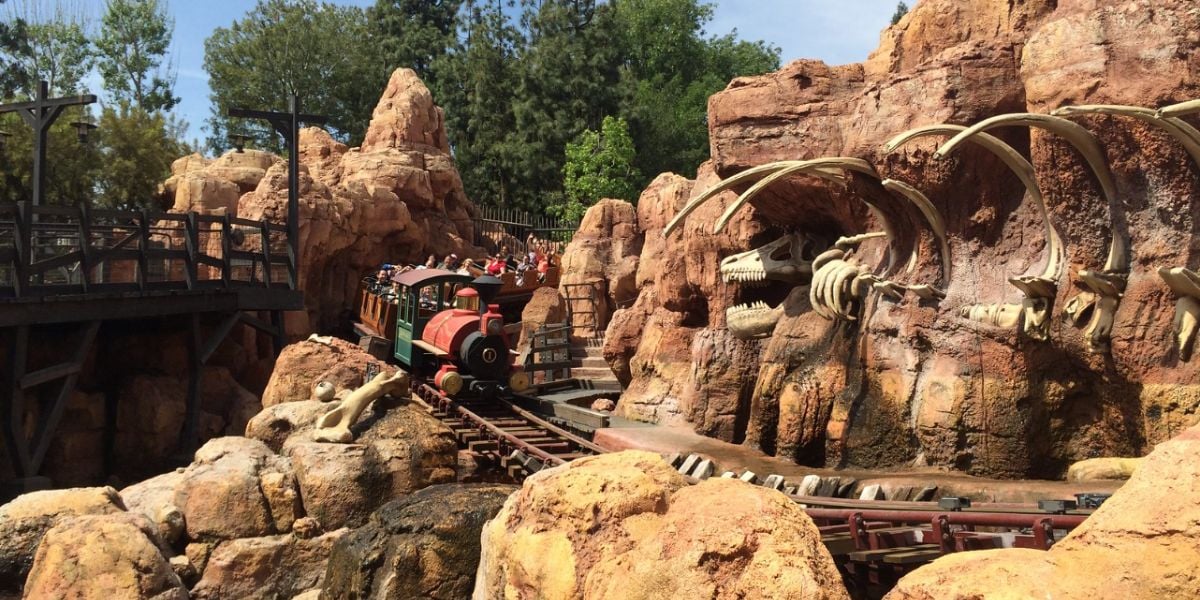
- Big Thunder Mountain Railroad: Creating the illusion of an abandoned 1880s Southwestern gold rush mine requires aggressive distressing techniques. Massive timbers framing the runaway train’s lift hill are blasted with heavy sand to strip away soft outer layers, exaggerating the natural rings and ridges to evoke decades of arid weather. According to Disneyland Engineering Service Manager Tony Alvarado, Douglas fir is the only timber that responds properly to that intense mechanical weathering while still holding deep, earthy stains.
- Fowler’s Harbor: The outdoor dining deck adjacent to Harbor Galley, which cantilevers out over the Rivers of America, is framed with ipe—an ultra-dense Brazilian walnut prized for its ability to withstand constant moisture without warping.
Fantasyland
- Classic Dark Rides: The whimsical interior queue arches, wood-paneled walls, and storybook facades of Snow White’s Enchanted Wish, Pinocchio’s Daring Journey, and Mr. Toad’s Wild Ride are milled from fine mahogany.
- Storybook Land Canal Boats: Showcasing the opposite end of the woodworking spectrum, Ganahl supplies the miniature lumber used to construct the tiny villages along the canal route. Alvarado pointed out that the miniature doors in Cinderella’s French village measure barely two inches by four inches. Artisans rely on fine-grained Douglas fir because it allows carvers to cut microscopic window mullions and roof shingles without splintering the wood.
Custom Tooling and Midnight Deliveries
Maintaining a 500-acre resort operating 365 days a year demands an extraordinarily nimble supply chain.
Disneyland frequently faces urgent maintenance requirements between midnight closures and morning rope drop. To ensure immediate availability, Ganahl maintains dedicated reserves of rare hardwoods at its Anaheim yard, including cumaru (Brazilian teak) and ipe, which are kept ready exclusively for park facilities teams.
When classic 1950s architectural moldings need replacement, off-the-shelf cutting knives simply do not match original hand-drawn profiles. To maintain historical accuracy, Ganahl manufactures custom steel milling knives that mount directly onto high-speed shaping machinery, replicating the exact shapes and curves drawn up by Walt Disney’s first generation of Imagineers.
Because Ganahl’s facility sits just minutes from the resort, emergency shipments can be pulled, cut to spec, and delivered backstage within hours, allowing maintenance crews to replace a broken rail, plank, or trim piece long before the first guests arrive in the morning.
Anchoring the Local Economy
Ganahl Lumber’s six-decade collaboration highlights the broader economic ripple effect Disneyland exerts across Southern California.
Ganahl is one of roughly 8,500 small and mid-sized businesses nationwide that contract directly with The Walt Disney Company. At the local level, the economic impact is profound:
- According to an economic study by Oxford Economics, the Disneyland Resort generates $16.1 billion in total economic activity across Southern California annually.
- The resort directly and indirectly supports more than 102,000 regional jobs.
- Nearly 75% of those jobs are based within Orange County.
- Employing 36,000 cast members, Disneyland remains the single largest employer in Orange County, accounting for roughly 1 out of every 20 jobs across the county.

From the four-inch miniature doors of Fantasyland to the soaring timbers of Big Thunder Mountain, Disneyland’s enduring magic rests on an authentic foundation of real lumber and local craftsmanship. Sixty years after Walt turned citrus groves into fairy tales, this quiet Anaheim lumberyard continues to supply the backbone of the dream.