Ever since the first brightly colored gondola cabins took flight above the treetops of Walt Disney World in the fall of 2019, the Disney Skyliner has rewritten the rules of resort transportation. What began as a project, met with skepticism about Florida heat and summer lightning storms, quickly transformed into a guest-favorite phenomenon. Families plan entire vacations around booking rooms at Skyliner-accessible properties, enjoying continuous boarding that eliminates the frustration of crowded bus depots and long waits.
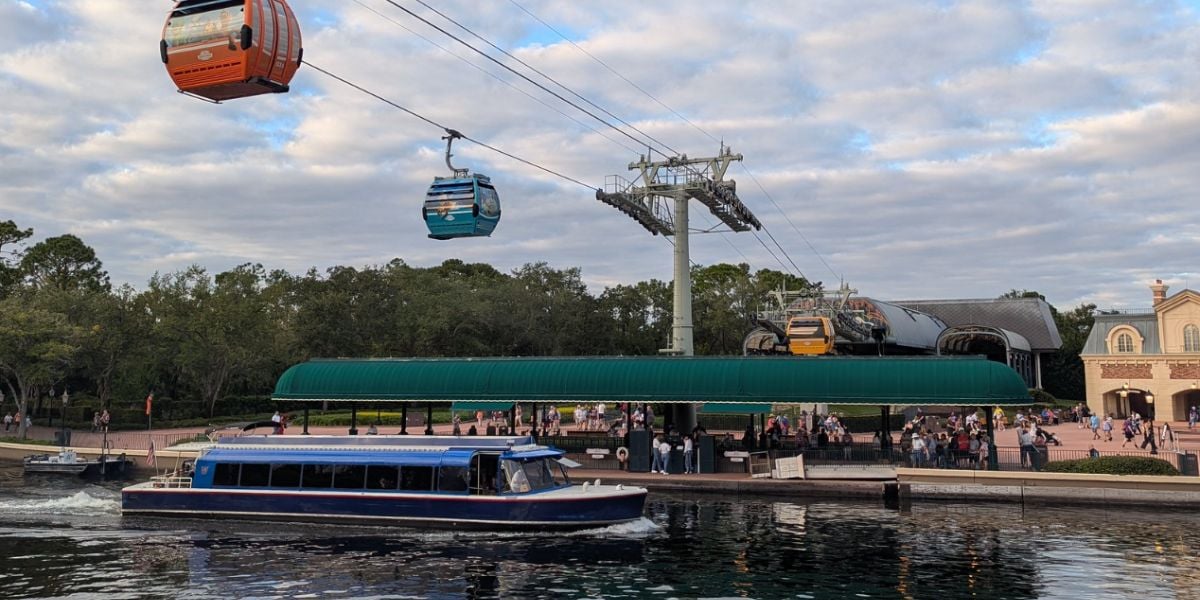
Given the system’s undeniable operational success, travelers and theme park enthusiasts have spent years debating where the cables could head next.
While public announcements from Disney leadership often focus on new attractions and castle park additions, the true clues regarding the future of Walt Disney World are almost always buried within county filings, civil engineering permits, and municipal infrastructure plans. A major roadwork initiative currently underway along Western Way strongly suggests that Disney and local oversight officials are quietly laying the groundwork for the next major Skyliner expansion.
The Western Way Project: Unlocking a Congested Gateway
To understand how asphalt and overpasses connect to aerial ropeways in the sky, one must look at the civil engineering overhaul underway along the resort’s western boundary.

Through the Central Florida Tourism Oversight District, Disney has advanced a massive roadway reconfiguration centered on the intersection of Western Way and Buena Vista Drive. This multi-million-dollar undertaking tackles one of the most frustrating bottlenecks on property through two critical phases:
First, crews are widening a 2.5-mile stretch of Western Way from four lanes to six lanes, expanding to three lanes in each direction from the State Road 429 interchange all the way past Disney’s Coronado Springs Resort to Buena Vista Drive.
Second, the project introduces a full grade-separated interchange. Instead of relying on a surface-level traffic signal that frequently backs up vehicles heading toward Disney’s Animal Kingdom, Coronado Springs, and the booming Flamingo Crossings district, Buena Vista Drive is being elevated onto an overpass directly above Western Way.

On the surface, this appears to be standard municipal traffic management designed to support regional growth. However, long-time observers of Disney development patterns know that major grade separations and highway widenings rarely occur in isolation. Within the boundaries of Walt Disney World, extensive roadway overhauls almost always serve as the precursor to large-scale hotel construction and guest transportation corridors.
Connecting the Dots: Coronado Springs, Blizzard Beach, and a New Resort
The Western Way corridor encompasses one of the largest parcels of buildable, master-planned real estate remaining within Walt Disney World property.

Historically, developing this pocket was hindered by disjointed traffic patterns, environmental setbacks, and awkward access points. By elevating Buena Vista Drive and streamlining the junction with Western Way, civil planners are clearing the logistical hurdles needed to unlock prime shovel-ready land for a brand-new resort hotel along the western axis.
This potential new lodging development brings the Skyliner back into focus.
Currently, the Skyliner operates across three distinct spokes stemming from its central hub at Caribbean Beach Resort, ferrying riders to Disney’s Hollywood Studios, EPCOT’s International Gateway, Disney’s Riviera Resort, and the Pop Century and Art of Animation resorts. Expanding that network northward toward Magic Kingdom or westward into Disney’s Animal Kingdom has long been deemed impractical due to live-animal flight restrictions and the immense environmental cost of crossing delicate wetlands.

The Western Way corridor, by contrast, presents a natural, hurdle-free alignment.
A new western branch originating from the existing hub at Disney’s Hollywood Studios could easily follow the newly expanded right-of-way along Buena Vista Drive and Western Way. Along this single path, the system could efficiently link:
- Disney’s Blizzard Beach Water Park and Winter Summerland Miniature Golf
- Disney’s Coronado Springs Resort and the flagship Gran Destino Tower
- The proposed new hotel site positioned along Western Way
By coordinating bridge elevations, drainage ponds, and utility rights-of-way during the initial highway construction phase, planners preserve the exact footprint required to erect future gondola support towers, avoiding the costly disruption of ripping up newly paved roadways later
The Compelling Economics of Gondola Transit
From a financial perspective, building aerial ropeways represents one of the smartest investments Disney can make in its guest infrastructure.

Unlike the monorail, which carries staggering construction costs per mile, requires bespoke rolling stock, and demands complex track maintenance, modern aerial cableways from Doppelmayr are significantly faster and cheaper to deploy.
Furthermore, the Skyliner has consistently proven that it drives direct corporate revenue:
- Premium Room Pricing: Properties on the line, such as Pop Century and Caribbean Beach, regularly command higher nightly room rates than comparable off-line resorts simply because they offer seamless flight access to two parks.
- Disney Vacation Club Appeal: Direct Skyliner connectivity is one of the primary selling points for Disney’s Riviera Resort.
- Fleet Reductions: Every passenger lifted into an aerial cabin represents a guest who does not require a diesel bus, reducing vehicle wear, fuel expenses, and driver staffing pressures across the resort’s transit fleet.

If Disney constructs a new hotel along Western Way without Skyliner access, the property would enter the market at an immediate disadvantage compared to existing resorts. Tying that future development, alongside Coronado Springs and Blizzard Beach, into the gondola grid instantly transforms the western perimeter into a premier destination.
Laying the Track Before the Cables
Disney rarely holds press conferences to announce that an overpass has been engineered to accommodate utility lines or future transit clearances. The company typically waits until site prep is well underway before revealing hotel names and transportation expansions to the public.

Yet the massive overhaul along Western Way reveals that the ground is actively being prepared for long-term expansion. With lanes widening, an elevated interchange rising, and prime resort real estate unlocked, the physical pathway is falling into place. Disney may not have strung the steel cables across Western Way just yet, but the foundation for the Skyliner’s next journey is already being poured in plain sight.