When Walt Disney famously declared that Disneyland would “never be completed as long as there is imagination left in the world,” he was describing a philosophy of continuous growth. For decades, that meant building faster roller coasters, bigger castles, and more immersive dark rides. In recent years, however, Imagineering has applied that same philosophy to cultural accountability.

When Disney added “Inclusion” as its fifth core training key alongside Safety, Courtesy, Show, and Efficiency, legacy attractions across the Walt Disney World Resort underwent renewed evaluation. From total rethemings to subtle scene replacements, Disney has taken active steps to eliminate outdated stereotypes, racial caricatures, and insensitive tropes from its park lineup.
Here is how five iconic Disney World attractions were changed or removed to create a more welcoming experience for modern guests.
1. Splash Mountain: Retiring the Legacy of ‘Song of the South’
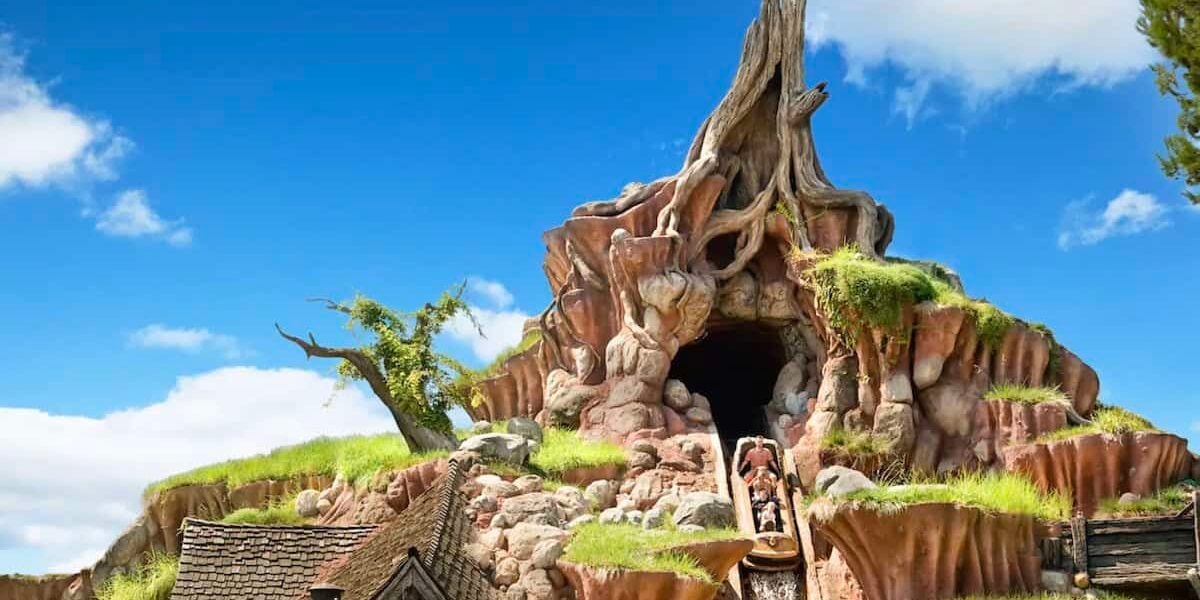
For over three decades, Splash Mountain stood as a centerpiece of Frontierland at Magic Kingdom. Combining a thrilling 50-foot flume drop with a memorable soundtrack featuring “Zip-A-Dee-Doo-Dah,” the attraction was a massive fan favorite. However, its foundational source material presented a deep cultural issue.

Splash Mountain was directly adapted from Disney’s controversial 1946 film Song of the South. Set during the Reconstruction era, the movie faced decades of sharp criticism from film historians, civil rights organizations, and the NAACP for romanticizing plantation life, minimizing the realities of slavery, and utilizing offensive Uncle Remus tropes. Because of these racial caricatures, Disney locked Song of the South in its corporate vault, never releasing it on home video in the United States or making it available on Disney+. Yet, its animated characters—Br’er Rabbit, Br’er Fox, and Br’er Bear—continued to star in one of Disney’s most prominent rides.
In June 2020, following growing public calls for change, Disney officially announced that Splash Mountain would be retired. Magic Kingdom’s version closed permanently in January 2023 and reopened in 2024 as Tiana’s Bayou Adventure. Inspired by The Princess and the Frog, the updated attraction keeps the thrilling log flume drop while replacing the problematic folklore with a celebration of New Orleans culture, jazz music, and Disney’s first Black princess.
2. Jungle Cruise: Steering Away from ‘Headhunter’ Stereotypes
An opening-day attraction at Magic Kingdom in 1971, the Jungle Cruise has always been loved for its pun-filled skipper jokes and nostalgic charm. Beneath the lighthearted humor, however, the original ride narrative relied heavily on colonial-era tropes that presented indigenous populations through crude, caricature-driven stereotypes.

For decades, guests sailed past animatronic scenes depicting dark-skinned “natives” wearing grass skirts and brandishing spears, a safari group pinned up a pole by a rhinoceros while local guides cowered, and “Trader Sam”—the caricatured indigenous “head merchant” who offered “two of his heads for one of yours.”
In 2021, Walt Disney Imagineering completed a sweeping overhaul of the Jungle Cruise at both Magic Kingdom and Disneyland. The update eliminated all offensive depictions of indigenous peoples. The trapped safari group was replaced with an international, diverse team of explorers, while the “native attack” scene was replaced with animatronic chimpanzees taking over a wrecked safari boat. Meanwhile, Trader Sam was given a clever new backstory: rather than a headhunter, Sam became the proprietor of the “Jungle Cruise Lost and Found Location,” turning a problematic trope into a fun, character-driven detail.
3. Peter Pan’s Flight: Updating the Never Land Tribe
Fantasyland’s Peter Pan’s Flight is one of the most enduring dark rides in theme park history, drawing long queues daily since Magic Kingdom opened in 1971. However, one specific scene, flying over Never Land, stood out as an unmistakable relic of mid-century racial caricatures: the depiction of the “Never Land Tribe.”
Based on J.M. Barrie’s original work and Disney’s 1953 animated film, the scene portrayed Native Americans using harmful stereotypes—featuring exaggerated bright red skin, stoic postures around a teepee, and caricatured facial features. While other parts of the ride were regularly refurbished over the decades, this scene remained virtually unchanged for over 50 years.
In August 2024, Imagineering quietly unveiled a fully updated scene inside Magic Kingdom’s attraction. The offensive caricatures were entirely removed and replaced with an authentic, respectful depiction of Tiger Lily and her community. In the refreshed scene, Tiger Lily gracefully performs the traditional Fancy Shawl Butterfly Dance alongside an elder female tribe member near a fire, while another tribe member plays a central drum. The update preserved Tiger Lily’s role in the Never Land story while eliminating the outdated tropes.
4. Pirates of the Caribbean: Retiring the Bride Auction
Adventureland’s Pirates of the Caribbean is widely considered one of Imagineering’s greatest storytelling achievements. As societal standards evolved, however, one sequence in particular became increasingly difficult to defend: the “Bride Auction.”
In the original 1973 attraction, invading pirates forced tied-up local women onto an auction block while an auctioneer shouted, “Take a wench for a bride!” Guests watched as townswomen wept in distress while the voluptuous “Redhead” lifted her skirt line to entice bidders. Though intended as a dark historical satire of pirate lawlessness, the scene essentially depicted human trafficking and sexual violence as lighthearted entertainment. (Earlier updates in the late 1990s had already modified a scene where pirates chased terrified women, turning the women into food-carrying villagers or having them chase pirates with brooms).
In 2018, Disney introduced a major narrative revision across its global parks. The banner reading “Take a Wench for a Bride” was replaced with “Surrender Your Loot.” The iconic Redhead was transformed from a victim into Redd, a fierce pirate captain overseeing the auction of stolen property and livestock from town residents.
5. Tom Sawyer Island: Evolving Frontier Narratives
Opening at Magic Kingdom in 1973, Tom Sawyer Island offered a self-guided wilderness playground set amid the Rivers of America. Grounded in the 19th-century works of Mark Twain, the island and surrounding riverboat voyage carried complex historical baggage regarding American frontier expansion and Native American relations.

Early park iterations across Disney resorts featured violent frontier depictions, including a “burning settler’s cabin” and caricatured “hostile Indian” attacks. Over the years, Disney quietly removed these violent scenes, reinterpreting Native American encampments along the riverbanks to focus on peaceful, culturally authentic storytelling.
As Disney continued to evaluate Frontierland, Imagineering recognized that contextualizing 19th-century expansion required a fresh narrative direction. Ultimately, Disney announced plans to retire Tom Sawyer Island and the Liberty Square Riverboat to construct a major Cars-themed expansion celebrating the American wilderness, bringing an end to an era of frontier storytelling that had grown increasingly out of step with modern park values.
Preserving Nostalgia While Building a Better Tomorrow
Theme parks are living, breathing spaces. While nostalgia plays a powerful role in how guests connect with Disney World, updating or retiring problematic attractions ensures the parks remain welcoming for future generations. By replacing racial caricatures and outdated tropes with rich, inclusive storytelling, Imagineering continues to prove that respecting history doesn’t mean standing still—it means ensuring the magic belongs to everyone.