A Walt Disney World or Disneyland vacation used to be synonymous with physical escapism. You entered the turnstiles, grabbed a paper map that inevitably tore at the seams by lunchtime, and surrendered to the physical immersion of a meticulously themed world. But if you have visited the parks anytime in the last five years, you know that the modern magic wand isn’t found in Cinderella Castle—it is the glowing smartphone screen tightly gripped in your hand.

Today’s Disney vacation is an undeniable marvel of digital logistics, but it comes at a steep experiential cost. Between mobile dining orders, virtual queue boarding groups, and the intricate dance of securing ride times, a new, unofficial role has emerged in every traveling party: the “designated scroller.” While the rest of the family takes in the sights and sounds of the parks, this individual is tethered to their device, missing the magic as they frantically refresh the park app to salvage the daily itinerary.
However, after years of pushing guests deeper into a digital ecosystem, Disney appears to be recognizing the fatigue. Rumblings within the company suggest a potential course correction, hinting that leadership wants to dial back the crushing technological demands placed on guests. But with rumors also swirling about an all-inclusive corporate “Super App,” is a true tech detox at Disney actually possible?
The Lightning Lane Labyrinth
The heart of the digital friction lies within the Lightning Lane system. When Disney replaced its free, paper-based FastPass system with digital, paid line-skipping services (first Genie+, now rebranded as Lightning Lane Multi Pass), they didn’t just introduce a new revenue stream—they introduced a grueling logistical puzzle.

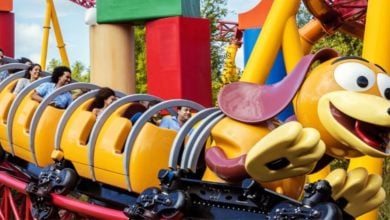
As recently highlighted in an eye-opening Wall Street Journal report, the person managing the daily itinerary has a fundamentally different vacation than the rest of their family. To maximize the value of their Lightning Lane purchase, guests often have to resort to a stressful practice known among diehards as playing the “Disney slots.”
This strategy involves booking a return time for an attraction and then repeatedly refreshing the app—sometimes dozens of times over several minutes—to intercept an earlier cancellation. It is a highly effective way to save time in line, but it turns the concept of a relaxing vacation into a high-stakes, competitive scheduling gig.
You aren’t just competing against the crowds you see around you; you are competing against thousands of other thumbs tapping away at the same time. The result is a surge in screen time that actively takes away from the spontaneous, atmospheric joy that made Disney parks famous in the first place. You don’t stumble upon a magical moment when your eyes are glued to a loading screen.
A Surprising Admission from Disney Leadership
For a long time, the prevailing wisdom was that Disney would never backtrack on park technology. The data collected from mobile apps helps the company anticipate crowd flow, manage staffing, and optimize food and merchandise inventory. But guest satisfaction is the absolute bedrock of the Disney brand, and complaints about over-complication have reached a fever pitch.

Buried within that same Wall Street Journal report was a quote that stopped Disney experts in their tracks. When asked about the exhausting complexity of the Lightning Lane system, Thomas Mazloum, the Chairman of Disney Experiences, offered a rare acknowledgment of the friction.
“This is something we are looking at as we consider ways to simplify the guest experience,” Mazloum told the Wall Street Journal.
In the carefully curated world of Disney corporate messaging, the word “simplify” is a massive signal. It suggests an internal realization that the pendulum has swung too far toward digital micromanagement. By admitting that the current system requires simplification, Mazloum has given fans hope that future iterations of park planning might prioritize ease of use over constant connectivity.

Whether this means completely removing the need to refresh the app on the fly or altering the algorithm so that the “Disney slots” method is no longer necessary remains to be seen. But the acknowledgment that guests need a break is a crucial first step.
The “Super App” Paradox
Yet, even as Mazloum speaks of simplifying the in-park experience, Wall Street insiders and tech analysts are buzzing about a seemingly contradictory project. Rumors have persisted that The Walt Disney Company is developing an all-inclusive “Super App”—a massive digital hub designed to merge every facet of the company’s empire into a single application.

According to the speculation, this proposed Super App would be the ultimate culmination of Disney’s “Parks-to-Pixels” strategy. It would combine the streaming power of Disney+, Hulu, and ESPN with the transactional logistics of the theme parks, Disney Cruise Line, and retail shopping.
In theory, the Super App would create a frictionless corporate ecosystem. You could watch a Marvel movie on your television at home, and the app would seamlessly offer you tickets to Disneyland’s Avengers Campus or the chance to buy a related piece of merchandise.
But for theme park fans already exhausted by app crashes, poor park Wi-Fi, and severe battery drain, the idea of a Super App sounds like a nightmare of software bloat.

How can Disney simplify a vacation while simultaneously asking guests to use an application heavy enough to stream live sports and 4K movies? If the goal is to get guests off their phones while waiting for Big Thunder Mountain, introducing a monolithic app that ties their entire digital life to The Walt Disney Company feels entirely counterproductive.
Finding the Digital Sweet Spot
Disney finds itself at a fascinating crossroads. The parks absolutely need technology to function at their current scale; managing millions of daily visitors worldwide requires the immense data and efficiency that mobile apps provide. Furthermore, Disney investors demand the kind of cross-platform synergy that a Super App promises.

But the theme park product relies on emotional resonance, nostalgia, and physical immersion—none of which can be fully experienced while staring at a five-inch screen. The designated scrollers are burning out, and Disney knows it.
If Thomas Mazloum and the rest of the Disney Experiences leadership team truly want to simplify the vacation, they will have to thread a delicate needle. They must retain the backend operational benefits of digital queuing and mobile ordering while rebuilding the front-end user experience to demand far less active engagement.
Until that balance is struck, parkgoers should probably pack an extra portable battery charger. But for the first time in years, there is a glimmer of hope on the horizon: Disney knows you’re tired of looking at your phone, and they just might be trying to fix it.