
The first warning was not a broken roller coaster or an approaching thunderstorm. It was the sky.
Across portions of the Midwest, familiar summer scenes became unsettling on July 16. Skylines faded behind a gray-orange curtain. The sun appeared muted. Even the air carried the unmistakable smell of something burning hundreds of miles away.
Inside amusement parks, however, much of the machinery of summer continued moving. Roller coasters climbed. Families crossed hot midway pavement. Employees remained stationed outdoors as an environmental threat—one guests could not always see clearly—settled around them.
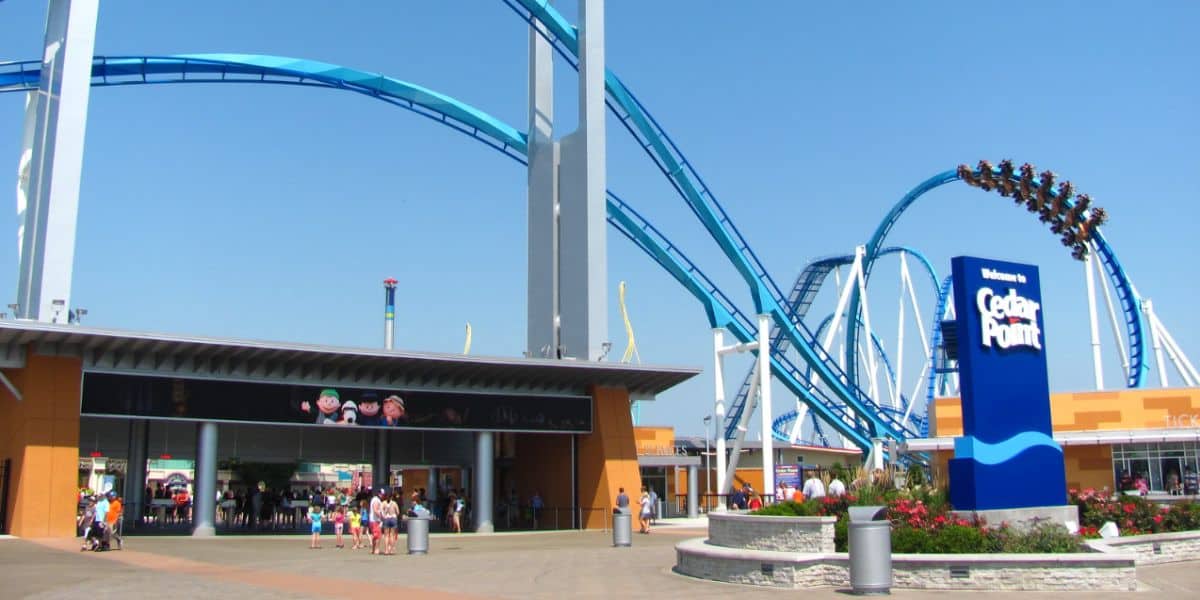
Cedar Point’s Early Closure Made the Danger Impossible to Ignore
Cedar Point, the flagship Ohio amusement park operated by Six Flags Entertainment Corporation, announced that it would close at 7 p.m. on July 16 because of poor air quality caused by Canadian wildfire smoke.
The decision came as smoke spread across the Midwest and Northeast, triggering warnings in more than 20 states. Detroit, Chicago, and Minneapolis experienced some of the worst air quality recorded anywhere in the world during the event. In parts of Michigan, measurements climbed beyond the upper limits of the Environmental Protection Agency’s standard Air Quality Index scale.
JUST IN: Cedar Point has CLOSED EARLY due to the Canadian wildfire smoke that rolled into the Sandusky, Ohio area today. The amusement park made the announcement and posted this statement: “Due to the poor air quality caused by the Canadian wildfires, @CedarPoint – @marcusleshock on X
JUST IN: Cedar Point has CLOSED EARLY due to the Canadian wildfire smoke that rolled into the Sandusky, Ohio area today.
The amusement park made the announcement and posted this statement:
“Due to the poor air quality caused by the Canadian wildfires, @CedarPoint will be… pic.twitter.com/PRnFbky980
— Marcus Leshock (@marcusleshock) July 16, 2026
Other Six Flags properties also altered operations. Valleyfair in Minnesota closed for the day on July 16 before reopening Friday, while Six Flags Great America outside Chicago ended operations early amid hazardous conditions.
Yet Cedar Point reopened on July 17 despite continuing smoke and an air-quality alert affecting the region. The park confirmed that it planned to operate normally, turning what might have been a one-day weather disruption into a more complicated conversation about when outdoor entertainment should stop.
UPDATE: Six Flags Great America plans to operate as usual today, as Canadian wildfire smoke has moved into the area. Statement from @SFGreat_America: “We are scheduled to operate today and will continue to monitor conditions. We encourage guests and team members who have any concerns during their visit to stop by Guest Services or First Aid for assistance.” As of 10:00am, the EPA has classified the air conditions in Gurnee, IL as “Hazardous.” – @marcusleshock on X
UPDATE: Six Flags Great America plans to operate as usual today, as Canadian wildfire smoke has moved into the area.
Statement from @SFGreat_America:
“We are scheduled to operate today and will continue to monitor conditions. We encourage guests and team members who have any… pic.twitter.com/CbRUTbFc5m
— Marcus Leshock (@marcusleshock) July 16, 2026
This is not simply a debate over whether roller coasters should run. It is a question of how a theme park company responds when the danger is atmospheric, unpredictable, and potentially harmful long before someone visibly appears to be in distress.

Wildfire Smoke Does Not Behave Like an Ordinary Weather Delay
Theme park visitors understand rain. They see lightning. They feel dangerous wind and recognize when severe weather is moving toward them.
Wildfire smoke is different.
Its most dangerous component is often PM2.5—microscopic particulate matter small enough to travel deep into the lungs and potentially enter the bloodstream. Exposure can aggravate asthma, trigger coughing and breathing difficulty, and increase cardiovascular strain. Children, older adults, pregnant people, and those with existing heart or lung conditions face heightened risks, although severe smoke can affect anyone.
The EPA’s AirNow index categorizes readings from 151 to 200 as “unhealthy,” 201 to 300 as “very unhealthy,” and anything above 300 as “hazardous.” At those upper levels, the concern is no longer limited to medically vulnerable visitors.
That distinction matters inside an amusement park. Guests may spend ten or twelve hours walking outdoors, climbing stairs, pushing strollers, and experiencing rides that elevate their heart rates. What feels like a regular vacation day can quietly become prolonged exposure during strenuous activity.

Employees Cannot Simply Retreat Indoors
The greatest concern may not involve guests at all.
Visitors can leave early, return to a hotel, or cancel their plans. Many park employees do not have the same freedom. Ride operators, food-service workers, security teams, lifeguards, custodial crews, and character performers may remain outside for hours because their jobs require it.
That makes wildfire smoke an employee-safety issue as much as a guest-experience problem.
Closing a major destination carries real consequences. Hourly employees can lose income. Families may have traveled hundreds of miles. Hotels are booked, tickets have been purchased, and thousands of vacation plans depend on the park opening its gates.
Still, keeping a park open transfers part of that burden onto workers and visitors, who must decide whether the experience is worth the exposure. A park can technically remain operational while the surrounding environment is no longer suitable for prolonged outdoor recreation.
That is the uncomfortable line Six Flags and other outdoor-entertainment operators are now being forced to confront.

Six Flags Is Facing a New Kind of Operational Test
There is no indication that every Six Flags property experienced identical air quality or that every affected park was legally required to close. Smoke concentration can change dramatically by location and hour, making company-wide judgments difficult.
But that variability strengthens the case for clear, park-specific communication.
Guests need more than a notice buried inside an app or a last-minute operating-hours change. They need current local AQI information, explanations of what those levels mean, flexible ticket policies, and visible details about precautions being taken for employees.
The company also faces a broader consistency problem. When one park closes because of dangerous air while another operates under an active advisory, guests naturally begin asking what threshold determines the difference.
The next generation of theme park safety policies may be shaped not only by storms and extreme heat, but by air people cannot safely breathe. Parks that once treated wildfire smoke as an unusual interruption may need formal AQI-based operating standards, much like their existing lightning and severe-weather procedures.

This Summer Could Change What Guests Expect From Theme Parks
The smoke will eventually move. Cedar Point’s skyline will clear, and the midway will once again look like the bright summer escape generations of families remember.
The questions raised by this event will linger.
Wildfire smoke has already affected enormous portions of North America, with Reuters reporting hundreds of active Canadian fires and hazardous pollution across major cities. Similar events can no longer be dismissed as isolated inconveniences.
For future guests, checking the weather may soon mean checking the AQI alongside temperatures, rain chances, and ride closures. For Six Flags, the larger challenge will be proving that protecting the people inside its parks—especially those required to work outdoors—matters as much as keeping the gates open.
In an industry built around carefully controlled experiences, wildfire smoke is a reminder that not every threat arrives with thunder, alarms, or an approaching storm cloud. Sometimes, the warning is simply the moment the sky begins to disappear.